
Fees and pricing
Compression stocking prices depend on the compression level, the length and the style you need. Your stockings are measured and fitted at the clinic, and you get the price before anything is ordered. Many extended health plans cover medical compression stockings with a prescription, so call (416) 445-5353 and we will help you check your coverage.
Personal quote
Given after measuring and fitting
All prices in Canadian dollars. Your fee is confirmed when you book.
Our clinic provides compression stockings and socks to alleviate leg swelling, discomfort, and varicose veins, while also enhancing circulation in your legs.
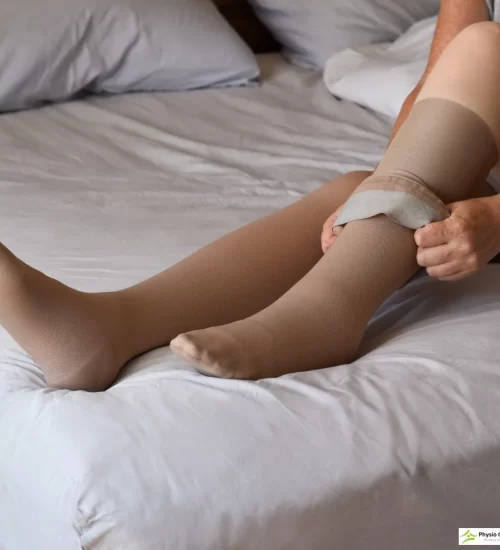
Compression stockings and socks apply pressure on your legs to facilitate blood flow towards the heart, which can reduce swelling, relieve leg pain and discomfort, and even prevent blood clots in those at risk.
At our clinic, we provide a variety of compression stockings and socks with different sizes, styles, and levels of compression to suit your specific requirements. Our trained professionals can assist you in selecting the appropriate compression level and fit for optimal comfort and effectiveness.
Compression stockings and socks provide several benefits to their wearers, such as:
Our clinic provides top-brand compression stockings and socks to ensure our clients experience maximum comfort and effectiveness.
Experienced and Qualified: With years of experience and full qualifications, our physio specialists provide safe and effective care. As providers of the best physiotherapy in Scarborough, we ensure that each treatment is tailored to your unique needs.
We create personalized treatment plans to meet your individual needs and goals, ensuring you receive the most effective care available.
Utilizing advanced technology and top-quality materials, we craft custom orthotics specifically for your feet, ensuring optimal comfort and support.
We address the whole person, not just the feet, to find and treat the underlying causes of foot and ankle issues, promoting overall wellness.
Our team is dedicated to delivering caring, expert services with the highest level of professionalism. If you’re searching for “physiotherapy near me in Scarborough,” look no further. We are here to help you achieve your health goals.
How they work
Compression stockings apply graduated pressure to the leg, strongest at the ankle and decreasing up the calf and thigh. That gradient helps the veins return blood toward the heart, reduces pooling and swelling, and supports tired, aching legs. Medical grade stockings are measured and fitted to deliver a specific pressure, which is what separates them from the loose support socks sold in pharmacies. The wrong size or the wrong pressure class is at best useless and at worst harmful, which is why fitting is done by a trained fitter with proper measurements, usually first thing in the day before the legs swell.
At Physio Cottage we measure and fit compression stockings and socks for people who stand or sit all day, for pregnancy, for travel, for varicose veins and venous insufficiency, after surgery and for lymphedema, following the pressure class prescribed by your doctor where a prescription applies. We carry a range of brands, styles and colours so that wearing them daily is realistic.
For tired, achy legs, mild swelling, long days on your feet, travel and pregnancy. Often available without a prescription.
For varicose veins, moderate swelling, after vein procedures and for many post surgical and pregnancy related needs. Usually prescribed by a doctor.
For chronic venous insufficiency, lymphedema, severe varicose veins and after a blood clot. Always prescribed and fitted carefully.
Who they help
Nurses, teachers, retail and warehouse staff, hairdressers, drivers and office workers. Compression reduces the heavy, aching feeling and ankle swelling at the end of a shift.
Swollen ankles, aching legs and new varicose veins are common as pregnancy progresses. Maternity stockings are fitted to accommodate the belly and can be worn from early pregnancy.
Compression is a core part of managing vein problems: reducing swelling and aching, supporting the veins and slowing progression. Fitted to the class your doctor prescribes.
Compression reduces swelling after orthopedic and vein surgery and is part of preventing and managing deep vein thrombosis, following medical advice.
Flat knit garments and specialized fittings for lymphedema of the leg, coordinated with your lymphedema therapist or physician.
Long flights and drives raise the risk of swelling and clots, especially with other risk factors. Travel socks fitted properly make a real difference.
Compression socks for running and recovery between sessions. Benefits are mainly comfort and reduced soreness; we are honest about what the evidence supports.
Special non binding diabetic socks protect circulation and skin. Compression for people with diabetes needs medical guidance, which we coordinate.
Swelling and heaviness in the legs are common with age. Easier to apply styles and donning aids make daily use practical.
Your fitting
Honest advice
Compression is safe and helpful for most people, and there are important exceptions. Compression should not be worn, or needs medical clearance first, if you have peripheral arterial disease or poor arterial circulation in the legs, severe neuropathy with loss of sensation, an active skin infection or open wound in the area, severe heart failure, or an allergy to the materials. New, sudden swelling of one leg, particularly with pain, warmth and redness, needs urgent medical assessment for a blood clot before any stocking goes on. Swelling with shortness of breath, chest pain or sudden weight gain also needs a doctor first. We screen for these at every fitting, and when a prescription is needed for the pressure class, we ask for it. Compression manages symptoms; it does not treat the cause of vein disease, so we encourage patients with varicose veins or venous insufficiency to have a medical assessment as well.
For most people with tired legs and mild swelling, the right stockings make an immediate difference, and combining them with walking, calf exercises and leg elevation does more still. Our physiotherapists can add a short leg health routine if you would like one.
Practical questions
Many extended health plans cover medical compression stockings, often a set number of pairs per year, and usually require a physician’s prescription stating the pressure class and diagnosis. We provide the receipt and documentation your insurer requires. Check your plan and bring your prescription.
Mild compression can be fitted without one. Moderate and firm classes are prescribed by a doctor, and insurance claims almost always require a prescription. Ask your doctor to specify the pressure class and the style.
You do not need to. We measure you at the fitting. Sizes vary between brands, which is why self sizing from a chart so often goes wrong.
Knee high works for most swelling and symptoms below the knee and is easier to wear. Thigh high or pantyhose is used when the swelling or veins extend above the knee or when a doctor prescribes it.
Yes: put them on first thing, use rubber gloves for grip, turn the stocking inside out to the heel before starting, and consider a donning aid. We show you the technique at the fitting and can recommend easier styles.
Usually not needed, since lying down reduces pooling. Some conditions call for night wear; follow your doctor’s advice.
Yes, and many obstetric providers recommend it. Maternity styles accommodate the belly and can be refitted as pregnancy progresses.
2231 Victoria Park Ave, Unit #5, Scarborough, ON M1R 1V8, with on-site parking and bus stops on Victoria Park and Lawrence Ave E. Open Monday to Friday 10am to 8pm and Saturday 9am to 5pm. Call (416) 445-5353 to book a fitting.
Book a fitting
Book a compression fitting at Victoria Park and York Mills. Bring your prescription if you have one.
A typical course
Here is a typical example of the kind of case we see every week, with details changed. A woman in her thirties who works at a hair salon in Wexford stands for nine hours a day. By mid afternoon her legs feel heavy and by evening her ankles are visibly swollen; a few small veins have appeared behind her knees. Her doctor has examined her, found no clot or other problem, and written a prescription for moderate compression stockings. She arrives for a fitting first thing in the morning before swelling builds. We take her ankle, calf and leg measurements, discuss the fabrics and colours that would work with her work clothes, and settle on a knee high in a breathable cotton blend. We fit the first pair in the clinic, show her how to turn the stocking to the heel and roll it up without tugging, and recommend rubber gloves for grip. She wears them from the first shift. Within a week the afternoon heaviness has gone and her evening ankle swelling is minimal. At the two week check the fit is good, she orders a second pair so she can wash one while wearing the other, and she claims both through her benefits with the receipt and prescription we provide. Six months later she returns for a replacement pair as the compression has faded with daily wear, which is normal. A short calf exercise routine from our physiotherapist and a habit of elevating her legs in the evening completes the plan.
Pressure that is strongest at the ankle and decreases up the leg, which helps blood return toward the heart.
Millimetres of mercury, the unit used to describe compression pressure. Classes run from mild (15 to 20) to firm (30 to 40 and above).
Vein valves that no longer close properly, allowing blood to pool in the lower leg. Causes swelling, aching and skin changes over time.
Swelling from a lymphatic system that cannot drain fluid properly, managed with specialized garments and therapy.
Two ways stockings are made. Circular knit is seamless and common; flat knit is firmer and used for lymphedema and irregular leg shapes.
A device that makes putting on compression stockings easier for people with limited grip or bending.
Before you buy
Compression stockings look simple, but the pressure level, the size and the style all change how well they work and how comfortable they feel. Stockings bought off a shelf without measuring often end up in a drawer because they roll down, pinch behind the knee or feel impossible to put on. These questions help you get a pair you will actually wear.
Compression is measured in millimetres of mercury. Lighter levels suit tired, achy legs and long days on your feet; firmer medical grades are used for varicose veins, swelling and some circulation problems. The right level depends on your legs and your health history, not on what feels tightest.
A proper fitting measures the ankle, calf and sometimes the thigh, ideally in the morning before swelling builds up. Ask who will measure you and whether they are trained in compression fitting.
Most people do well with knee high stockings, which are easier to put on and stay up better. Thigh high or pantyhose styles are chosen when swelling or veins extend above the knee.
Firm compression is not suitable for everyone. Poor arterial circulation, some skin conditions, uncontrolled heart failure and diabetes with nerve damage need careful screening, and sometimes a doctor needs to agree first.
Ask to be shown, and to practise in the clinic. Donning gloves and simple aids make a big difference, especially for older adults or people with sore hands.
Elastic loses strength with washing and wear. Most people replace daily stockings every few months. Ask how long your pair should last and how to tell when the compression has faded.
Choosing a level
Compression garments are sold in ranges, and the numbers can be confusing. Light support, roughly 8 to 15 mmHg, is often used for tired legs and long periods of sitting. Moderate compression, roughly 15 to 20 mmHg, is a common choice for travel, pregnancy and jobs that keep you standing all day. Firm medical compression, roughly 20 to 30 mmHg and above, is used for varicose veins, swelling after surgery or injury, and other conditions where a health professional has recommended it. The strongest levels are reserved for specific medical problems and are fitted only after screening.
Graduated stockings are tightest at the ankle and gradually looser up the leg. That pattern helps blood and fluid move back towards the heart instead of pooling at the ankles. It is also why size matters so much: a stocking that is too small squeezes the wrong places, and one that is too large does very little. A measured fitting is the simplest way to get the level and the size right together.
Costs and billing
Many extended health plans in Ontario cover medical grade compression stockings under a medical supplies benefit. The rules vary by plan, so it is worth checking before your fitting. Common conditions include a prescription from a physician, a minimum compression level, a limit on the number of pairs per year, and a maximum dollar amount for the year.
We suggest asking your insurer four things: whether compression stockings are covered, whether a doctor prescription is needed and what it must say, how many pairs you can claim in a year, and whether the plan pays the full amount or a percentage. Bring the answers, and your prescription if you need one, to your fitting. Our team will give you a detailed receipt showing the product and the compression level so your claim has what the insurer asks for. Call (416) 445-5353 if you are not sure what your plan needs.
Daily use
Legs are least swollen when you first get up. Putting stockings on early makes it easier and gives the best support through the day.
Reach inside, hold the heel, and turn the stocking inside out down to that point. Slide your foot in, line up the heel, then ease the rest up your leg a little at a time. Rubber gloves help you grip the fabric.
Wrinkles and rolled tops create tight bands that work against the stocking. Never fold the top down. If a stocking keeps slipping, the size or style may need changing.
Hand wash or use a gentle cycle in cool water, then air dry flat away from heat. Washing after each wear restores the elastic and keeps skin healthy. Having two pairs makes this easy.
Take your stockings off and call a doctor if your toes turn blue, white or cold, you feel numbness or pins and needles, or the skin becomes painful or breaks down. Seek urgent care for sudden calf pain and swelling in one leg, or for shortness of breath.
Everyday situations
Long flights and road trips keep you sitting for hours, which slows circulation in the legs. Moderate compression stockings, together with walking the aisle, ankle pumps and drinking water, are a common way to reduce leg swelling while travelling. People with a history of blood clots should speak with their doctor before a long journey.
During pregnancy, hormonal changes and the growing baby put extra pressure on leg veins, and swollen ankles are common in the third trimester. Maternity compression styles with a soft belly panel are available, and many patients find knee high stockings easiest. Tell your midwife or doctor you are using compression.
For nurses, retail and warehouse staff, hairstylists and anyone on their feet all day, compression can reduce the heavy, aching feeling by the end of a shift. Combined with good footwear and short movement breaks, it is a simple habit that many of our Scarborough patients rely on.
Keep reading
Foot support for people on their feet all day, often paired with compression.
Supports for knees, ankles and wrists, fitted after a proper assessment.
When to start rehab, and where swelling management fits in.
Recovery guidance for the months after having a baby.
Our main physiotherapy service for injury, pain and recovery.
More answers
Usually not. Most compression is designed for when you are upright and active. Unless a health professional has told you otherwise, take them off at bedtime and put them back on in the morning.
Yes. Compression socks come in styles that look like ordinary dress or athletic socks, and many of our male patients wear them for work, travel and sport.
Some runners find they reduce calf soreness and help recovery. The evidence for performance is limited, so we suggest choosing them for comfort rather than speed.
Medical compression is firm by design. Technique, gloves and a donning aid make a big difference, and a different style or size may help. Bring them to the clinic and we will show you.
No referral is needed for a fitting at Physio Cottage, but many insurance plans need a doctor prescription to reimburse medical compression.
Physio Cottage is at 2231 Victoria Park Ave, Unit #5, Scarborough, ON M1R 1V8. We are open Monday to Friday 10am to 8pm and Saturday 9am to 5pm. Call (416) 445-5353.
Book a compression fitting at our Scarborough clinic, ideally in the morning, and leave with stockings you can put on and wear comfortably.
Still wondering
Snug and supportive, firmest at the ankle, but never painful, numb or cutting in. If they leave deep marks or your toes change colour, take them off and have the fit checked.
Physio Cottage, 2231 Victoria Park Ave, Unit #5, Scarborough, ON M1R 1V8. Call (416) 445-5353.