Chronic pain
Ongoing pain that hasn’t fully responded to other treatment, addressed as part of a broader chronic pain plan.
Acupuncture · Scarborough
Reviewed by Maryam Ahankoob, Registered Physiotherapist and clinic lead. Updated October 2026.
Chronic pain, tension headaches, stress, poor circulation, or repetitive strain from desk work, our registered acupuncturists use traditional Chinese medicine techniques to relieve pain and restore balance, without medication.
We serve patients from across Scarborough and east Toronto, including Victoria Village, Wexford, Bendale, Agincourt, L’Amoreaux, and Clairlea, with easy parking and flexible evening and Saturday appointments near Victoria Park & Ellesmere.

Regulated in Ontario
Acupuncture is a component of Traditional Chinese Medicine (TCM) that uses thin, sterile needles inserted at specific points on the body to stimulate the nervous system, ease pain, and support your body’s own healing response.
In Ontario, Traditional Chinese Medicine and acupuncture is a regulated health profession, overseen by the College of Traditional Chinese Medicine Practitioners and Acupuncturists of Ontario (CTCMPAO). That means your acupuncturist has met provincial education and safety requirements, worth checking, since not every “acupuncture-style” service advertised online is delivered by a registered practitioner.
Registration is easy to verify. You can look up any acupuncturist’s registration directly on the CTCMPAO website before you book, in under a minute.
Fees and pricing
Your first acupuncture visit costs $120 and each subsequent visit is $100. The initial appointment includes a health history and assessment so your acupuncturist can choose points and an approach that suit your condition, followed by your first treatment. Many extended health plans include acupuncture when it is provided by a registered practitioner. Check your plan, or call us and we will help you confirm your coverage before you book.
$120
Assessment and first treatment
$100
Per treatment session
All prices in Canadian dollars. Your fee is confirmed when you book.
A common question
Both use thin, solid needles, so it’s a fair question, but the theory and goal behind each are different.
| Based on | Best known for | |
|---|---|---|
| Acupuncture | Traditional Chinese Medicine, meridian-based points | Whole-body balance, chronic pain, stress, circulation, general wellness |
| Dry needling | Western, physiotherapy-based approach | Releasing tight, localized muscle trigger points |
Many patients benefit from acupuncture as part of a broader physiotherapy or myofascial release plan. Ask your practitioner which approach fits your goals.
Self-check
You may benefit from acupuncture if you experience any of the following.
If any of this sounds familiar, an acupuncture assessment is a reasonable next step.
Book an assessmentConditions we treat
Ongoing pain that hasn’t fully responded to other treatment, addressed as part of a broader chronic pain plan.
Needling can ease the muscle tension and nervous system patterns behind frequent headaches.
A calming, drug-free way to lower overall tension and support relaxation.
Supports blood flow to areas that feel persistently cold, tight, or under-recovered.
Many patients report more restful sleep as tension and pain ease.
Used alongside physiotherapy or sport injury rehab to support recovery.
Desk work, typing, and repetitive hand motion can lead to wrist and forearm tension or carpal-tunnel-type symptoms. Acupuncture can be used alongside physiotherapy to ease tension and support recovery.

Needle safety, plainly
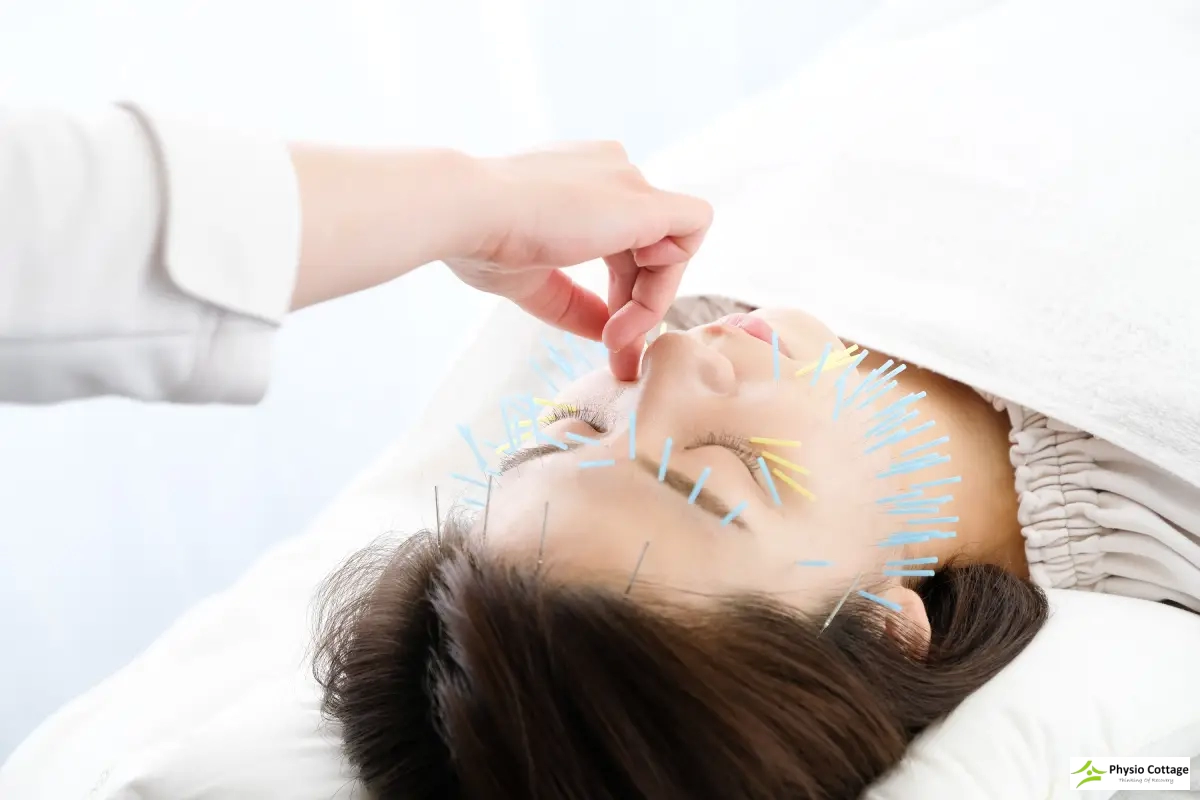
Acupuncture needles are extremely thin, solid, sterile, and used only once. Most are inserted no more than half an inch to an inch deep, and many patients feel little more than a light pinch, if anything at all.
Once placed, needles typically stay in for a short rest period while you relax, often described as one of the most calming parts of the visit. Mild bruising at a needle site is possible but uncommon.
Single-use, no exceptions. Every needle is disposed of immediately after your session in a sharps container: nothing is ever reused.

Your first visit
Your first visit starts with a conversation about your health history, symptoms, and goals, so your acupuncturist can select the points and approach that fit your condition.
Treatment can begin the same visit, followed by a short rest period while the needles are in place. Many patients leave feeling noticeably more relaxed.
Why Physio Cottage
Regulated by the College of TCM Practitioners and Acupuncturists of Ontario.
Every treatment is built around your symptoms, goals, and overall plan.
A relaxing environment designed to support treatment, not rush it.
Combine acupuncture with physiotherapy, massage, or chiropractic care.
Most extended health plans cover acupuncture: we bill directly where available.
Read what patients across Scarborough and east Toronto say on our Google profile.
Where our patients come from
Physio Cottage is located near Victoria Park & Ellesmere and welcomes patients from across Scarborough and east Toronto.
Approaches
Acupuncture is not one technique. Depending on your condition and comfort, your practitioner may use one or a combination of the approaches below. Each uses sterile, single use needles that are far finer than the needles used for injections, and most patients feel a brief tap followed by a dull, heavy or warm sensation rather than pain.
Needles placed at classical points along the body, chosen for your pattern of symptoms. Sessions are calm and unhurried, and many patients find this approach particularly helpful for stress, sleep and headaches.
Needles placed directly into tight bands of muscle that refer pain, such as the knot in the shoulder blade that sends pain up the neck. Often used for sports injuries and desk related tension. Acupuncture vs dry needling.
A gentle electrical current passed between two needles for a steady, rhythmic stimulation. Used for persistent pain and some nerve related conditions where manual needling alone is not enough.
Suction cups applied over tight muscle before or after needling to improve circulation and loosen the tissue. Expect round marks that fade over a few days.
Modified point selection and positioning for nausea, back and pelvic pain, and general wellbeing, with points that are avoided in pregnancy excluded. Is acupuncture safe during pregnancy?
Used by our physiotherapists as one part of a plan for sprains, tendon pain and post surgical stiffness, alongside manual therapy and exercise. Physiotherapy.
Condition guide
These are the reasons patients in Scarborough most often book acupuncture at Physio Cottage, with a realistic note on how treatment usually goes. Results vary from person to person, and we will tell you early if acupuncture does not seem to be helping you.
The most common reason for a visit. Needling the tight muscles and local points often eases pain and improves movement within a few sessions, especially when combined with the exercise program from our physiotherapists.
Points in the neck, shoulders, scalp and hands. Many patients report fewer and milder headaches over a course of four to eight sessions, which we review together as we go.
Needling the calf and the sole of the foot alongside loading advice and footwear changes. Acupuncture for plantar fasciitis.
Points around the wrist, forearm and neck to ease tingling and aching from keyboard work and repetitive tasks. Combined with nerve gliding exercises and ergonomic advice.
Local and distal points to reduce pain and allow more activity. Acupuncture does not reverse arthritis, but less pain often means more walking and stronger legs, which is what protects the joint.
Calming treatments that many patients describe as the most relaxed they feel all week. Acupuncture is a support here, not a replacement for medical or psychological care when that is needed.
Your course of treatment
Acupuncture tends to work cumulatively. A single session can bring relief, but lasting change usually needs a short course. For a recent problem such as a muscle strain or a flare of neck pain, we typically suggest one to two sessions a week for two to three weeks. For long standing problems such as chronic headaches, arthritis pain or persistent low back pain, a course of six to ten sessions over several weeks is more realistic, followed by occasional sessions if they help you maintain the result.
We review progress at every visit. If you have had four sessions without any change, your acupuncturist will say so and suggest a different approach, which might be physiotherapy, massage therapy or a conversation with your doctor. How many acupuncture sessions are needed?
Honest advice
Acupuncture is a safe treatment in trained hands, and it is not the right starting point for everything. Please see a doctor first, or tell us so we can advise you, if you have:
Once a doctor or physiotherapist has assessed the problem, acupuncture is often a useful part of the plan and can begin right away.
Most people who book acupuncture at our Scarborough clinic come in with pain that has lasted longer than they expected. The most common reasons are:
Fine needles placed at specific points stimulate nerves in the skin and muscle. Research suggests this can change how pain signals are processed, prompt the release of the body’s own pain-relieving chemicals such as endorphins and help tight muscle relax. Results vary from person to person, which is why your practitioner reviews how you respond every few visits.
Traditional acupuncture uses points chosen from an assessment of your symptoms as a whole. Dry needling targets tight bands and trigger points within a muscle. Your practitioner explains which approach suits your problem before treatment starts. Read more about acupuncture and dry needling and the needles used in acupuncture.
Our clinic at 2231 Victoria Park Ave, Unit #5 sees acupuncture patients from Wexford, Maryvale, Dorset Park, Clairlea and across Scarborough, as well as Parkwoods and Victoria Village. Weekday appointments run until 8 p.m., with Saturday appointments from 9 a.m. to 5 p.m. Call (416) 445-5353 or book online.
Getting here
Physio Cottage is at 2231 Victoria Park Ave, Unit #5, Scarborough, ON M1R 1V8, with on-site parking and bus stops on Victoria Park and Lawrence Ave E within a short walk. We see acupuncture patients from across Scarborough, North York and East York, and from Markham and Pickering for patients who work nearby. Hours are Monday to Friday from 10am to 8pm and Saturday from 9am to 5pm; evening sessions are popular, so book ahead when you can. Call (416) 445-5353 or book online.
Plan for 45 to 60 minutes at your first visit, which includes the assessment. Follow up sessions are usually 30 to 45 minutes, with needles in place for 15 to 25 minutes of that time.
Typically between five and twenty, depending on the condition. Fewer, well chosen points are often more comfortable and just as effective.
Many patients who dislike injections do fine with acupuncture because the needles are so fine. Tell us about your concern; we start with fewer needles and explain each step.
Most extended health plans cover acupuncture when it is provided by a registered practitioner, and we offer direct billing to most major insurers. Check your plan’s annual limit and bring your card.
Yes. Most people feel relaxed but clear headed. If you feel light headed after your first session, rest in the clinic for a few minutes before leaving.
We focus on pain, musculoskeletal conditions, headaches and stress related symptoms, where the evidence and our experience are strongest. We are honest about what acupuncture can and cannot do. Can acupuncture help with weight loss?
Step by step
We go through your symptoms, medical history, medications and goals, and check for anything that changes how we treat you, such as pregnancy, blood thinners or a pacemaker. This takes about 15 minutes and sets the plan.
You lie comfortably on the table, usually with only the treatment area uncovered. Needles are placed in a few seconds each; most people feel a tap and then a dull or warm sensation. They stay in for 15 to 25 minutes while you rest in a quiet room, and your practitioner checks on you.
Needles are removed, we discuss how it felt and what to expect over the next day, and we agree on how many sessions to plan before reviewing. You leave with simple advice on activity, hydration and anything to watch for.
Patients who combine acupuncture with the exercise program from our physiotherapists tend to keep their results longer. Ask about a combined plan if your problem has lasted more than a few weeks.
Our approach
What sets acupuncture at Physio Cottage apart is not the needles; it is what surrounds them. Because the practitioner works alongside physiotherapists, a chiropractor and registered massage therapists in one clinic, acupuncture is prescribed for a reason and reviewed against a goal rather than offered as a standalone ritual. A patient with tennis elbow, for example, may receive dry needling to settle the tendon pain, a loading program from the physiotherapist to rebuild the tendon, and advice on grip and technique so the problem does not return. A patient with migraines may combine traditional acupuncture with neck treatment and sleep and posture coaching. Sessions are calm and never rushed, rooms are private, and the same practitioner sees you throughout. We have served Scarborough, North York and East York from Victoria Park and Ellesmere since 2017, with evening and Saturday hours and direct billing to most extended health plans, so a course of acupuncture is practical to complete rather than something you start and abandon.
Questions patients ask
Many extended health insurance plans cover acupuncture, and we offer direct billing to most major providers where available.
Most patients feel little to no discomfort. The needles are extremely thin, and many describe the treatment as relaxing rather than painful.
This varies by condition. Some people notice relief after one or two sessions, while others benefit from an ongoing series of treatments.
No referral is necessary. You can book directly with our team.
Acupuncture is rooted in Traditional Chinese Medicine and meridian-based points, used for whole-body balance and a wide range of conditions. Dry needling is a Western, physiotherapy-based technique that targets localized muscle trigger points.
Yes, when performed by a registered acupuncturist using sterile, single-use needles. Mild bruising or soreness at a needle site is possible but uncommon.
Many patients use acupuncture alongside physiotherapy to ease tension and support recovery from repetitive strain, including carpal-tunnel-type symptoms.
Yes. As part of our multidisciplinary clinic, acupuncture is often combined with physiotherapy, massage therapy, or chiropractic care for more complete results.
From the blog
Registered acupuncturists, direct billing, and appointments that fit your schedule, right at Victoria Park & Ellesmere.
Monday to Friday 10am to 8pm · Saturday 9am to 5pm · Sunday closed
2231 Victoria Park Ave, Unit #5, Scarborough, ON M1R 1V8