
When Is the Right Time to Start Physiotherapy After Surgery?
Short answer: Most people start some physiotherapy within a day or two after surgery, often in hospital, and begin outpatient sessions within one to six weeks depending on the procedure and the surgeon’s instructions. Starting at the right time protects healing tissue while limiting stiffness and muscle loss. Learn about physiotherapy at Physio Cottage.
The crucial question of when to start physiotherapy after surgery has personalized answers, ranging from within 24 hours for joint replacements to a staged approach weeks later for more complex procedures. The right time to start physiotherapy after surgery is not one-size-fits-all, but immediate post-op consultation will clarify when to start pt after surgery and when to start physio after hip replacement to safeguard your recovery.
Throughout this thorough guide, we’ll explore evidence-based timing protocols, procedure-specific recommendations, and practical tips to help you navigate your physical therapy journey with confidence.
If you’re searching for quality physiotherapy, starting treatment at the right time after surgery can significantly impact your recovery outcomes and help you return to daily activities faster.
Critical Window for Post-Surgical Physiotherapy
Your body enters a critical healing phase immediately after surgery, characterized by inflammation, tissue repair, and neuromuscular adaptation. During this window, controlled movement serves multiple therapeutic purposes:
it prevents the formation of excessive scar tissue, maintains joint range of motion, stimulates circulation to promote healing, and helps preserve muscle strength that would otherwise deteriorate rapidly during prolonged immobility.
However, the precise timing must balance these benefits against surgical wound integrity, pain management, and your individual health status.
Starting Physiotherapy After Knee Surgery: Timelines and Guidelines
Knee surgery encompasses various procedures, each with specific timelines for starting physiotherapy to optimize recovery while minimizing risks. The key is balancing early movement to prevent complications with protection of healing tissues.
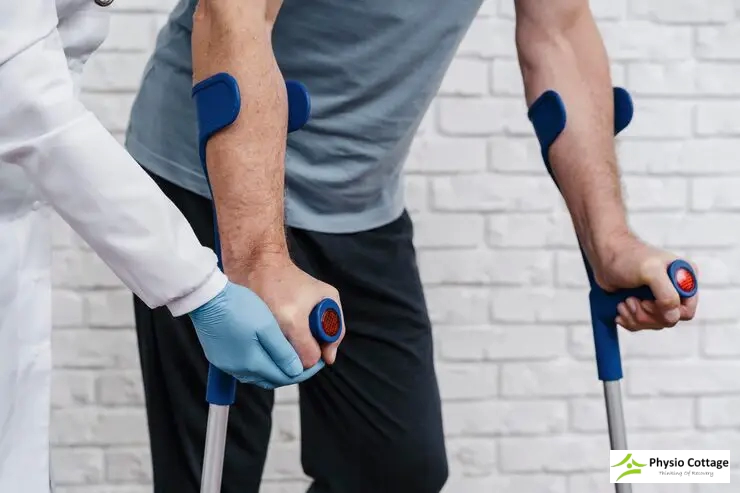
Knee replacement surgery, one of the most common orthopedic procedures, typically begins with gentle physiotherapy on the same day as surgery or within 24 hours. This early start, supported by clinical evidence, improves outcomes by promoting circulation and reducing stiffness. Initial sessions focus on basic mobility exercises in the hospital bed, including ankle pumps to prevent blood clots, quadriceps sets to activate thigh muscles, and gentle knee bending using a continuous passive motion (CPM) machine or therapist assistance. By the first day, patients often progress to sitting at the bedside, standing with assistance, and short walks using a walker or crutches.
In the first week after knee replacement, the emphasis is on achieving functional milestones: bending the knee to at least 90 degrees, fully straightening it, walking short distances independently, and managing stairs safely. Meeting these early goals is linked with better long-term results, such as improved range of motion and quicker return to daily activities. Your physiotherapist will create a progressive program matched to your pain tolerance and recovery pace.
For other knee surgeries, the timeline varies based on the procedure’s invasiveness. Arthroscopic surgeries, such as meniscus repair or ACL reconstruction, usually allow physiotherapy to start within 1-3 days. These minimally invasive approaches involve smaller incisions, enabling earlier intervention. For ACL reconstruction, initial exercises prioritize reducing swelling, restoring full extension, and gentle range-of-motion work to protect the graft before advancing to strengthening.
In cases of cartilage repair or more extensive reconstructive surgeries, a delayed weight-bearing protocol may be recommended. Upper body and core exercises can begin immediately to maintain overall fitness and prevent compensatory issues, while full lower-extremity rehabilitation might be postponed for several weeks to safeguard healing tissues.
This staged approach across all knee surgeries ensures personalized recovery, with close coordination between your surgeon and physiotherapist to adjust based on individual factors like age, health, and surgical specifics.
Our whole-person physiotherapy considers not just your surgical site, but your overall physical and emotional well-being throughout the post-operative recovery process.
Also Read: Everything You Need to Know About Choosing Physiotherapy
When to Start Physiotherapy After Surgery: Procedure-Specific Guidelines
Different surgical procedures demand distinct rehabilitation timelines based on tissue healing rates, surgical techniques, and functional requirements.
Joint Replacement SurgeriesKnee and hip replacements typically begin physiotherapy within 6-24 hours, focusing on mobility exercises, pain management, and precautions to prevent complications. Shoulder replacements start with passive range-of-motion within days, delaying active strengthening for 6-8 weeks.
Spinal SurgeriesSpinal fusion waits 4-6 weeks for formal therapy to allow stabilization, with gentle walking permitted immediately. Less invasive procedures like microdiscectomy may start within 1-2 weeks, emphasizing pain management and mobility before strengthening.
Soft Tissue RepairsRotator cuff repairs vary by tear size, with small tears allowing immediate passive motion and large ones requiring 4-6 weeks of immobilization. Achilles tendon repairs support early controlled mobilization within 2 weeks to reduce stiffness.
We provide compassionate physiotherapy services for refugee physiotherapy, understanding that timely post-surgical rehabilitation is essential regardless of your background or circumstances.
When to Start PT After Surgery: The Role of Prehabilitation
Prehabilitation involves physical therapy before surgery to build strength, improve range of motion, and prepare for recovery. It leads to faster functional milestones, less pain, and better outcomes. It also establishes exercises for post-surgery and addresses pre-existing issues.
Also Read: How long does it take for tennis elbow to heal with physiotherapy?
Factors That Influence Your Personal Physiotherapy Timeline
Timing depends on surgical complexity, with simpler procedures allowing earlier start. Health status affects readiness; better-managed conditions like diabetes or fitness enable intensive rehab sooner. Pain management must be effective for participation. Wound healing status requires monitoring to avoid delays from issues like infection.

Maximizing Recovery: What to Expect in Early Physiotherapy Sessions
Initial sessions assess range of motion, strength, swelling, pain, and function. They review surgical instructions and precautions. Education covers the healing process, normal sensations, and exercise techniques. Pain and swelling are managed with ice, elevation, manual therapy, and compression. Basic exercises include bed movements, stretching, isometric contractions, and short walks, matched to surgery type.
The Risks of Starting Too Early, or Too Late
Balance is essential when determining when to start pt after surgery. Both premature and delayed initiation of physiotherapy carry distinct risks that can compromise your recovery trajectory.
Starting too early before adequate tissue healing can cause serious complications. These include surgical wound disruption, increased inflammation, graft failure in reconstruction procedures, hardware loosening in fracture repairs, or re-injury of repaired structures. Overly aggressive early mobilization might also cause excessive pain that leads to protective muscle guarding, ultimately delaying rather than accelerating recovery.
Conversely, waiting too long to begin physiotherapy creates its own set of problems. Prolonged immobility leads to rapid muscle atrophy, and noticeable strength loss can begin within 48-72 hours of inactivity. Joint stiffness develops as connective tissues shorten and scar tissue forms in restricted positions. Cardiovascular deconditioning occurs remarkably quickly, reducing your exercise tolerance and overall functional capacity.
Delayed mobilization also increases complication risks including deep vein thrombosis, pressure ulcers, and respiratory problems. Perhaps most concerning, extended inactivity can create psychological barriers to movement, with patients developing fear-avoidance behaviors that persist long after tissues have healed adequately to tolerate activity.
The optimal approach recognizes that tissue healing follows predictable phases, inflammation, proliferation, and remodeling, with each phase tolerating progressively greater mechanical loads. Your physiotherapist’s expertise lies in calibrating exercise intensity to match your healing stage, pushing boundaries safely while respecting biological constraints.
Also Read: The Importance of Physiotherapy for Seniors
Building Your Personalized Recovery Roadmap
Success in post-surgical rehabilitation requires more than knowing when to start physiotherapy after surgery, it demands a thorough, individualized recovery plan that evolves as you progress through distinct healing phases.
Your recovery roadmap should include specific, measurable goals for each rehabilitation phase. Early goals might focus on basic independence in transfers and walking short distances. Intermediate goals could target returning to work, driving, or recreational walking. Advanced goals address return to sports, demanding occupational activities, or complete restoration of pre-injury function.
Progression criteria must be clearly defined. Rather than following rigid timelines, advancement to more challenging exercises should be based on achieving specific functional milestones, demonstrating adequate strength and control, and maintaining proper movement quality. This criterion-based progression ensures you move forward when ready, not simply when the calendar dictates.
Home exercise programs form the backbone of successful recovery. Your physiotherapy clinic visits provide guidance, hands-on treatment, and progression, but daily home exercises drive actual tissue adaptation and functional improvement. Consistency in performing prescribed exercises, even when challenging or inconvenient, separates excellent outcomes from mediocre ones.
Regular reassessment and adjustment keeps your program aligned with recovery progress. Your physiotherapist should evaluate your status frequently, modify exercises as you improve, and address any emerging problems before they derail your recovery. This dynamic approach responds to your body’s actual healing rather than following generic protocols.
Our team of registered physiotherapists has the expertise and credentials to create personalized post-surgery rehabilitation programs matched to your specific procedure and recovery timeline.
The Mental Game of Recovery
We need to talk about the psychological toll of surgery. It is frustrating to rely on others for simple tasks. It is depressing to see your muscles shrink.
A good physiotherapist acts as a coach and a cheerleader. We validate your frustration. We celebrate the small wins, like bending your knee 5 degrees more than last week. This mental support is crucial. When you feel supported, your compliance with exercises increases, and consequently, your results improve.

Warning signs after surgery
- Increasing redness, heat or discharge at the incision
- Fever or chills
- Calf pain or swelling in one leg
- Sudden shortness of breath or chest pain
Contact your surgeon or seek urgent care if you notice these. Call 911 for chest pain or trouble breathing.
What to bring to your first outpatient visit
- Your surgical report or discharge papers and any protocol from your surgeon
- A list of medications
- Braces, slings or walking aids you were given
- Loose clothing that gives access to the area
Frequently Asked Questions
Can I start physiotherapy too soon after surgery?
Yes, before adequate healing, it risks compromising repairs or causing complications. “Too soon” is rare with surgeon protocols; modern techniques tolerate controlled movement. Distinguish beneficial mobilization from excessive activity; collaborate with professionals for safety.
What happens if I miss the optimal window to start physiotherapy?
Early start is best, but later initiation increases stiffness, weakness, or compensatory patterns. Recovery takes longer and may need intensive treatment, but improvement is possible. Start as soon as possible after delay.
How do I know if I’m pushing too hard in early physiotherapy sessions?
Appropriate discomfort includes soreness, stretching, and fatigue. Warning signs: sharp pain, increased swelling, persistent or worsening pain, or unease. Communicate symptoms for assessment and adjustments.
Does insurance typically cover immediate post-surgical physiotherapy?
Most plans cover it as medically necessary, with variations by plan. Hospital-based is included in care; outpatient depends on policy, possibly with limits or copays. Check provider for details and pre-authorization.
Can I do physiotherapy exercises at home instead of attending clinic sessions?
Home exercises are essential but don’t replace professional care, especially early on. Clinics provide assessment, manual therapy, form correction, progression, and equipment. Combine visits with home exercises based on surgery and progress.
Take the Next Step Toward Optimal Recovery
Recovery from surgery represents a challenging but ultimately rewarding journey. With proper timing, skilled guidance and your committed participation, you can work toward returning to your active lifestyle.
Contact Physio Cottage today to begin your path toward complete recovery. Your future self will thank you for taking action now.
Related guides
- Can Physiotherapy Prevent Surgery?
- Muscle strain recovery time with physiotherapy
- When to Start Physio After Ankle Sprain?
Book your physiotherapy assessment
Physio Cottage, 2231 Victoria Park Ave, Unit #5, Scarborough, ON M1R 1V8. Open Monday to Friday 10am to 8pm and Saturday 9am to 5pm. Direct billing where your plan allows.
- One-to-one assessment with a registered practitioner
- Evening and Saturday appointments
- Parking at Victoria Park and Ellesmere

About the author and clinical reviewer
Maryam Ahankoob, Registered Physiotherapist at Physio Cottage, 2231 Victoria Park Ave, Unit #5, Scarborough, ON M1R 1V8. Questions about this article or your own symptoms? Call (416) 445-5353 or learn more about our clinic.
This article is general information, not a diagnosis. Please book an assessment for advice about your situation.