Manual therapy
Craniosacral therapy in Scarborough
Reviewed by Maryam Ahankoob, Registered Physiotherapist and clinic lead. Updated October 2026.
Craniosacral therapy (CST) is a gentle, hands-on treatment that uses a very light touch around the head, spine and pelvis to ease tension in the membranes and fluid that surround the brain and spinal cord. People often book it for stress, tension headaches, jaw tension and discomfort that has lasted a long time. Physio Cottage is at Victoria Park and Ellesmere in Scarborough.
Fees and pricing
Craniosacral therapy prices
Craniosacral therapy is billed at the rate of the practitioner who provides it. With a registered physiotherapist, the initial assessment is $115 and follow-up visits are $105. As part of a registered massage therapy session, prices start at $79.10 for 30 minutes and go up to $169.50 for 90 minutes, tax included. Call us before you book and we will explain which option suits your needs.
Initial physiotherapy assessment
$115
First visit: assessment and treatment plan
- Full history and movement assessment
- The problem explained in plain language
- Treatment plan agreed together
- Home exercise program
Physiotherapy follow-up visit
$105
Per treatment session
- Hands-on treatment
- Exercise progression
- Progress re-checked each visit
- Receipt for your insurer
Registered massage therapy
$79.10
From 30 minutes, tax included
- 45 min $101.70
- 60 min $124.30
- 75 min $146.90
- 90 min $169.50
All prices in Canadian dollars. Your fee is confirmed when you book.
Craniosacral therapy
What craniosacral therapy is
Craniosacral therapy is a gentle, hands-on way of assessing and treating the craniosacral system: the membranes and cerebrospinal fluid that surround and protect the brain and spinal cord. Using a light, careful touch, the therapist feels for areas of restriction and works to release them.
Practitioners use it to support the central nervous system and to ease tension that can be felt in other parts of the body. Because the touch is so light, it is a calm, non-invasive option that suits a wide range of people, including those who find firmer massage or joint work uncomfortable.
Why people book it
- Stress and tension that does not settle with rest.
- Tension headaches and jaw tension, often alongside neck tightness.
- Neck and back tension where a gentle approach is preferred.
- Long-standing discomfort as one part of a wider care plan.
At our clinic
Craniosacral therapy at Physio Cottage
A light, hands-on touch
The pressure is very gentle, so the session stays comfortable even when an area is sore or sensitive.
Time to talk first
Your therapist asks about your symptoms, history and goals before treatment, so the session focuses on what is bothering you.
Works alongside other care
CST can be booked on its own or combined with physiotherapy or massage therapy when that suits your plan.
A calm, quiet setting
Sessions take place in a quiet treatment room, which helps many people relax into the treatment.
Receipts and direct billing
We provide receipts for your extended health plan, with direct billing where your plan allows.
Easy to reach in Scarborough
The clinic is at Victoria Park and Ellesmere with easy parking, open Monday to Friday 10am to 8pm and Saturday 9am to 5pm.
What it is
Craniosacral therapy explained plainly
Craniosacral therapy is a very gentle, hands-on treatment in which the practitioner uses light pressure, often no more than the weight of a coin, on the head, spine, sacrum and other parts of the body. The aim is to release tension in the membranes and connective tissue surrounding the brain and spinal cord and to calm the nervous system. Sessions are quiet and unhurried, you stay fully clothed, and most people describe the experience as deeply relaxing.
We think it is important to be straightforward about the evidence. Research on craniosacral therapy is limited and of mixed quality. Some studies suggest benefit for certain kinds of chronic pain, headache and the symptoms of stress, and many patients report feeling calmer, sleeping better and experiencing less tension after treatment. It is not a cure for any disease, and we do not present it as one. At Physio Cottage it is offered as a gentle, low risk option for people who want a calming hands-on treatment, usually alongside physiotherapy, massage therapy or chiropractic care that addresses the mechanical side of their problem.
Very light touch
No forceful manipulation, no deep pressure. Suitable for people who find other hands-on treatments too intense, including those with sensitive conditions and older adults.
Whole body approach
Although the name refers to the skull and sacrum, the practitioner may work gently at the feet, pelvis, spine, chest and head over the course of a session.
Nervous system focus
Much of what patients notice is a shift from a tense, alert state toward rest and calm, which is why stress, sleep and tension related symptoms are the most common reasons to book.
Who books it
Reasons patients in Scarborough book craniosacral therapy
Tension headaches and migraines
Gentle work on the neck, base of the skull and head as a supporting treatment, alongside physiotherapy for the neck and advice on triggers.
Stress, anxiety symptoms and burnout
A calming session that many patients book during demanding periods. We encourage anyone with significant anxiety or low mood to involve their doctor as well.
Poor sleep
Patients often report deeper sleep in the days after a session. Combined with sleep habit advice from our team.
Jaw tension and TMJ discomfort
Light work around the jaw, face and neck for clenching and grinding, alongside jaw exercises and, where useful, massage therapy.
Chronic pain and fibromyalgia
For patients whose nervous system is sensitized and who do not tolerate firmer treatment, craniosacral therapy can be a gentle entry point within the chronic pain program.
After concussion
Once medically cleared, some patients find gentle work helpful for the headaches and tension that follow a concussion, alongside neck and vestibular physiotherapy.
Neck and back tension
As a complement to physiotherapy or chiropractic care when muscle guarding and stress are part of the picture.
Pregnancy and postpartum
A gentle option for tension and discomfort during pregnancy, positioned for comfort, with the pelvic floor and physiotherapy services available in the same clinic.
Older adults
For patients who want hands-on care but cannot tolerate deep massage or adjustment because of osteoporosis, frailty or sensitivity.
Your session
What to expect at a craniosacral therapy session
- Conversation first: your history, what you hope to get from treatment and anything that would change the approach, such as recent head injury, surgery, pregnancy or a bleeding disorder.
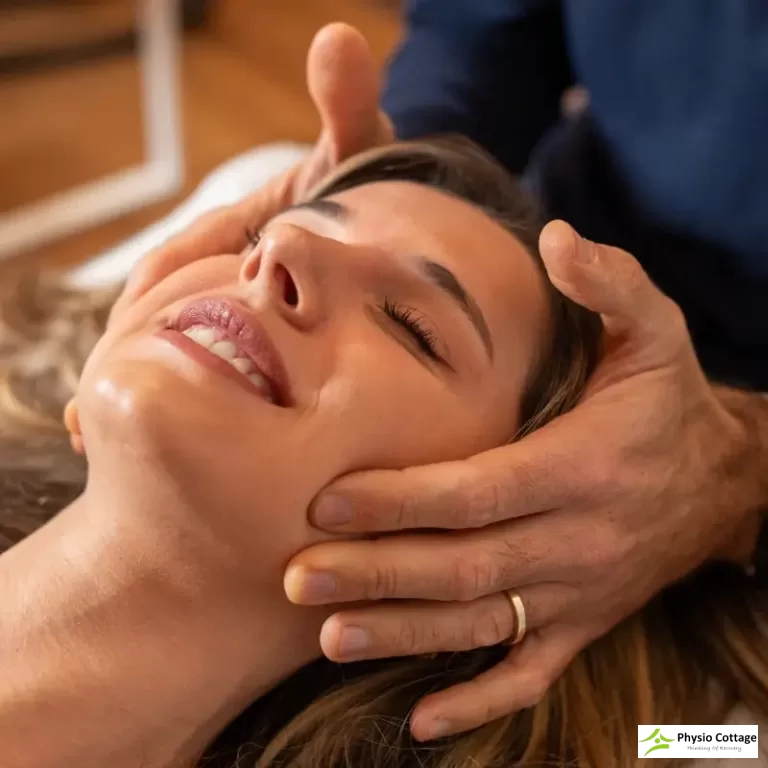
- The treatment: you lie on your back on a treatment table, fully clothed, in a quiet room. The practitioner places their hands lightly on different areas and holds them still for periods of time. You may feel warmth, gentle pulsing, a sense of heaviness or simply deep relaxation. Many people drift toward sleep.
- Length: sessions are typically 45 to 60 minutes.
- Afterwards: take a few minutes before getting up, drink water and allow a quiet evening if you can. Mild tiredness or emotional release for a day is not unusual.
- Course: some patients book a single session when they need it; others find a short series of three to six sessions more helpful. We review honestly after the first two whether it is worth continuing.
Our commitments
- We never claim craniosacral therapy cures or treats disease, and we will not recommend it instead of medical care you need.
- If your symptoms suggest a condition that needs assessment, such as a new or severe headache, neurological signs or a recent head injury, we say so and refer you first.
- It is offered alongside, not instead of, the evidence based physiotherapy, chiropractic and massage therapy services in the clinic.
- If after a couple of sessions you are not noticing benefit, we tell you and suggest something else.
Compared with other care
How craniosacral therapy fits with the rest of our clinic
With physiotherapy
Physiotherapy treats the mechanical problem: a stiff neck, a weak core, an injured shoulder. Craniosacral therapy can calm the tension and stress around it. For most pain conditions, physiotherapy comes first. Physiotherapy.
With massage therapy
Massage works on muscle through pressure and movement; craniosacral therapy is far lighter and slower. Patients who find massage too intense often prefer this. Massage therapy.
With chiropractic care
Chiropractic care restores joint movement; craniosacral therapy does not adjust joints. Some patients combine both. Chiropractic care.
With acupuncture
Both are calming, nervous system oriented treatments. Acupuncture has a larger evidence base for pain; craniosacral therapy suits people who prefer no needles. Acupuncture.
With medical care
We coordinate with your doctor, especially for headache, concussion, mood and sleep concerns, and we never ask you to stop medical treatment.
On its own
For stress, tension and sleep, many patients simply book a session when they need one. That is a reasonable use of a gentle, low risk treatment.
Practical questions
Questions about craniosacral therapy in Scarborough
Is craniosacral therapy covered by insurance?
Coverage depends on who provides it and how your plan is written. When provided by a registered massage therapist it is usually billed under massage therapy. Ask when booking and we will tell you how it would be billed for you.
Does it hurt?
No. The pressure is extremely light. Most people find it relaxing, and some fall asleep.
Is it safe?
For most people, yes, because the touch is so gentle. It is avoided or modified after recent head injury, with certain neurological conditions, bleeding disorders or acute illness. We screen for these before treatment.
Is there scientific evidence that it works?
The research is limited and mixed. Some studies suggest benefit for chronic pain, headache and stress related symptoms; others find little difference from relaxation. We describe it honestly as a gentle, calming treatment that many patients find helpful, not as a proven cure.
How many sessions will I need?
Some people feel a benefit after one. For ongoing tension or headaches, three to six sessions is a reasonable trial, and we review together whether it is helping.
Can children have it?
We assess case by case and refer to a practitioner with paediatric focus where appropriate. Call to discuss.
What should I wear?
Comfortable clothing. You remain fully dressed.
Where are you located?
2231 Victoria Park Ave, Unit #5, Scarborough, ON M1R 1V8, with on-site parking and bus stops on Victoria Park and Lawrence Ave E. Open Monday to Friday 10am to 8pm and Saturday 9am to 5pm. Call (416) 445-5353.
Book a session
A gentle, calming treatment in a quiet room.
Book craniosacral therapy at Victoria Park and Ellesmere, on its own or alongside the other services in the clinic.
- Light touch, fully clothed, 45 to 60 minute sessions
- Honest about what it can and cannot do
- 2231 Victoria Park Ave, Unit #5, Scarborough, ON M1R 1V8
- Monday to Friday 10am to 8pm, Saturday 9am to 5pm
- On-site parking, minutes from the 401 and DVP
A typical course
What craniosacral therapy looks like in practice
Here is a typical example of the kind of case we see, with details changed. A woman in her forties from Parkwoods, a manager with a demanding job and two teenagers, has had tension headaches three or four times a week for a year, a clenched jaw in the mornings and poor sleep. Her doctor has ruled out anything serious and suggested managing stress. She has tried massage, which she found too intense, and she does not want needles. Her first visit with us is a conversation: her history, her headaches, what makes them better and worse, and what she hopes for. We screen for anything that would change the approach, explain honestly what craniosacral therapy is and what the evidence does and does not show, and describe what the session involves. She lies on the table fully clothed, and the practitioner works with very light contact at the sacrum, the spine, the base of the skull and the jaw over forty five minutes. She falls asleep halfway through. She leaves calm, a little tired, and sleeps better that night. Over four weekly sessions the headaches reduce to one or two a week and the morning jaw tension eases; we add a referral to our physiotherapist for neck strengthening and a simple jaw routine, and advice on screen breaks. She continues with a session every month or so during busy periods, which she describes as the only hour in her week that is fully hers. We make no claim that craniosacral therapy cured her headaches; the combination of calm, neck treatment and better sleep did the work, and that is how we present it.
Glossary: terms you may hear
Sacrum
The triangular bone at the base of the spine, between the hip bones. One of the main areas of contact in a session.
Cranial bones
The bones of the skull, where the practitioner uses light contact around the back of the head and the temples.
Dura
The tough membrane surrounding the brain and spinal cord. Craniosacral theory focuses on tension in this system.
Still point
A moment of deep stillness and relaxation that practitioners aim for during a session.
Release
A softening or letting go that the practitioner feels and the patient often experiences as warmth or heaviness.
Light touch
Pressure of roughly five grams, about the weight of a coin. The defining feature of the technique.
Before you book
Questions to ask before you book craniosacral therapy
Craniosacral therapy is a gentle, hands on treatment, and the person delivering it matters more than the name of the technique. A good clinic will welcome your questions and answer them plainly. These are the questions we suggest every patient asks, whether they book with us or anywhere else in Scarborough.
Who will treat me, and what is their training?
Ask which registered professional will deliver the session, what their regulated profession is, and where they trained in craniosacral techniques. At Physio Cottage we will tell you who you are booked with and what their background is before your first visit, so there are no surprises on the day.
What does the evidence say?
An honest practitioner will tell you that the research on craniosacral therapy is mixed. Many patients find it calming and helpful for tension, sleep and stress related pain, while the theory behind it is still debated. We explain both sides and let you decide whether it suits you.
How will we know if it is helping?
Before treatment starts, agree on what you will track: headache days per week, morning jaw tension, sleep quality or pain scores. We review those markers after three or four sessions, and if nothing is changing, we say so and suggest a different approach.
Will it be combined with anything else?
Craniosacral therapy works best as one part of a plan. Ask whether neck strengthening, posture work, breathing practice or massage will be added. Most of our patients receive a mix that reflects their goals rather than a single technique on repeat.
Is there anything that rules me out?
Recent head injury, a known bleed or aneurysm, raised pressure inside the skull and some neurological conditions mean the treatment is not appropriate, or needs a doctor to agree first. We ask about these at your first visit and will refer you if anything concerns us.
Can I check my insurance first?
Yes. Coverage depends on who delivers the treatment and on your plan. Call us at (416) 445-5353 before your visit and we will tell you how the session will be billed, so you can confirm with your insurer.
Costs and billing
How craniosacral therapy is billed and how to check your coverage
Craniosacral therapy is not a separate regulated profession in Ontario. It is a technique delivered by a regulated professional, most often a registered massage therapist or a physiotherapist. That matters for billing, because extended health plans pay for the professional, not the technique. When craniosacral work is delivered within a massage therapy appointment, it is usually billed as massage therapy. When it is part of a physiotherapy treatment plan, it is billed as physiotherapy.
Before your first session, we suggest you check four things with your plan. First, whether massage therapy or physiotherapy is covered, and the annual maximum for each. Second, whether your plan needs a doctor note for massage therapy, which some group plans still ask for. Third, how much of each visit the plan reimburses, since many plans pay a percentage rather than the full fee. Fourth, whether your spouse has a second plan that can coordinate benefits with yours.
Our front desk can explain how your visit will be receipted and whether we can submit the claim for you. Receipts always show the name and registration number of the professional who treated you, which is what your insurer will ask for. If you are paying privately, ask us about appointment lengths so you can choose a session that fits your budget and your goals. We do not sell packages you have to commit to before you know whether the treatment suits you.
Getting ready
How to prepare for your first craniosacral session
Wear comfortable clothing
You stay fully clothed for craniosacral therapy. Soft, loose clothing without a belt or heavy jewellery makes it easier to lie still and relax for the whole session. Remove hair clips that sit at the back of the head.
Bring your history
A list of medications, any imaging reports, and notes from your doctor help us screen safely. If you track headaches, sleep or pain, bring that record too. It gives us a starting point to measure change against.
Arrive a few minutes early
Rushing in from the 401 or a tight parking spot is not the best way to start a calming treatment. Arriving ten minutes early gives you time to complete forms and settle. We have parking at the clinic.
Plan a quiet hour afterwards
Many patients feel deeply relaxed or a little tired after treatment. If you can, avoid a hard workout or a stressful meeting straight after your first session, and drink some water.
After treatment
What patients notice in the days after a session
Responses vary from person to person. The most common report is a sense of calm and heaviness during and straight after the session, followed by better sleep that night. Some people notice their jaw sits more loosely, or that a familiar band of tension around the head has softened. A smaller number feel a little sore, emotional or tired for a day, which usually settles on its own. If symptoms feel worse or new symptoms appear, call us so we can review your plan.
Between sessions, the habits you build matter as much as the treatment. Short breaks from screens, a gentle neck mobility routine, slow breathing before bed and paying attention to clenching during the day all support the changes you feel on the table. Your practitioner will give you two or three simple things to try at home, not a long list you will never manage.
Seek urgent medical care, not craniosacral therapy, for a sudden severe headache, headache after a head injury, headache with fever and a stiff neck, new weakness, confusion, loss of vision or difficulty speaking.
Keep reading
Related guides from our Scarborough clinic
Can massage therapy help with tension headaches?
How hands on treatment eases muscle tension in the neck and shoulders that can feed recurring headaches.
TMJ physiotherapy for jaw pain
What jaw assessment and treatment involves when clenching, clicking or jaw pain is part of the picture.
How long is a typical massage session?
Appointment lengths explained, so you can choose the right session for your goals and your plan.
Massage therapy
Our registered massage therapy service, often combined with craniosacral techniques.
Physiotherapy
Assessment and exercise based care for neck, back and jaw problems that sit alongside tension and stress.
More answers
More questions about craniosacral therapy
How many craniosacral sessions will I need?
Most patients try three or four weekly sessions, then review progress with their practitioner. Some continue monthly during stressful periods; others move on to exercise based care. There is no fixed number, and we will not ask you to commit to a long course up front.
Is craniosacral therapy safe for children and older adults?
The touch is very light, which is why it is often chosen for people who cannot tolerate firmer treatment. We still screen every patient carefully, and for children we involve a parent or guardian in every decision and every session.
Can I have craniosacral therapy during pregnancy?
Many pregnant patients find it comfortable, using side lying positions later in pregnancy. Tell us you are pregnant when you book, and let your midwife or doctor know you are having treatment.
Will I feel anything during the session?
Most people feel warmth, gentle pressure and a sense of relaxation. Some feel very little and simply fall asleep. Nothing should hurt. If anything feels uncomfortable, tell your practitioner and they will adjust straight away.
Do I need a referral?
No referral is needed to book at Physio Cottage. Some insurance plans ask for a doctor note to reimburse massage therapy, so check your plan wording first.
Where is the clinic and when are you open?
Physio Cottage is at 2231 Victoria Park Ave, Unit #5, Scarborough, ON M1R 1V8. We are open Monday to Friday 10am to 8pm and Saturday 9am to 5pm. Call (416) 445-5353 to book.
Ask us whether craniosacral therapy suits you
Call our Scarborough clinic and speak with someone who can explain the treatment, the billing and the first session before you book.
Still wondering
A few more answers before your visit
Is craniosacral therapy the same as massage?
No. Massage uses firmer strokes and kneading on muscles, while craniosacral therapy uses very light, still contact, mostly around the head, spine and pelvis. Some patients enjoy both, and a registered massage therapist may blend them in one session if it suits your goals.
Can craniosacral therapy help with stress and sleep?
Many patients describe it as one of the most relaxing treatments they have had, and some report sleeping better afterwards. We present that as a common experience rather than a promise, and we pair it with practical sleep and stress habits.
Can I combine it with physiotherapy?
Yes. For neck pain, jaw tension and headaches, gentle craniosacral work often sits alongside physiotherapy exercises in the same plan.
Every first visit starts with a conversation about your history and your goals, and you can ask any question before treatment begins. If craniosacral therapy is not the right fit for you, we will say so and suggest what may help instead.
Physio Cottage, 2231 Victoria Park Ave, Unit #5, Scarborough, ON M1R 1V8. Call (416) 445-5353.
From the blog
Guides about craniosacral therapy from Physio Cottage
Your wellness matters to us
Book a craniosacral therapy session online or call the clinic. We are at 2231 Victoria Park Ave, Unit #5, Scarborough, ON M1R 1V8, open Monday to Friday 10am to 8pm and Saturday 9am to 5pm.
- Gentle, hands-on treatment
- Can be combined with physiotherapy or massage
- Direct billing where your plan allows
- Easy parking at Victoria Park and Ellesmere