
Products
Orthopedic braces in Scarborough
Reviewed by Maryam Ahankoob, Registered Physiotherapist and clinic lead. Updated October 2026.
If joint or muscle pain is holding you back, Physio Cottage supplies orthopedic braces that support weak or injured joints and muscles while they recover. Braces for the knee, ankle, wrist, elbow, shoulder and back are chosen and fitted at the clinic by our physiotherapists and trained staff, usually alongside a treatment plan.
Fees and pricing
Orthopedic brace pricing
Orthopedic brace prices depend on the joint, the type of support and whether the brace is off the shelf or custom fitted. Your practitioner recommends a brace after assessing your injury, and you get the price before anything is ordered. Many extended health plans cover braces with a prescription, so call (416) 445-5353 and we will help you check your coverage.
Orthopedic braces
Personal quote
Given after your assessment
- Brace matched to your injury
- Price confirmed before you order
- Help checking your coverage
All prices in Canadian dollars. Your fee is confirmed when you book.
How they help
What orthopedic braces do
Orthopedic braces provide external support to a joint or muscle group. Depending on the design they limit movement in one direction, stabilize a joint, offload a painful area or remind you to move in a safer way. Used correctly they can reduce pain and discomfort, support range of motion and help protect a joint from further strain while it heals.
A brace is rarely the whole answer. At Physio Cottage it is usually paired with physiotherapy so that strength and control return and the brace can be reduced or retired when it has done its job.
What we supply
Braces for most joints
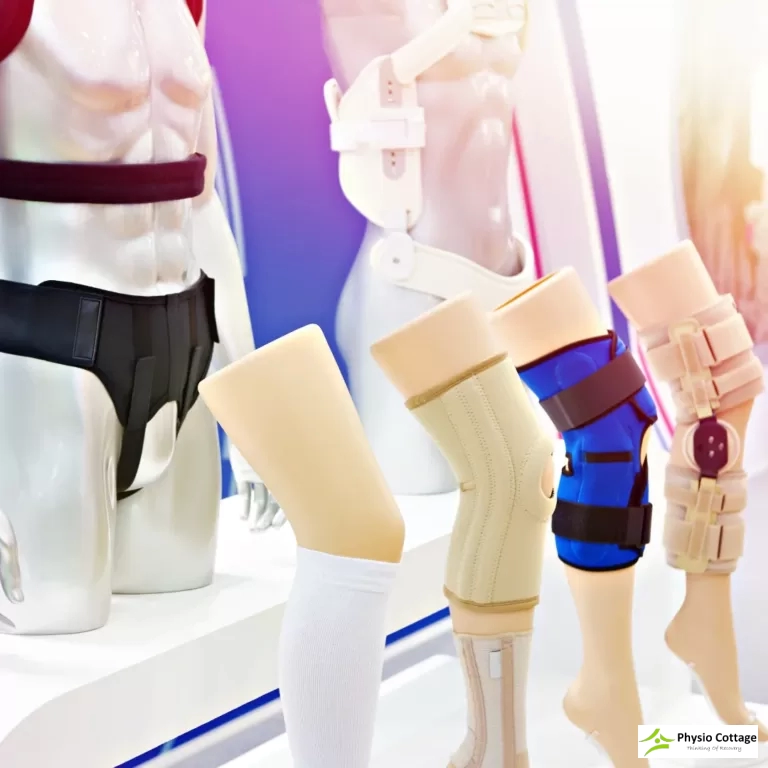
The clinic offers braces for knees, ankles, elbows, wrists, shoulders and the back, in sizes and designs to suit different injuries and conditions. Our trained staff help you find the right brace for your needs and fit it for comfort and function.
- Easing pain and discomfort in joints and muscles
- Supporting weak or injured joints and muscles
- Supporting range of motion during recovery
- Helping protect against further injury
- Supporting recovery after surgery
Why fit here
Bracing at Physio Cottage
Wide range of braces
Knee, ankle, wrist, elbow, shoulder and back braces, matched to your injury and your activity.
Assessment and fitting
A physiotherapist assesses the joint first. Trained staff measure and fit the brace, show you how to wear it and adjust it where needed.
Quality products
Braces from established orthopedic suppliers, built for durability, stability and day-to-day wear.
Insurance paperwork
Many extended health plans cover orthopedic braces with a prescription. We provide the paperwork and offer direct billing where your plan allows it.
Treatment in the same clinic
Physiotherapy, chiropractic care, massage therapy and acupuncture are available alongside bracing.
Follow-up
We check the fit as swelling changes and advise when to reduce brace use as strength returns.
How bracing fits
When a brace helps, and when it holds you back
A brace is a tool with a job: to protect a healing tissue, stabilize an unstable joint, offload a painful area or support a joint during a specific activity. Used for the right reason and for the right length of time, bracing lets people keep moving, working and playing while the underlying problem is treated. Used without a plan, it can weaken the muscles that should be doing the job and become a crutch that is hard to give up. That is why at Physio Cottage braces are fitted within a physiotherapy or chiropractic plan, with a clear purpose and a plan for when and how to reduce their use.
We fit a range of off the shelf and custom fitted braces for the knee, ankle, wrist, elbow, shoulder and back, and we are honest about which you need. Sometimes the answer is a simple sleeve from a pharmacy; sometimes it is a custom knee brace that your insurance will cover; often it is no brace at all and a strengthening program instead.
Protect
After a ligament sprain, a fracture that has come out of a cast or a surgical repair, a brace limits the movements that would stress the healing tissue while allowing the rest.
Stabilize
For joints that give way, such as an ankle that keeps rolling or a knee with a ligament deficiency, a brace provides the stability the ligaments cannot while strength and balance training rebuild control.
Offload
Unloader knee braces shift weight away from a worn side of the knee in osteoarthritis; wrist and elbow braces reduce strain on irritated tendons during work and sport.
What we fit
Braces and supports available at our Scarborough clinic
Knee braces
From compression sleeves for mild pain and swelling to hinged ligament braces after ACL or MCL injury and unloader braces for osteoarthritis. Custom knee braces are measured and ordered through the clinic.
Ankle braces
Lace up and strap braces for the return to sport after a sprain, and supports for chronic instability. Fitted to your shoe and your sport.
Wrist and thumb supports
For carpal tunnel symptoms, wrist sprains, tendon irritation and thumb arthritis. Night splints for carpal tunnel are a common, effective prescription.
Elbow straps and sleeves
Counterforce straps for tennis and golfer’s elbow that reduce strain on the tendon during work and play while the loading program rebuilds it.
Shoulder supports
Slings and immobilizers after injury or surgery, and posture supports used short term while strengthening takes over.
Back supports
Lumbar supports for acute flares and for heavy lifting periods at work, with a clear plan to wean off as core strength returns, and sacroiliac belts for pregnancy related pelvic pain.
Walking boots and post operative braces
Fitted and adjusted according to your surgeon’s or doctor’s instructions, with rehabilitation planned around the protocol.
Sports and work specific supports
Patella straps, hip and groin compression, and supports chosen for the demands of your sport or job.
Related: compression and orthotics
When circulation or foot mechanics are part of the picture, we also fit compression stockings and prescribe custom orthotics.
Conditions
Problems we commonly manage with bracing
- Knee osteoarthritis: an unloader brace can reduce pain with walking and stairs and delay the need for surgery, alongside strengthening and weight management advice.
- ACL and MCL injuries: hinged bracing during rehabilitation and the return to sport, whether or not surgery is planned.
- Recurrent ankle sprains: a brace during sport while balance and strength training reduce the risk of the next one.
- Carpal tunnel syndrome: a night splint that holds the wrist neutral often reduces night time numbness within weeks.
- Tennis and golfer’s elbow: a counterforce strap for work and play alongside the tendon loading program.
- Acute low back pain in physical jobs: short term lumbar support to get through the working day while treatment settles the flare.
- Pregnancy related pelvic pain: a sacroiliac belt with pelvic floor and hip exercise.
- Post fracture and post surgical care: braces fitted to the protocol, with rehabilitation planned from day one.
Our rules for bracing
- Every brace has a purpose written in your plan and a point at which we review whether you still need it.
- A brace is never a substitute for strengthening. The exercise program runs alongside it from the start.
- Fit is checked in the clinic: too loose does nothing, too tight restricts circulation.
- We explain how to put it on, when to wear it and when not to, and how to care for it.
- If a pharmacy product will do the job, we say so.
Step by step
How brace fitting works at Physio Cottage
1. Assessment
A physiotherapy or chiropractic assessment of the injury or condition, your activities and your goals. If you have a prescription or surgical instructions, bring them.
2. Recommendation
We explain whether a brace will help, which type, and what else the plan includes. For insurance claims we provide the documentation your plan requires, which usually includes a physician’s prescription for custom braces.
3. Measuring and ordering
Off the shelf braces are fitted from stock or ordered in your size. Custom knee braces are measured in the clinic and manufactured to your measurements, typically within two to three weeks.
4. Fitting and instruction
We fit the brace, check alignment and comfort, and show you how to put it on, adjust it and look after it.
5. Rehabilitation alongside
Your exercise program begins at once. The brace supports the joint while the muscles are trained to do the job themselves.
6. Review and weaning
At follow up we check fit and function and decide together when to reduce use, keep it for sport only, or retire it.
Practical questions
Questions about orthopedic braces in Scarborough
Are braces covered by insurance?
Many extended health plans cover braces, with custom knee braces usually requiring a physician’s prescription and specific documentation. Off the shelf braces may be covered under medical supplies. Check your plan and bring the details; we provide what insurers ask for. WSIB and auto insurers cover braces that are part of an approved treatment plan.
Will wearing a brace make my muscles weak?
Only if it replaces exercise. Worn for the right reasons alongside a strengthening program, a brace protects the joint while the muscles get stronger. That is how we use them.
Should I wear it all the time?
It depends on the purpose. Protective braces after injury are often worn most of the day at first; sport and work braces are worn for the activity only; night splints for carpal tunnel are worn in bed. Your plan spells it out.
How do I know if the fit is right?
Snug but not tight, no numbness or tingling, no slipping during activity and no skin irritation after a day of wear. If any of those happen, come back for an adjustment.
Can I buy a brace without an assessment?
You can buy supports in many places, but a brace for the wrong problem can delay recovery. A short assessment tells you whether you need one and which one.
Do you fit braces after surgery?
Yes, according to your surgeon’s instructions, and we plan rehabilitation around the surgical protocol.
How long does a custom knee brace last?
Several years with normal use. Straps and pads wear first and can be replaced.
Where are you located?
2231 Victoria Park Ave, Unit #5, Scarborough, ON M1R 1V8, with on-site parking and bus stops on Victoria Park and Lawrence Ave E. Open Monday to Friday 10am to 8pm and Saturday 9am to 5pm. Call (416) 445-5353.
Book a fitting
Support that fits your injury and your plan.
Start with an assessment at Victoria Park and Ellesmere. We fit what you need and nothing you do not.
- Fitted within a physiotherapy or chiropractic plan
- Insurance documentation provided
- 2231 Victoria Park Ave, Unit #5, Scarborough, ON M1R 1V8
- Monday to Friday 10am to 8pm, Saturday 9am to 5pm
- On-site parking, minutes from the 401 and DVP
A typical course
What a bracing case looks like in practice
Here is a typical example of the kind of case we see every week, with details changed. A man in his sixties from Agincourt has knee osteoarthritis on the inside of his right knee. Walking the dog has become a chore, stairs hurt, and his surgeon has told him a replacement is likely in a few years but not yet. He arrives asking for a brace his neighbour recommended. Our assessment confirms that his pain is concentrated on the inner side of the knee, that his thigh muscles are weak, and that his walking pattern loads the inner compartment. We recommend an unloader knee brace, which shifts weight toward the healthier outer side of the joint, and we are clear that it will only work alongside a strengthening program. His doctor writes the prescription his insurer requires, we measure him for a custom unloader brace, and it arrives in three weeks. Meanwhile he starts quad, hip and balance exercises and manual therapy for the stiff knee. At the fitting we adjust the hinge and show him how to put it on for walks and stairs. Within a month he is walking the dog for forty minutes with the brace and climbing stairs with far less pain. At the three month review his strength has improved enough that he uses the brace only for longer walks. The replacement may still come one day; for now he has his routine back, which was the goal.
Glossary: terms you will hear at your fitting
Hinged brace
A brace with metal or carbon hinges at the joint that allow bending but block sideways movement, used after ligament injury.
Unloader brace
A knee brace that applies a gentle sideways force to shift weight away from the worn side of the joint in osteoarthritis.
Counterforce strap
A band worn below the elbow that changes where the forearm tendon pulls, reducing strain in tennis and golfer’s elbow.
Night splint
A splint worn during sleep to hold a joint in a neutral position, commonly for carpal tunnel syndrome and plantar fasciitis.
Sacroiliac belt
A firm belt worn around the pelvis to stabilize the sacroiliac joints, often used for pregnancy related pelvic pain.
Weaning
The planned reduction in brace use as strength and stability return, so the muscles take over the job.
Before you book
Questions to ask before you buy an orthopedic brace
A brace is a medical device, and the wrong one can do as little good as no brace at all. Pharmacies and websites sell hundreds of supports with confident labels, but the label cannot see your knee, your ankle or your back. Before you spend money on a brace, in Scarborough or anywhere else, these are the questions worth asking.
Has anyone assessed the problem?
A brace should follow a diagnosis, not replace one. A sore knee could come from a ligament, the kneecap, the meniscus or arthritis, and each needs a different kind of support. At Physio Cottage a physiotherapist assesses the joint first, then recommends whether a brace is needed at all.
What is the brace supposed to do?
Ask for a plain answer: limit a movement, unload part of a joint, hold the kneecap in its groove, protect a healing ligament or simply remind you to move carefully. If nobody can explain the purpose, you cannot judge whether it is working.
Off the shelf or custom?
Many problems are well managed with a good quality prefabricated brace fitted properly. Custom braces are made for specific cases, such as some ligament injuries or significant arthritis on one side of the knee. Ask why one option is recommended over the other.
How long should I wear it, and when?
Some braces are worn all day for a few weeks, some only for sport, and some only at night. Wearing a brace longer than needed can weaken the muscles that should be doing the work. You should leave with a clear wearing schedule.
Who checks the fit later?
Swelling goes down, muscles change and straps stretch. A brace that fitted well in week one may slip or rub by week four. Ask whether follow up fitting checks are included and who to call if something feels wrong.
What paperwork will my insurer want?
Many extended health plans reimburse braces but ask for specific documents. Find out before you buy, not after, so your claim is not delayed. Our team can tell you what we provide with each brace.
Costs and billing
How orthopedic braces are billed and how to check your coverage
Extended health plans in Ontario often cover orthopedic braces under a medical supplies or medical devices benefit. Each plan sets its own rules, and the details matter. Some plans cover braces only when a physician has written a prescription. Some cover one brace per body part in a set period. Some reimburse a percentage of the cost up to an annual maximum, and some exclude braces used only for sport.
Before your fitting, we suggest calling your insurer or checking your plan booklet for four things. First, whether braces are covered and under which benefit. Second, whether you need a prescription from a doctor, and whether a physiotherapist assessment report helps. Third, the annual or lifetime maximum for medical devices. Fourth, whether custom braces and prefabricated braces are treated differently.
If your brace is part of a workplace injury or motor vehicle accident claim, the approval process is different, and the brace may need to be approved before it is dispensed. Tell us about any open claim when you book. Our front desk will explain what your receipt and documentation will show, and we will never pressure you into a more expensive brace than your problem needs. Call (416) 445-5353 to check before your visit.
Living with a brace
How to wear and care for your brace
Put it on the same way every time
Your physiotherapist will show you how the brace lines up with landmarks on your joint, such as the centre of the kneecap or the ankle bones. Lining it up the same way each time keeps the support where it is meant to be. If it twists or slides, take it off and start again rather than tightening the straps harder.
Check your skin every day
Look for red marks that do not fade within half an hour, blisters, numbness or tingling. A thin sleeve or sock under the brace can reduce rubbing. Skin problems are a sign the fit needs adjusting, not something to put up with.
Keep it clean
Sweat and skin oils break down padding and straps. Most fabric braces can be hand washed in cool water with mild soap and left to air dry away from heaters. Never put a brace with metal hinges or rigid shells through a dryer.
Keep doing your exercises
A brace supports a joint while the muscles around it get stronger. If you wear the brace and skip the exercises, the joint is no stronger when the brace comes off. Your home programme matters as much as the device itself.
Weaning off
When and how to stop wearing a brace
For most injuries, a brace is a bridge, not a destination. As pain settles and strength returns, your physiotherapist will reduce how often you wear it, usually starting with everyday activities at home and keeping it for higher demand tasks such as stairs, long walks or sport. We test balance, strength and control at each stage before suggesting the next step, so you are not left guessing.
Some people do benefit from long term bracing, for example with some types of knee arthritis, chronic ankle instability during sport, or after certain surgeries. In those cases we review the brace each year to make sure it still fits and still does its job. Either way, the goal is the same: the least support you need to stay active and comfortable.
See a doctor promptly rather than reaching for a brace if a joint looks deformed after an injury, you cannot bear weight, the area is hot, red and swollen without an obvious cause, or you have numbness or colour change in the foot or hand.
Keep reading
Related guides from our Scarborough clinic
Ankle sprain physiotherapy
How sprains are graded and treated, and where a brace fits into getting back to walking and sport.
When to start physio after an ankle sprain
Why early, guided movement usually beats long rest in a brace.
Physiotherapy for knee pain
Common causes of knee pain and the exercise based care that usually comes before, or alongside, bracing.
Sport injury treatment
Assessment, rehab and return to sport planning for active people across Scarborough.
Custom orthotics
When foot support inside the shoe helps knee, ankle and heel problems.
More answers
More questions about orthopedic braces
Can I sleep in my brace?
Only if your physiotherapist or surgeon has told you to. Some braces are designed for night use, such as some wrist splints, while most knee and ankle braces are meant for daytime activity. Sleeping in the wrong brace can cause pressure marks and stiffness.
Will a brace make my muscles weaker?
It can if you rely on it without exercising. Used for the right length of time alongside a strengthening programme, a brace protects the joint while your muscles recover rather than replacing them.
Can I wear my brace for sport?
Many braces are made for sport, but not all are allowed in every league or comfortable under every uniform. Tell us your sport and position so we can recommend a brace that fits the demands and the rules.
What if my brace from a store does not fit well?
Bring it to your appointment. Sometimes a few adjustments to strap position or sizing solve the problem. If it is the wrong type of brace for your condition, we will explain why and what would work better.
Do I need a referral?
You do not need a referral to be assessed at Physio Cottage. Some insurance plans need a prescription from a physician to reimburse a brace, so check your plan before you buy.
Where is the clinic and when are you open?
Physio Cottage is at 2231 Victoria Park Ave, Unit #5, Scarborough, ON M1R 1V8. We are open Monday to Friday 10am to 8pm and Saturday 9am to 5pm. Call (416) 445-5353 to book a brace assessment.
Get the right brace, fitted properly
Book an assessment with a physiotherapist at our Scarborough clinic and leave with a clear plan for your brace and your recovery.
Still wondering
A few more answers before your visit
How long will I need to wear a brace after an injury?
It depends on the injury and how it heals. Many people wear a brace for a few weeks and then reduce use as strength returns. Your physiotherapist will set the schedule and review it at each visit.
Can a brace help with arthritis?
Some knee braces are designed to unload the more worn side of the joint and can ease pain during walking. They work best with strengthening and weight management, not instead of them.
Physio Cottage, 2231 Victoria Park Ave, Unit #5, Scarborough, ON M1R 1V8. Call (416) 445-5353.
From the blog
Guides about orthopedic braces from Physio Cottage
- When to Start Physio After Ankle Sprain?
- Physiotherapy for Knee Pain: Causes and Treatment Options
- How long does it take for tennis elbow to heal with physiotherapy?
- Knee Pain When Walking? 7 Hidden Causes You Should Know
Related services at the clinic: custom orthotics, sport injuries and physiotherapy.
Your wellness matters to us
Book a brace fitting online or call the clinic. We are at 2231 Victoria Park Ave, Unit #5, Scarborough, ON M1R 1V8, open Monday to Friday 10am to 8pm and Saturday 9am to 5pm.
- Assessment before every brace
- Measured and fitted in the clinic
- Direct billing where your plan allows
- Easy parking at Victoria Park and Ellesmere