
Products
Custom orthotics in Scarborough
Reviewed by Maryam Ahankoob, Registered Physiotherapist and clinic lead. Updated October 2026.
Physio Cottage assesses, casts and fits custom made orthotics for heel pain, flat feet, high arches, knee pain and tired feet after long days on your feet. A physiotherapist examines how you stand and walk before anything is made, so the orthotic corrects what is actually going on. We are at Victoria Park and Ellesmere in Scarborough.
Fees and pricing
Custom orthotics pricing
Custom orthotics are priced per pair after your foot assessment, because the right device depends on your feet, your footwear and what you need it to do. Many extended health plans cover custom orthotics, often with a prescription and an assessment, so call (416) 445-5353 and we will give you the price and help you check your coverage before you order.
Custom orthotics
Personal quote
Given after your foot assessment
- Foot and gait assessment
- Price confirmed before you order
- Help checking your coverage
All prices in Canadian dollars. Your fee is confirmed when you book.
Custom orthotics
Made for your feet, fitted at the clinic
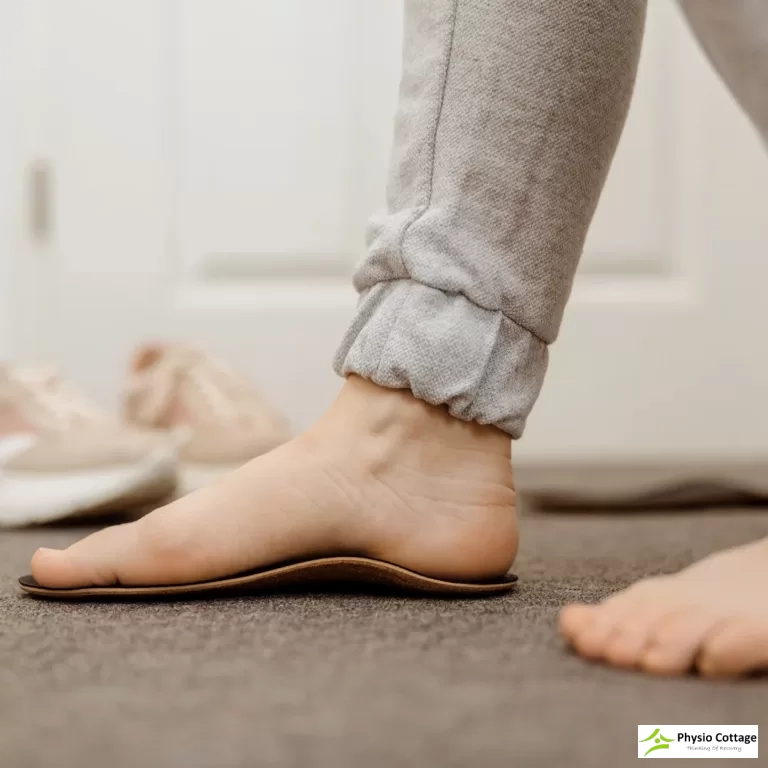
Custom orthotics are inserts made from a cast or scan of your own feet, shaped to support your arches, control how your foot rolls and spread pressure across the sole. They sit inside your everyday shoes, work boots or runners and are built to the measurements and the prescription from your assessment.
At Physio Cottage the orthotic is one part of a plan. Your physiotherapist checks your footwear, your walking pattern and the joints above the foot, and pairs the orthotic with exercise or hands-on treatment when that is what will make the difference.
What we provide
- Custom made orthotics cast or scanned at the clinic and manufactured to your prescription.
- Orthopedic footwear options chosen for comfort, support and the shape of your orthotic.
- Gait analysis that looks at how you stand, walk and run to find the imbalances behind your pain.
- Fitting and follow up to adjust the orthotic as your feet settle into it.
Why patients choose us
Custom orthotics at Physio Cottage
Assessed by a physiotherapist
A biomechanical exam, gait analysis and foot evaluation come before the cast, so the orthotic is designed for your feet and your symptoms.
Made to your cast or scan
Each pair is manufactured from your own impression and prescription, with materials chosen for comfort, support and daily wear.
Care beyond the insert
Orthotics are combined with physiotherapy, chiropractic care or an exercise program when needed, so the whole chain from foot to hip is addressed.
Insurance paperwork support
Many extended health plans cover custom orthotics. We provide the assessment notes and receipts your insurer asks for, with direct billing where your plan allows.
Fitting and follow up
You try the orthotics on at the clinic, we check the fit in your shoes and adjust them if your feet need time to adapt.
Easy to reach in Scarborough
The clinic is at Victoria Park and Ellesmere with easy parking, open Monday to Friday 10am to 8pm and Saturday 9am to 5pm.
How they work
What custom orthotics are, and what they are not
Custom orthotics are inserts made from a cast or scan of your feet, shaped to support your particular arch, redistribute pressure and guide how your foot moves through each step. They are prescribed for a reason found in an assessment, not sold as a cure all. The pharmacy insoles many people have tried are generic cushioning; they can help a sore foot feel better for a while, but they do not change mechanics. Custom orthotics do, which is why they can relieve pain in the heel, arch, knee, hip and even low back when foot mechanics are part of the cause.
At Physio Cottage, orthotics are prescribed after a physiotherapy assessment that looks at your whole lower limb, not just your feet. If your pain can be fixed with strengthening, footwear changes and treatment alone, we will tell you so. If orthotics will help, we explain exactly what they will do and pair them with the exercise program that addresses the rest of the problem.
Biomechanical assessment
We watch you stand, walk and, where relevant, run; assess arch height, ankle and big toe mobility, hip and knee alignment; and look at the wear on your current shoes.
Casting or scanning
Your feet are cast or scanned in a corrected position, with notes on the modifications needed for your condition and your footwear. The orthotics are manufactured to that prescription.
Fitting and follow up
Orthotics are checked in your shoes, adjusted if needed and worn in gradually over one to two weeks. A follow up visit confirms the fit and the effect on your symptoms.
Conditions
Problems custom orthotics are prescribed for at our Scarborough clinic
Plantar fasciitis and heel pain
The most common reason for an orthotics prescription. Supporting the arch and cushioning the heel reduces strain on the plantar fascia while the loading program and calf work rebuild its tolerance.
Flat feet and overpronation
Feet that roll inward excessively load the inside of the knee, the hip and the low back. Orthotics control the roll; strengthening the foot and hip reduces dependence on them over time.
High arches
Rigid high arches absorb shock poorly and overload the heel and the ball of the foot. Cushioned, contoured orthotics spread the load. How custom orthotics address high arches.
Knee pain and runner’s knee
When kneecap pain or inner knee strain is driven by foot mechanics, orthotics are one part of a plan that also strengthens the hips and quads.
Achilles tendinopathy and shin splints
Orthotics that reduce excessive foot motion can lower the strain on the Achilles and shin while the tendon loading program does its work. For heel or Achilles pain that has lasted months, shockwave therapy is another option.
Bunions, metatarsalgia and Morton’s neuroma
Pain under the ball of the foot and between the toes. Orthotics with a metatarsal support offload the painful area and slow the progression of a bunion when combined with footwear changes.
Diabetic and arthritic feet
Pressure relief and cushioning for feet that need protection, prescribed in coordination with your doctor and, where needed, a foot specialist.
Leg length difference
A true difference in leg length can contribute to back, hip and knee pain. A heel lift built into an orthotic is a simple, effective correction when the assessment confirms it.
Work boots and long standing days
Nurses, warehouse workers, trades and retail staff on their feet all day. Orthotics made for work footwear reduce foot, knee and back fatigue over a shift.
Honest advice
When you probably do not need orthotics
Orthotics are sometimes sold to people who do not need them. We do not do that. Reasons we would not recommend them, or would recommend something else first:
- Your foot pain is recent and has not had a proper course of treatment, footwear changes and strengthening. Many heel and arch problems resolve without inserts.
- Your feet are flat or high arched but you have no symptoms. Foot shape alone is not a reason to treat.
- Your pain comes from somewhere other than the foot, such as a back problem referring pain into the leg. We assess the whole chain to find out.
- A change of shoes would do the job. Worn out, unsupportive or ill fitting footwear causes a great deal of foot pain, and the fix is cheaper than orthotics.
- You want them for a child without symptoms. Children’s flat feet usually develop normally; we assess and advise rather than prescribe automatically.
When orthotics are the right call, we say so clearly, and we explain what to expect and how long they last.
Footwear matters as much as the insert
- Orthotics need a shoe with a removable insole, a firm heel counter and a stable sole. They do not work in flimsy flats or most dress shoes.
- Replace running shoes every 500 to 800 kilometres, or when the midsole feels dead, whichever comes first.
- Match the shoe to the task: work boots, runners, walking shoes and court shoes load the foot differently.
- Bring your most worn shoes to the assessment. The wear pattern tells us a great deal.
- Semi custom options exist for dress shoes and sandals when full orthotics will not fit; ask us.
Step by step
From assessment to orthotics in your shoes
1. Book an assessment
A physiotherapy assessment at Victoria Park and Ellesmere. Bring your usual shoes and any imaging or doctor’s notes. If orthotics are being claimed through insurance, check whether your plan requires a prescription from a physician and we will advise.
2. Assessment and decision
We examine your feet, ankles, knees and hips, watch you walk and discuss your symptoms and activities. If orthotics will help, we explain what kind and why; if not, we tell you what will.
3. Casting
Your feet are cast or scanned in the corrected position and the prescription is written with the modifications your condition needs: arch height, heel cup depth, posting, cushioning, metatarsal support or a heel lift.
4. Manufacture
The orthotics are made to your prescription by a laboratory. Turnaround is typically two to three weeks; we tell you the expected date when you order.
5. Fitting
We fit the orthotics in your shoes, check alignment and comfort and make any adjustments. You start with a few hours a day and build to full time over one to two weeks.
6. Follow up and exercise
A follow up visit checks the effect on your symptoms. Alongside the orthotics, your physiotherapist gives you the foot, calf and hip exercises that address the rest of the problem.
Practical questions
Questions about custom orthotics in Scarborough
Are custom orthotics covered by insurance?
Many extended health plans cover custom orthotics, often once every one or two years, and many require a prescription from a doctor plus a gait analysis and a receipt showing the casting method and the manufacturer. We know what insurers ask for and provide the documentation. Check your plan details and bring them to your visit.
How long do custom orthotics last?
Typically two to five years depending on the material, your weight, your activity and how much you wear them. The top cover wears first and can be replaced. We check them at your follow up visits.
Will they feel strange at first?
Usually, for a week or two. Wear them for a few hours a day and increase gradually. Pressure in a new spot that does not settle within two weeks means an adjustment is needed; come back and we will make it.
Do I have to wear them forever?
Not always. For some conditions orthotics are a long term support; for others they bridge a period while strengthening and footwear changes solve the underlying problem. We discuss which applies to you.
Can I move them between shoes?
Yes, between shoes of a similar style with removable insoles. Work boots, runners and dress shoes often need different orthotics or a second pair.
Are they suitable for children?
When a child has symptoms, yes, with orthotics replaced as the foot grows. We assess children carefully and prescribe only when there is a reason to.
What is the difference between custom and over the counter insoles?
Over the counter insoles are generic cushioning or arch support in standard shapes. Custom orthotics are made from a cast of your feet to a prescription for your condition. Some mild problems do well with a good over the counter insole, and we will tell you if that is the case.
Do you treat the pain as well as make the orthotics?
Yes. Orthotics are prescribed within a physiotherapy plan that treats the condition directly: manual therapy, loading programs, footwear advice and, where helpful, acupuncture or massage therapy in the same clinic.
Book an assessment
Foot, heel or knee pain? Find out whether orthotics will help.
Start with a physiotherapy assessment at Victoria Park and Ellesmere. If orthotics fit, we cast the same visit.
- Prescribed after assessment, never sold on their own
- Insurance documentation provided; direct billing for physiotherapy
- 2231 Victoria Park Ave, Unit #5, Scarborough, ON M1R 1V8
- Monday to Friday 10am to 8pm, Saturday 9am to 5pm
- On-site parking, minutes from the 401 and DVP
A typical course
What a custom orthotics case looks like in practice
Here is a typical example of the kind of case we see every week, with details changed. A woman in her fifties who works twelve hour shifts as a nurse at a Scarborough hospital has had heel pain for eight months. It is worst with the first steps out of bed and after a long shift. She has tried gel insoles, a night splint and stretching from the internet, with brief relief. At her assessment we find a tender plantar fascia at the heel, very flat arches that collapse when she stands on one leg, a stiff big toe and tight calves, along with hospital shoes whose soles have worn through on the inside edge. We explain that three things need to change: the load on the fascia, the mechanics of her foot and the shoes. She starts a calf and foot strengthening program and manual therapy for the calf and fascia that day, replaces the shoes with a supportive pair with a removable insole, and is cast for custom orthotics with a deep heel cup and a supportive arch. The orthotics arrive in two and a half weeks and are fitted in the new shoes; she builds up wear time over ten days. At the six week review, the morning pain has gone and she finishes shifts without limping. She keeps the orthotics for work, continues the calf routine twice a week and has a second pair made for her walking shoes the following year through her benefits. The orthotics were one part of the fix, not the whole of it, which is how we approach every case.
Glossary: terms you will hear at your fitting
Pronation and supination
Pronation is the inward roll of the foot as it lands; supination is the outward roll. Some of each is normal; too much of either overloads tissues up the chain.
Posting
A wedge built into the orthotic under the heel or forefoot to control how the foot rolls.
Heel cup
The raised rim around the heel of the orthotic that holds the heel pad in place and improves stability.
Metatarsal support
A raised pad behind the ball of the foot that spreads the metatarsal bones and offloads a painful forefoot or neuroma.
Shell and top cover
The shell is the firm supportive base made to your cast; the top cover is the cushioning layer that wears first and can be replaced.
Gait analysis
Watching and sometimes recording how you walk or run to see how your feet, knees and hips move together. Insurers often require it for a claim.
Before you book
Questions to ask before you get custom orthotics
Custom orthotics can be a real help for the right problem, and an expensive disappointment for the wrong one. Before you book an orthotics appointment anywhere in Scarborough, ask these questions. A clinic that is confident in its work will answer every one of them without hesitation.
Will someone assess more than my feet?
Foot, knee, hip and back pain often have causes that orthotics cannot fix, such as weak hip muscles or a stiff ankle. A proper assessment looks at how you stand, walk and move, and decides whether orthotics belong in the plan at all.
How is the mould or scan taken?
Ask how your foot shape will be captured and whether your foot is held in a supported position during casting. The method affects how well the finished device matches your foot.
What will the orthotic actually change?
You should hear a clear goal: support a collapsing arch, reduce pressure under the ball of the foot, cushion a sore heel or control rolling at the ankle. A vague promise of better alignment is not enough.
Is there a follow up?
Good orthotics are checked after you have worn them for a few weeks. Ask whether adjustments are included if something rubs or feels wrong.
Would an off the shelf insole do?
For some people a good prefabricated insole and better shoes are enough. An honest clinic will tell you if that is the case for you.
What does my insurer need?
Most plans have specific paperwork rules for orthotics. Knowing them before your appointment avoids a rejected claim.
Costs and billing
How custom orthotics are billed and how to check your coverage
Many extended health plans in Ontario include custom orthotics, but they tend to have more conditions attached than most benefits. Common requirements are a prescription from a physician, a biomechanical or gait assessment, proof that the orthotics were custom made from a cast or scan of your feet, and a limit such as one pair in a set number of years.
Before your appointment, check with your plan whether orthotics are covered, who can prescribe them, what assessment documents are needed, how often you can claim, and the maximum amount per claim. Some plans also ask for the lab invoice. Our team will tell you exactly what documents we provide with your orthotics so you can match them to your plan. Call (416) 445-5353 before booking if you want us to walk you through it.
Breaking them in
Your first weeks with new orthotics
Start with an hour or two
Wear your orthotics for one to two hours on the first day, then add an hour or so each day. Most people are wearing them all day within one to two weeks.
Expect some new sensations
Mild arch awareness or tired feet in the first week is common as your feet adjust. Sharp pain, blisters or new knee or hip pain are not normal and mean the orthotics need checking.
Use the right shoes
Orthotics work best in shoes with a firm heel counter, a removable insole and enough depth. Take out the original insole before putting the orthotic in so your foot is not raised too high.
Come back for your check
At your follow up we look at how you walk, how your shoes are wearing and how your symptoms have changed, then fine tune the fit if needed.
Footwear
Choosing shoes that work with your orthotics
An orthotic can only do its job inside a shoe that supports it. Look for shoes with a firm heel that does not collapse when you squeeze it, a sole that bends at the ball of the foot but not in the middle, laces or straps that hold the foot in place, and enough room at the toes. Running shoes, walking shoes and many work boots are good choices. Very soft fashion sneakers, ballet flats and high heels usually are not.
Many patients ask about winter boots, dress shoes and sandals. Slimmer orthotic designs can fit some dress shoes, and some winter boots have removable liners that leave enough room. Tell us about the shoes you wear most, including work boots and indoor shoes at home, so your orthotics are designed for your real week, not an ideal one.
Care and replacement
Looking after your orthotics
Wipe your orthotics with a damp cloth and mild soap, and let them air dry away from heaters and car dashboards, which can warp the shell. Take them out of your shoes overnight if your feet sweat a lot. The top cover usually wears out first and can often be replaced without remaking the whole device.
How long orthotics last depends on the materials, your weight and how much you walk, but many people find they need reassessment every two to three years. Changes in your feet, your weight, your activity or your pain are all good reasons to have them checked sooner.
Keep reading
Related services and guides
Acupuncture for plantar fasciitis
Another option for heel pain, often combined with orthotics and stretching.
Physiotherapy for knee pain
When knee pain starts at the foot, and when it does not.
How physiotherapy helps postural imbalances
Why posture and movement patterns matter as much as foot shape.
Compression stockings
Support for tired, swollen legs, often paired with orthotics for long shifts.
Orthopedic braces
Ankle and knee supports fitted after assessment.
More answers
More questions about custom orthotics
Can children wear custom orthotics?
Most flat feet in young children are normal and do not need orthotics. Children with pain, frequent tripping or a foot that looks very different from the other may benefit from an assessment first.
Can I move my orthotics between shoes?
Yes, as long as the shoes are a similar style and depth. Many people keep one pair for work shoes and move them to sneakers on weekends.
Will orthotics fix my bunion?
Orthotics cannot straighten a bunion, but they can reduce pressure and pain around it, especially with wider shoes.
Do I need a referral?
No referral is needed for an assessment at Physio Cottage. Many insurance plans need a doctor prescription to reimburse custom orthotics.
Where is the clinic and when are you open?
Physio Cottage is at 2231 Victoria Park Ave, Unit #5, Scarborough, ON M1R 1V8. We are open Monday to Friday 10am to 8pm and Saturday 9am to 5pm. Call (416) 445-5353.
Find out whether orthotics will help you
Book an assessment at our Scarborough clinic. Bring the shoes you wear most and we will look at the whole picture, not just your arches.
Still wondering
A few more answers before your visit
How long does it take to get my orthotics?
After your assessment and casting, custom orthotics are made in a lab and usually take a couple of weeks. We call you when they are ready and book a fitting so we can check them on your feet and in your shoes.
Can orthotics help with back pain?
Sometimes, when the way your feet move affects your knees, hips and lower back. Often back pain has other causes, which is why we assess the whole chain before recommending orthotics.
Do I need orthotics for every pair of shoes?
Not usually. Most people wear them in the shoes they spend the most time in, such as work shoes and walking shoes.
Every orthotics visit starts with a conversation about your pain, your work and the shoes you wear, and you can ask any question before casting. If orthotics are not the right answer for your feet, we will say so and suggest what may help instead.
Physio Cottage, 2231 Victoria Park Ave, Unit #5, Scarborough, ON M1R 1V8. Call (416) 445-5353.
From the blog
Guides about custom orthotics from Physio Cottage
- How Do Custom Orthotics Help High Arches?
- Benefits of Acupuncture for Plantar Fasciitis
- Knee Pain When Walking? 7 Hidden Causes You Should Know
- Physiotherapy for Knee Pain: Causes and Treatment Options
Related services at the clinic: orthopedic braces, compression stockings and physiotherapy.
Your wellness matters to us
Book an orthotics assessment online or call the clinic. We are at 2231 Victoria Park Ave, Unit #5, Scarborough, ON M1R 1V8, open Monday to Friday 10am to 8pm and Saturday 9am to 5pm.
- Assessment by a registered physiotherapist
- Cast or scanned and fitted at the clinic
- Direct billing where your plan allows
- Easy parking at Victoria Park and Ellesmere