
Low back pain & sciatica
Long-standing back pain and nerve-related leg pain that hasn’t fully resolved.
Chronic Pain · Scarborough
Reviewed by Maryam Ahankoob, Registered Physiotherapist and clinic lead. Updated October 2026.
Long-standing back, neck, or joint pain, fibromyalgia, arthritis, or nerve-related pain that hasn’t resolved, our multidisciplinary team treats the pain at its source using physiotherapy, massage, acupuncture, and myofascial release, not a single generic fix.
We serve patients from across Scarborough and east Toronto, including Victoria Village, Wexford, Bendale, Agincourt, L’Amoreaux, and Clairlea, with easy parking and flexible evening and Saturday appointments near Victoria Park & Ellesmere.

Let’s define it clearly
Chronic pain is pain that persists beyond the usual healing time for an injury, generally longer than three months, or pain that occurs alongside an ongoing condition like arthritis. It can be constant or come and go, and it can affect your ability to work, sleep, exercise, or simply enjoy your day.
It’s easy to be told there’s “nothing more that can be done.” Chronic pain is a real, recognized medical condition, and it’s treatable: the right approach is usually multimodal rather than a single fix.
You’re not expected to just manage on your own. A personalized plan, not just a generic exercise sheet, is the starting point.

Fees and pricing
Your chronic pain program starts with a physiotherapy assessment at $115, and physiotherapy follow-up visits are $105. Chronic pain often responds best to a combined plan, so your program may also include acupuncture, chiropractic care or registered massage therapy, each billed at its own rate below. You pay only for the visits you book, and each one comes with a receipt for your extended health plan.
$115
First visit: assessment and treatment plan
$105
Per treatment session
$79.10
From 30 minutes, tax included
All prices in Canadian dollars. Your fee is confirmed when you book.
Why the old advice doesn’t always work
With a fresh injury, pain usually tracks tissue damage directly: an ankle sprain hurts because tissue is healing. With long-standing pain, the nervous system itself can become more sensitive over time, a process sometimes called central sensitization. That means pain can persist, or flare with less provocation than before, even after the original tissue has healed.
This is exactly why a chronic pain plan usually combines hands-on treatment (to address what’s still mechanically contributing) with graded activity and education (to help calm an overly sensitive system), rather than rest alone, which can sometimes make things worse.
Self-check
You may benefit from a chronic pain assessment if you experience any of the following.
If any of this sounds familiar, a chronic pain assessment is a reasonable next step.
Book an assessmentConditions we treat
Long-standing back pain and nerve-related leg pain that hasn’t fully resolved.
Persistent tension and restriction, often tied to posture or old injury.
Managing pain and stiffness while keeping joints as mobile as possible.
Widespread muscle pain and fatigue, addressed with a graded, whole-body approach.
Ongoing headache patterns linked to muscle tension, posture, or nervous system sensitivity.
Pain that continues well after tissue would normally be expected to heal.
Neuropathic pain, repetitive strain injuries (RSI), and pain following a WSIB workplace injury or motor vehicle accident (MVA), with direct billing where your claim applies.
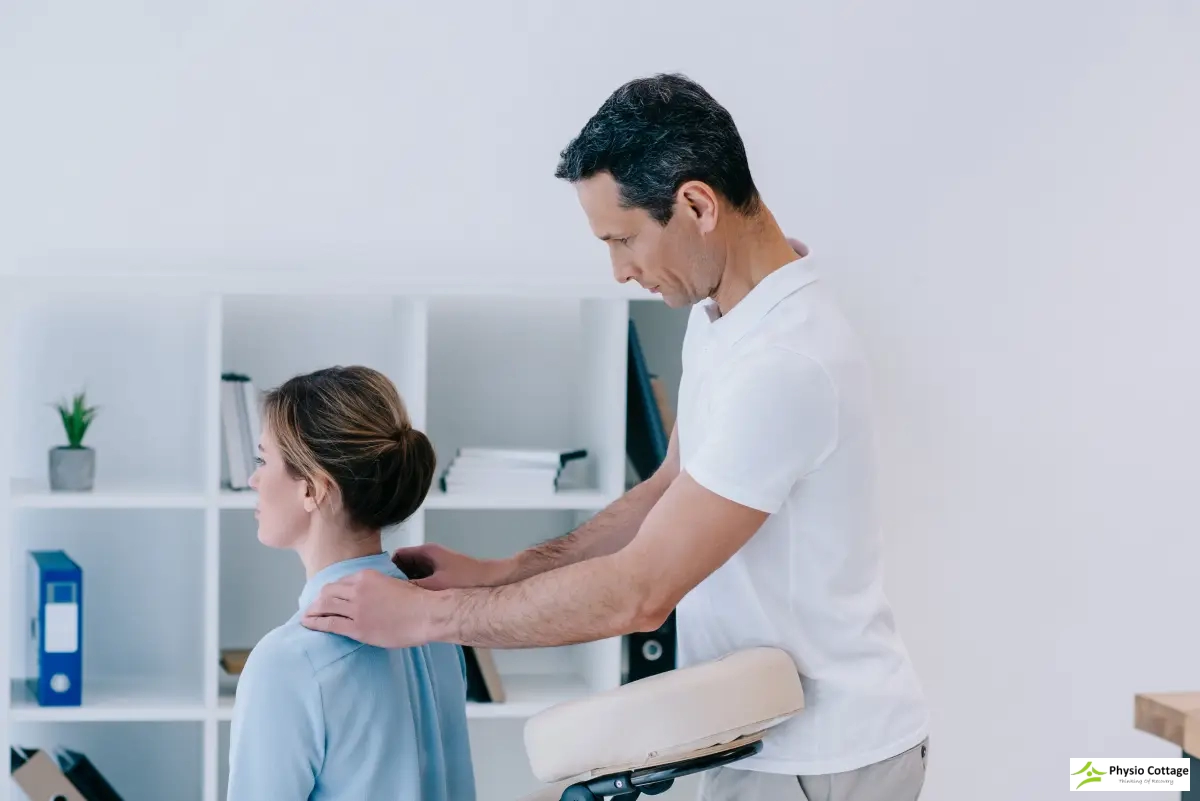
A multidisciplinary approach
Chronic pain rarely responds to just one type of treatment. Here’s how each of our services can contribute to your plan.
| Service | How it helps with chronic pain |
|---|---|
| Physiotherapy | Rebuilds strength, mobility, and movement confidence around the painful area |
| Massage therapy | Eases muscle tension and supports circulation around chronically tight areas |
| Acupuncture | A drug-free option to help calm pain signaling and support relaxation |
| Myofascial release | Targets restricted fascia contributing to widespread tightness and pain |
| Shockwave therapy | Radial shockwave for long-standing tendon and heel pain, used alongside an exercise plan |
| Chiropractic care | Spinal and joint adjustment to support alignment and reduce mechanical strain |
Your plan is built around which of these fit your condition, not all patients need every service.

Your first visit
Your first visit starts with a full conversation about your pain history, what makes it better or worse, and how it’s affecting your daily life, not just the painful spot itself.
From there, your team recommends a personalized plan, which may combine hands-on treatment with a graded activity plan and pain education, so you understand the “why” behind your program, not just the exercises.
Why Physio Cottage
Physiotherapists, RMTs, chiropractors, and acupuncturists working from one plan.
Every pain experience is different: your plan is built around yours.
You’ll understand the reasoning behind your plan, not just the exercises.
Most extended health plans, plus WSIB and MVA claims.
Evening and Saturday appointments, with easy on-site parking.
Read what patients across Scarborough and east Toronto say on our Google profile.
Where our patients come from
Physio Cottage is located near Victoria Park & Ellesmere and welcomes patients from across Scarborough and east Toronto.
The program
Chronic pain is rarely fixed by one technique, which is why our program draws on the whole clinic. The mix below is adjusted to you after the assessment, and the balance shifts as you improve: more hands-on care early on, more movement and self management as you gain confidence.
Understanding why pain can persist after tissues have healed, and why hurt does not always equal harm, changes how people move and how much they fear activity. This is built into every visit, not delivered as a lecture.
Starting at a level you can manage on a bad day and building steadily, rather than overdoing it on good days and paying for it afterwards. The goal is a reliable baseline, then slow, planned progress.
Joint mobilization, soft tissue release and registered massage therapy to settle stiffness and guarding so that movement is more comfortable while you build capacity.
Acupuncture, TENS and interferential current for pain relief that makes exercise and daily activity possible. Used as a support for the active parts of the plan, not as a standalone fix.
For persistent disc related back and neck pain with nerve symptoms, gentle traction can reduce pressure and pain. Spinal decompression and traction.
Practical strategies for the days that go wrong: how to pace tasks, what to do during a flare, and how to protect sleep, which has a direct effect on pain sensitivity.
What to expect
If you have had pain for months or years, it will not resolve in a week, and anyone promising that is not being honest with you. What we do see, consistently, is a pattern like this:
Assessment, a clear explanation of what is driving your pain, hands-on treatment to ease the worst of it, and a small, achievable daily routine. Visits are weekly or twice weekly.
The exercise and activity program grows. Good days become more frequent and flare ups shorter. Visits move to weekly or every two weeks, and the home program does more of the work.
You know how to manage flares, your baseline activity is higher, and visits become occasional check ins or stop altogether. Some patients keep monthly massage or acupuncture as maintenance; that is their choice.
We measure progress by what you can do, not only by a pain score: walking further, sleeping better, returning to work or a hobby. Those changes often come before the pain number moves, and they are what matter.
Working with your doctor
Chronic pain is often managed by several people at once: a family doctor, sometimes a pain specialist, rheumatologist or surgeon, and us. We send progress notes to your doctor when you ask us to, and we are happy to receive imaging reports, specialist letters and medication lists so the plan fits the rest of your care. If something in your presentation needs medical attention, such as new neurological signs or symptoms that do not fit a musculoskeletal pattern, we tell you and write to your doctor the same day.
We do not prescribe or adjust medication, and we do not ask you to stop treatment your physician has recommended. What we add is the movement, hands-on care and self management that medication alone cannot provide.
Pain that persists after a workplace injury or a car accident is treated under the same programs, with the paperwork handled by us. For WSIB claims we submit treatment plans and progress reports directly. For motor vehicle accidents we complete the treatment plan forms for your auto insurer and bill them. Where a claim has been closed but pain remains, your extended health plan usually covers continuing care, and we direct bill. WSIB injuries and motor vehicle accident rehabilitation.
Living with less pain
Read more in our guide to managing stress from chronic pain.
Getting here
Physio Cottage is at 2231 Victoria Park Ave, Unit #5, Scarborough, ON M1R 1V8, with on-site parking right at the door, which matters when walking far is hard. The Victoria Park and Lawrence East buses stop nearby, and the clinic is a few minutes from the Don Valley Parkway and Highway 401 for patients from North York, East York and Markham. Hours are Monday to Friday from 10am to 8pm and Saturday from 9am to 5pm. Call (416) 445-5353 to book a chronic pain assessment.
Chronic pain needs a different approach from acute injury care: pain education, graded activity and pacing rather than a few weeks of stretches. Bring your previous notes and we will build on what has been tried, not repeat it.
Some soreness when starting a new program is normal and settles. We start at a level you can tolerate on a bad day and progress slowly so flare ups from treatment are rare and short.
Yes. Arthritis, spinal stenosis and long standing back and knee pain are among the most common reasons older adults see us, and gentle, consistent programs make a real difference at any age.
The initial assessment is about 60 minutes so there is time to hear your whole story. Follow ups are 30 to 45 minutes.
Yes. Many patients find it helpful to have someone hear the explanation and the plan with them.
Physiotherapy, massage therapy, chiropractic care and acupuncture are each billed under their own category of most extended health plans, and we direct bill. We will help you plan visits around your annual limits.
Condition guide
Usually a mix of stiffness, deconditioning and fear of bending. We restore movement with manual therapy and decompression where discs are involved, then build hip and core strength through graded loading. Patients learn that bending and lifting are safe when progressed properly, and most return to full activity without needing to avoid anything.
The nervous system is over sensitive, so the plan starts very gently: breathing, pacing, sleep habits and light rhythmic exercise such as walking or pool work. Massage and acupuncture at a comfortable intensity help many patients tolerate more activity. Progress is measured over months, and small consistent gains add up.
Strengthening the muscles around the joint reduces pain and improves function even when the joint changes on an x-ray stay the same. We combine hands-on treatment for stiffness with a progressive strength program and advice on footwear, walking aids and activity, and we coordinate with your surgeon if a replacement is planned.
Headaches, neck pain, nerve pain after injury and pain after surgery each have their own version of this plan. Ask at your assessment and your physiotherapist will walk you through what yours would look like.
Why it works
Most people with persistent pain have already tried stretching videos, a gym membership, a brace or a long rest. The missing piece is usually not effort; it is a plan that starts at the right level, progresses at the right pace and adjusts when something flares. That is what regular visits provide: someone who has seen hundreds of cases like yours, who measures what you can do each week and who changes the plan before you lose momentum. Physio Cottage has treated chronic pain patients at Victoria Park and Ellesmere since 2017, and the physiotherapists, registered massage therapists, chiropractor and acupuncturist share one chart, so your care is coordinated rather than scattered across different clinics. Evening and Saturday hours mean treatment fits around work, and direct billing means you are not fronting the cost and chasing receipts. The goal from the first visit is the last visit: a confident, active patient who knows how to manage their own body.
Questions patients ask
An acute injury typically heals within weeks to a few months. Chronic pain persists beyond that usual healing window, or occurs alongside an ongoing condition like arthritis, and often needs a different, multimodal treatment approach.
Many patients see real, lasting improvement with the right combination of hands-on treatment, graded activity, and education: it’s not always just about “managing” symptoms indefinitely.
No referral is required to book an assessment. Some insurance plans may request one for reimbursement, so check with your provider if unsure.
Most extended health insurance plans cover physiotherapy, massage, and other services used in a chronic pain plan. We offer direct billing to most major providers where available.
Yes. We build a graded, whole-body plan combining manual therapy, exercise, and education for fibromyalgia and other widespread pain conditions.
It varies by condition and how long you’ve had it. Some patients notice improvement within a few weeks; longer-standing pain typically needs a longer, staged plan.
Yes, many chronic pain plans combine physiotherapy with massage therapy, acupuncture, or chiropractic care, depending on what fits your condition.
Yes. We treat pain related to WSIB workplace injuries and motor vehicle accidents (MVA), and bill directly to your claim where applicable.
A personalized, multidisciplinary plan, direct billing, and appointments that fit your schedule, right at Victoria Park & Ellesmere.
Monday to Friday 10am to 8pm · Saturday 9am to 5pm · Sunday closed
2231 Victoria Park Ave, Unit #5, Scarborough, ON M1R 1V8
From the blog
Book a chronic pain assessment online or call the clinic. We are at 2231 Victoria Park Ave, Unit #5, Scarborough, ON M1R 1V8, open Monday to Friday 10am to 8pm and Saturday 9am to 5pm.