
Shockwave therapy
Shockwave therapy in Scarborough: radial shockwave for tendon and heel pain
Reviewed by Dr. Maryam Ahankoob, Registered Physiotherapist and clinic lead. Updated October 2026.
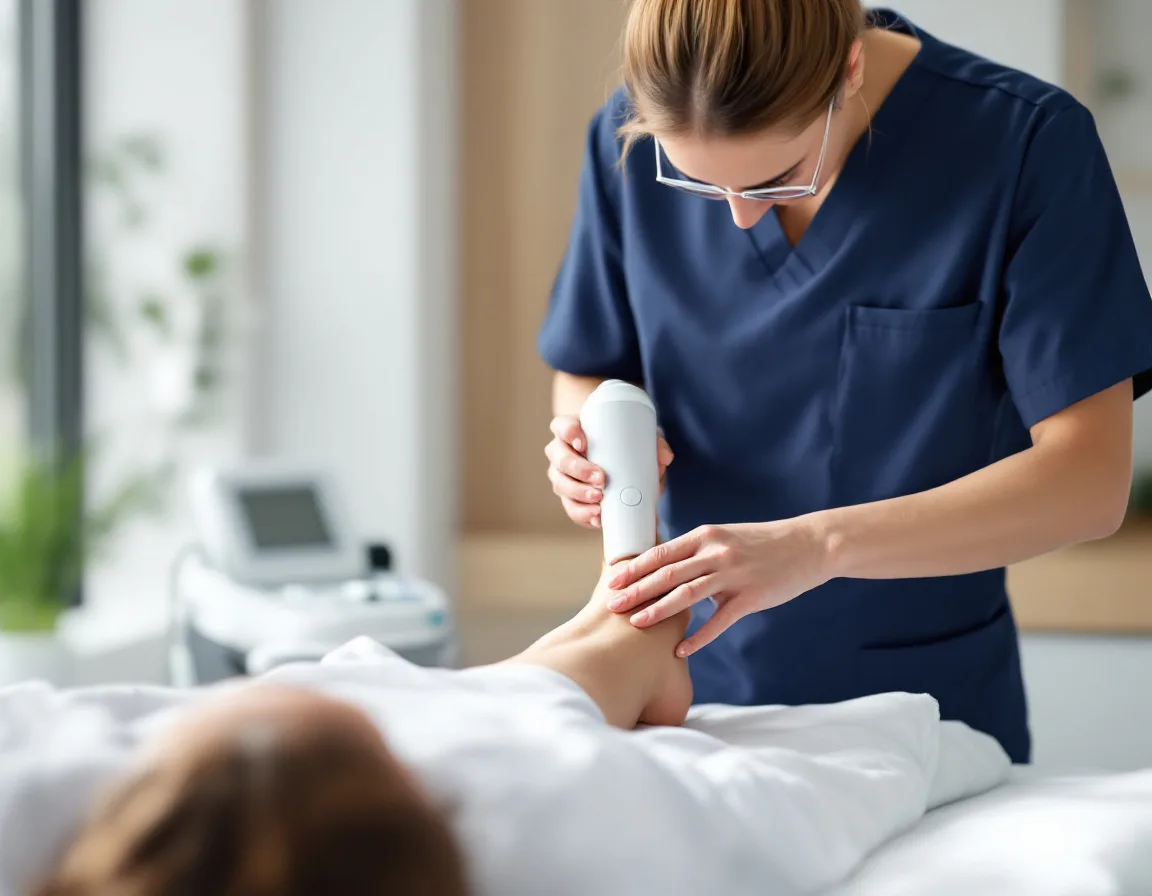
Shockwave therapy, also called extracorporeal shockwave therapy (ESWT), sends strong acoustic pulses through the skin into a sore tendon or a stubborn area of soft tissue. At Physio Cottage, registered physiotherapists use radial shockwave therapy for plantar fasciitis, tennis elbow, Achilles and patellar tendon pain, calcific shoulder tendonitis and outer hip pain, always as part of a full physiotherapy plan. The clinic is at Victoria Park Ave and Ellesmere Rd in Scarborough, with evening and Saturday hours and direct billing where your plan allows.
Fees and pricing
Shockwave therapy cost in Scarborough
Shockwave therapy is delivered by a registered physiotherapist, so it starts with a physiotherapy assessment. The initial assessment is $115 and physiotherapy follow-up visits are $105. Shockwave is added to your visit when your physiotherapist confirms it suits your condition. Ask the front desk for the current shockwave fee when you book, and we will tell you the full cost before any treatment starts.
Initial physiotherapy assessment
$115
First visit: assessment and treatment plan
- History and hands-on examination
- Screening for shockwave safety
- Plan that combines shockwave and exercise
- Home loading program
Physiotherapy follow-up visit
$105
Per treatment session
- Shockwave when it is part of your plan
- Exercise progression
- Progress re-checked each visit
- Receipt for your insurer
Shockwave add-on
Call for fee
Confirmed before treatment
- Usually 3 to 5 weekly sessions
- About 5 to 10 minutes per area
- Radial shockwave device
- Billed with your physiotherapy visit
All prices in Canadian dollars. Your fee is confirmed when you book.
The treatment
What is shockwave therapy?
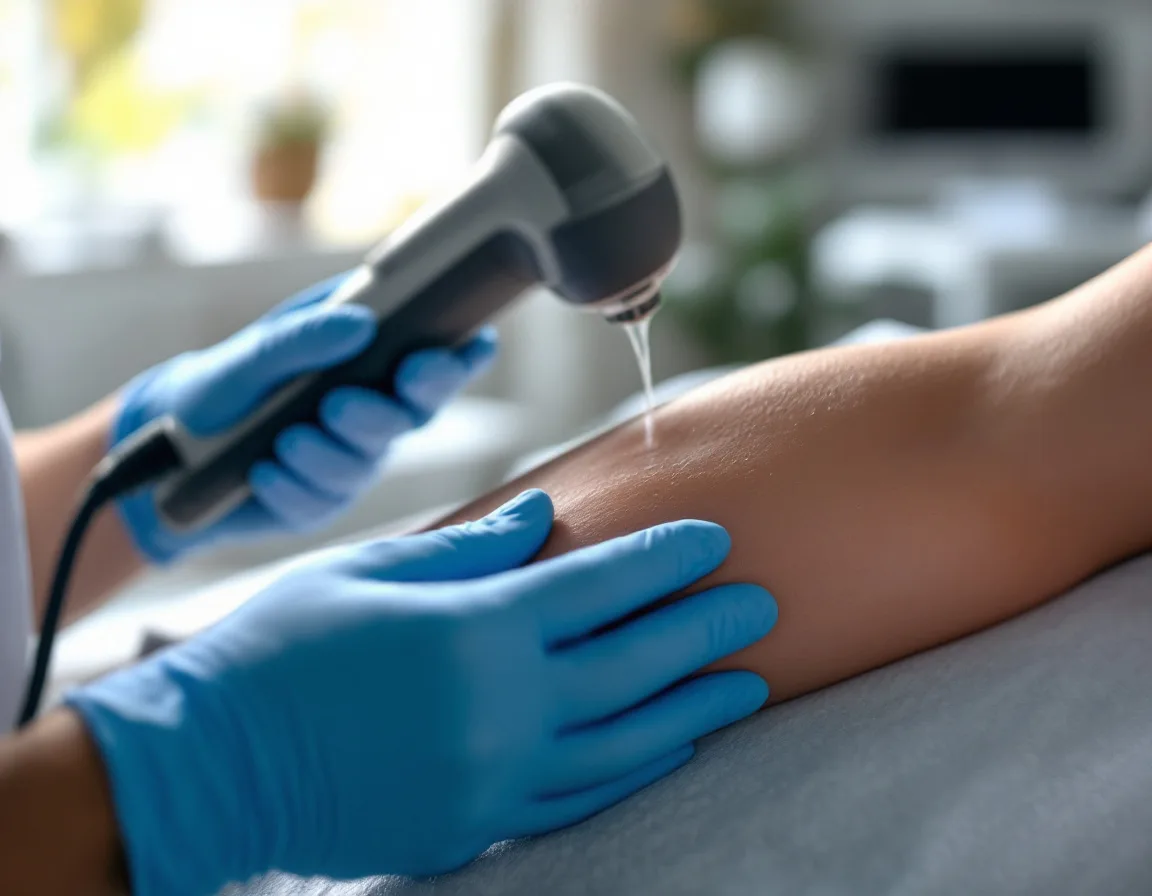
Shockwave therapy is a non-invasive treatment that uses high-energy sound waves, delivered through a handheld applicator, to stimulate tissue that has stopped healing well. The pulses are not electric and they are not a laser. They are mechanical pressure waves, a little like a very fast, very focused tapping, that travel through the skin into the tendon, fascia or muscle underneath.
Tendons that have been sore for months often sit in a stuck state: the tissue is irritated, the blood supply is modest and the pain system has become sensitive. Shockwave is used to give that area a strong mechanical stimulus. Research suggests it can increase local blood flow, prompt the cells in the tendon to start remodelling, break up calcium deposits in some shoulder tendons and calm pain signalling for a period after treatment.
That is why physiotherapists use it mainly for chronic problems, typically pain that has lasted three months or more and has not settled with rest, braces, injections or exercise alone. It is rarely the first thing we try for a fresh injury.
Types of shockwave
Radial shockwave therapy vs focused shockwave
You will see two names online. Both use acoustic pulses, but they behave differently in the body.
Radial shockwave (RSWT)
Radial shockwave spreads its energy outward from the tip of the applicator, so the strongest effect is near the surface and it covers a wider area. It suits tendons and fascia that sit close to the skin, such as the plantar fascia, the outer elbow, the Achilles tendon and the patellar tendon. This is the type used at Physio Cottage.
Focused shockwave (FSWT)
Focused shockwave concentrates energy at a set depth below the skin. It is often used for deeper targets and in some medical settings for bone healing. For most tendon problems seen in a physiotherapy clinic, published studies show radial and focused devices give broadly similar results.
What matters more than the device
The type of machine matters less than an accurate diagnosis, the right dose, enough sessions and a loading program that rebuilds the tendon. Shockwave on its own, without exercise, tends to give shorter relief. That is why it always sits inside a physiotherapy plan here.
Who it suits
Conditions we treat with shockwave therapy
Shockwave therapy has the strongest research support for the tendon and fascia problems below. Your physiotherapist confirms whether it fits your case after an assessment.
Plantar fasciitis and heel pain
Shockwave therapy for plantar fasciitis is one of the most studied uses. It is aimed at the thick band under the heel that becomes painful with the first steps in the morning or after sitting. It is often combined with calf and foot loading and, where needed, custom orthotics.
Tennis elbow and golfer’s elbow
Lateral and medial elbow tendon pain from gripping, lifting, computer work or racquet sports. Shockwave is used alongside forearm strengthening and changes to how you grip and lift during the day.
Achilles tendonitis
Pain in the tendon above the heel or where it attaches to the bone, common in runners, people on their feet all day and after a jump in activity. Shockwave is paired with a graded calf loading program.
Patellar tendonitis (jumper’s knee)
Pain just below the kneecap with stairs, squats, jumping or sitting for long periods. Shockwave is used with progressive quadriceps and hip loading.
Calcific shoulder tendonitis
Calcium deposits in the rotator cuff that cause aching and pain when reaching overhead. Shockwave has good evidence for this problem and is used to help the body break down the deposits over time.
Outer hip pain (GTPS)
Greater trochanteric pain syndrome, often called hip bursitis, causes pain on the side of the hip when lying on that side, climbing stairs or standing on one leg. Shockwave is combined with hip strengthening.
Shin splints
Medial tibial stress syndrome in runners and people starting new sports. Shockwave may be used once a bone stress injury has been ruled out, together with a return-to-run plan.
Hamstring and other tendon pain
Upper hamstring tendon pain in runners, and some cases of rotator cuff, adductor and gluteal tendon pain that have not settled with exercise alone.
Muscle trigger points
Some physiotherapists use lower-energy shockwave on tight, sensitive points in the neck, shoulders, back or calves as part of chronic pain care. Evidence here is more limited, so it is used selectively.
How it works
How shockwave therapy works on a stubborn tendon
When a tendon has been painful for months, the problem is usually not inflammation in the classic sense. It is a change in the tendon’s structure and in how sensitive the area has become. That is why rest helps for a while and then the pain returns as soon as you go back to running, walking at work or lifting.
Shockwave therapy is thought to help in four ways:
- Mechanical stimulus. The pulses load the tendon cells, which respond by producing new collagen and restarting the repair process.
- Blood flow. Studies show new small blood vessels can form in treated tissue, which supports healing.
- Calcium breakdown. In calcific shoulder tendonitis, shockwave can help break up deposits so the body can clear them.
- Pain modulation. Treatment can reduce pain signalling for a period, which makes it easier to do the strengthening that the tendon actually needs.
The last point is important. Shockwave opens a window. The exercise program is what uses that window to make the tendon stronger and more tolerant of load.
- Typical session: 5 to 10 minutes of shockwave per area within a physiotherapy visit
- Typical course: 3 to 5 sessions, about one week apart
- Typical pulses: around 1,500 to 3,000 per area, set by your physiotherapist
- Anaesthetic: none needed, the intensity is adjusted to your comfort
- Downtime: none, most people walk out and carry on with their day
Your visit
What to expect at a shockwave therapy session
- Assessment first. Your physiotherapist takes a full history, examines the area and checks that the pain is coming from the tendon or fascia and not from a nerve, joint, bone stress injury or something that needs medical follow-up. If you already have imaging such as an ultrasound or X-ray, bring the report.
- Safety screening. We go through the contraindications listed below, including pregnancy, blood thinners, pacemakers and recent steroid injections.
- Finding the spot. The physiotherapist feels for the most tender area and marks it. A gel is applied to the skin so the pulses pass through smoothly.
- Treatment. The applicator is held on the area and the device delivers rapid pulses that feel like strong tapping. The intensity starts low and is turned up to a level that is uncomfortable but tolerable. You can ask to pause or lower it at any time.
- Exercise and advice. The rest of the visit is spent on strengthening, mobility or manual therapy, and on adjusting your daily load: how far you walk or run, how you lift, what footwear you use.
- Review. At each visit we check pain, function and your exercise progress, then decide whether more shockwave is useful. If you are not responding after the planned course, we change the plan or refer you on.
Wear or bring clothing that lets us reach the area easily: shorts for knee, hip, shin or heel problems and a loose top or tank top for the shoulder and elbow.
Number of sessions
How many shockwave therapy sessions will I need?
Most treatment plans use 3 to 5 sessions of shockwave, spaced about one week apart. Some people with long-standing problems or calcific shoulder tendonitis need a few more. The exercise program continues between sessions and for some weeks after the last one.
It is common to feel some relief within a few hours or days of a session, but the tendon keeps remodelling for weeks after treatment ends. Many studies measure results at 6 to 12 weeks after the course, not on the day. We usually re-check at 4 to 6 weeks after your last shockwave session to see where things stand.
Results vary from person to person, and shockwave does not help everyone. Your physiotherapist will tell you honestly if your progress suggests another option, such as a referral to your family doctor or a sports medicine physician.
Between sessions
What you can do at home
- Keep doing the loading exercises your physiotherapist gives you
- Stay active, but avoid big jumps in running distance or long periods on your feet in the 48 hours after a session
- Avoid ice and anti-inflammatory medication right after treatment unless your doctor has told you to take them, because the aim is to stimulate a healing response
- Write down your pain level each morning so we can track change
Safety
Who should not have shockwave therapy
Shockwave therapy is low risk when screened properly, but it is not right for everyone. Your physiotherapist will not use it, or will treat a different area, if any of the following apply.
Pregnancy
Shockwave is not used on the lower back, abdomen, pelvis or hips during pregnancy. Pregnant patients can still have physiotherapy and other treatments for tendon pain.
Blood thinners and bleeding disorders
If you take anticoagulant medication or have a clotting disorder, tell us. Shockwave may not be suitable because of the risk of bruising and bleeding.
Pacemakers and implants
Shockwave is not applied near a pacemaker or other implanted electronic device, and is used with care near metal implants.
Recent steroid injection
Most clinicians wait several weeks after a cortisone injection into the same area before starting shockwave. Let us know the date of any injection.
Infection, tumours and open wounds
Shockwave is never used over an active infection, a known or suspected tumour, broken skin or a recent fracture that has not healed.
Growth plates, nerves and major vessels
It is not used over open growth plates in children and teens, over the lungs, or directly on large nerves and blood vessels. A history of blood clots in the area also rules it out.
After treatment
Side effects of shockwave therapy
Most side effects are mild and settle within a few days. The most common are:
- Redness and mild swelling of the skin over the area
- Soreness or a dull ache for 24 to 48 hours, sometimes a short flare of the usual pain
- Small bruises or tiny red spots on the skin, especially in people who bruise easily
- Brief tingling or numbness, which is uncommon
Serious complications are rare when screening is done properly. If you notice severe pain, spreading redness, heat or swelling, or anything that worries you, call the clinic or seek medical care.
Does it hurt?
What shockwave feels like
Shockwave therapy is uncomfortable, especially over the most sensitive spot, but it should not be unbearable. People often describe it as a strong, fast tapping or a deep thudding. The sensation is usually strongest in the first minute and eases as the area gets used to it. Your physiotherapist adjusts the intensity based on your feedback, and many people find the discomfort less at each later session as the tendon becomes less sensitive.
Insurance
Is shockwave therapy covered by insurance?
Because shockwave therapy is delivered by a registered physiotherapist as part of a physiotherapy visit, it is usually claimed under the physiotherapy benefit of an extended health plan. Some plans list shockwave separately or exclude it, so it is worth checking your booklet or calling your insurer before your first visit.
We bill most extended health insurance plans directly where your plan allows it, and you get an official receipt after every visit. For work injuries and car accident claims, treatment is billed to the claim where the claim covers it. You can read more on our WSIB injuries and motor vehicle accident pages.
Medical expenses that your plan does not pay may be claimable on your tax return. Keep your receipts.
Compared with other options
Shockwave vs injections and surgery
For many chronic tendon problems, guidelines suggest exercise-based physiotherapy first, with shockwave as an option when progress stalls. Cortisone injections can ease pain quickly but may not help the tendon long term, and repeated injections into some tendons are discouraged. Surgery is usually kept for cases that have not improved after a full course of conservative care. Shockwave gives you a non-invasive step between the two, and you can discuss all of these choices with your physiotherapist and family doctor.
Related care
Shockwave works as part of a full plan
Most people who have shockwave therapy at Physio Cottage also use one or more of these services.
Physiotherapy
Assessment, loading programs and hands-on care from registered physiotherapists. This is the base of every shockwave plan.
Sports injury physiotherapy
Return-to-sport plans for runners, racquet players and gym users with tendon pain, shin splints or heel pain.
Custom orthotics
For plantar fasciitis and Achilles pain where foot mechanics play a part, after a gait and foot assessment.
Massage therapy
Registered massage therapy for tight calves, forearms and hips that often go along with tendon problems.
Acupuncture
Another option for pain relief that some patients combine with their exercise program.
Orthopedic braces
Counterforce straps for tennis elbow, night splints for plantar fasciitis and knee supports, fitted in the clinic.
Shockwave therapy near you
Shockwave therapy in Scarborough at Victoria Park and Ellesmere
Physio Cottage is a physiotherapy clinic at 2231 Victoria Park Ave, Unit #5, in Scarborough, just south of Ellesmere Rd. Patients come to us for shockwave therapy from Wexford, Dorset Park, Maryvale, Clairlea, Ionview, Parkwoods, Victoria Village and the rest of Scarborough and North York. There is on-site parking, and the 24 Victoria Park and 54 Lawrence East TTC routes stop nearby.
We are open Monday to Friday 10am to 8pm and Saturday 9am to 5pm, so you can fit sessions in after work or on the weekend. No doctor’s referral is needed to book, though some insurance plans ask for one before they reimburse.
- 2231 Victoria Park Ave, Unit #5
Scarborough, ON M1R 1V8 - physiocottage@gmail.com
- Directions on Google Maps
FAQ
Shockwave therapy questions
What is shockwave therapy used for?
Shockwave therapy is mainly used for chronic tendon and fascia problems that have not settled with rest and exercise, such as plantar fasciitis, tennis elbow, Achilles and patellar tendonitis, calcific shoulder tendonitis and outer hip pain.
Does shockwave therapy work?
Research supports shockwave therapy for several chronic tendon problems, especially plantar fasciitis, calcific shoulder tendonitis and tennis elbow, and results are better when it is combined with a strengthening program. It does not help everyone, and your physiotherapist will review your progress at each visit.
How many shockwave sessions do I need?
Most plans use 3 to 5 sessions about one week apart. Some long-standing or calcific problems need a few more. The tendon keeps responding for several weeks after the last session.
How long does a shockwave session take?
The shockwave part usually takes 5 to 10 minutes per area. It is done within a physiotherapy visit that also includes assessment, exercise and advice.
Is shockwave therapy painful?
It is uncomfortable, often described as strong, fast tapping, but it should not be unbearable. The intensity is adjusted to your feedback and you can ask to pause at any time. Mild soreness for a day or two afterwards is common.
What is the difference between radial and focused shockwave therapy?
Radial shockwave spreads energy from the applicator tip and suits tissue near the surface, like the heel, elbow and Achilles. Focused shockwave concentrates energy at a set depth. For most tendon problems, studies show broadly similar results. Physio Cottage uses radial shockwave.
How much does shockwave therapy cost in Scarborough?
At Physio Cottage, shockwave starts with a physiotherapy assessment at $115, and follow-up physiotherapy visits are $105. Call (416) 445-5353 for the current shockwave fee, which is confirmed before any treatment starts.
Is shockwave therapy covered by insurance?
When it is delivered by a registered physiotherapist, it is usually claimed under the physiotherapy benefit of extended health plans. Some plans exclude it, so check your plan. We direct bill where your plan allows it.
Can shockwave therapy help plantar fasciitis?
Plantar fasciitis is one of the most studied uses of shockwave therapy. It is usually combined with calf and foot strengthening, footwear advice and sometimes custom orthotics or a night splint.
Can shockwave therapy help tennis elbow?
Shockwave is a common option for tennis elbow that has lasted more than a few months. It tends to work better alongside forearm strengthening and changes to how you grip and lift.
Who should not have shockwave therapy?
It is not used over a pregnant abdomen or pelvis, near a pacemaker, over infection, tumours, open wounds, unhealed fractures or growth plates, or in people with some bleeding disorders or on blood thinners. Tell us about any recent steroid injection.
What are the side effects of shockwave therapy?
The most common are redness, mild swelling, soreness for 24 to 48 hours and small bruises. Tingling or numbness is uncommon. Serious side effects are rare with proper screening.
Can I exercise after shockwave therapy?
Yes. You can walk and do normal daily activity straight away. Most people are asked to avoid hard running, jumping or heavy lifting with the treated area for about 48 hours, then continue their exercise program.
Do I need a referral for shockwave therapy?
No referral is needed to book at Physio Cottage. Some insurance plans need a doctor’s note for reimbursement, so check your plan.
Where can I get shockwave therapy in Scarborough?
Physio Cottage offers radial shockwave therapy at 2231 Victoria Park Ave, Unit #5, Scarborough, ON M1R 1V8, near Ellesmere Rd. We are open Monday to Friday 10am to 8pm and Saturday 9am to 5pm. Book online or call (416) 445-5353.
Your wellness matters to us
Book a shockwave therapy assessment online or call the clinic. We are at 2231 Victoria Park Ave, Unit #5, Scarborough, ON M1R 1V8, open Monday to Friday 10am to 8pm and Saturday 9am to 5pm.
- Radial shockwave by registered physiotherapists
- Every session paired with an exercise plan
- Direct billing where your plan allows
- Easy parking at Victoria Park and Ellesmere