Skip to content

Pelvic health · Scarborough

Pelvic Floor Physiotherapy in Scarborough

Reviewed by Maryam Ahankoob, Registered Physiotherapist and clinic lead. Updated October 2026.

If you’re dealing with bladder leaks, pelvic pain, painful intercourse, or discomfort after pregnancy, you don’t have to just live with it. Physio Cottage provides pelvic floor physiotherapy in Scarborough for women and men, delivered by a Registered Physiotherapist with specialized pelvic health training.

We serve patients from across Scarborough and east Toronto, including Victoria Village, Wexford, Bendale, Agincourt, L’Amoreaux, and Clairlea, with easy parking and flexible evening and Saturday appointments near Victoria Park & Ellesmere.

Pelvic floor physiotherapy in Scarborough at Physio Cottage
Private treatment roomsOne-on-one care in a closed room, at a pace you set.
  • Registered Physiotherapist, pelvic health trained
  • Direct billing to most insurers, WSIB & MVA
  • Evening and Saturday appointments
  • Patient reviews on Google since 2017

What is pelvic floor physiotherapy?

Pelvic floor physiotherapy is a specialized area of physiotherapy focused on the muscles, ligaments, and connective tissue that support your bladder, uterus, and rectum. When these muscles become too weak, too tight, or uncoordinated, it can lead to issues like leakage, pelvic pain, or a feeling of heaviness or pressure.

Using a combination of manual therapy, targeted internal and external assessment, breathing and core retraining, and personalized exercise programs, our pelvic floor physiotherapist works with you to restore normal muscle function and address the root cause of your symptoms, not just manage them.

Too tight is as common as too weak. Strengthening the wrong pattern can make symptoms worse, which is why treatment starts with an assessment rather than an exercise sheet.

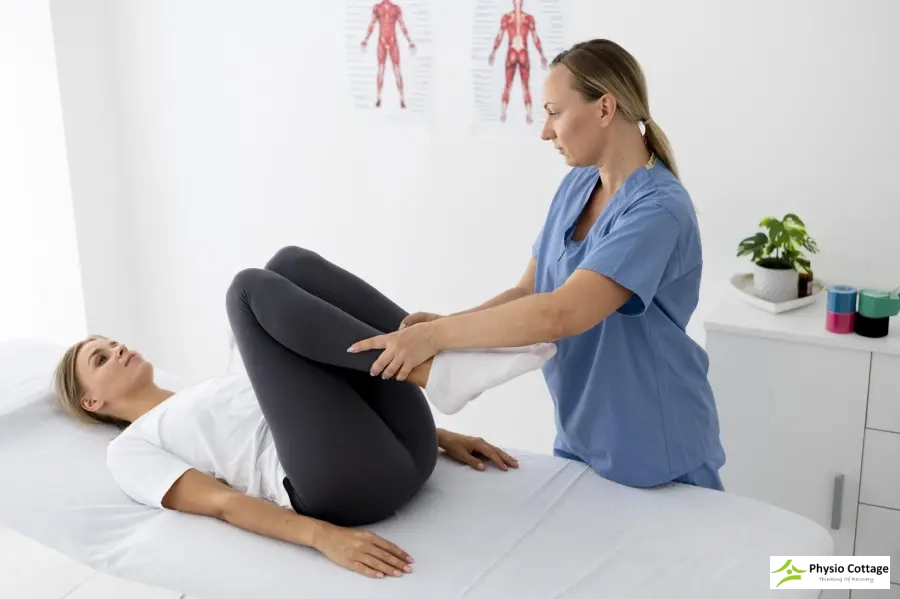
Pelvic floor physiotherapist assessing a patient in Scarborough

Fees and pricing

Pelvic floor physiotherapy prices in Scarborough

Your initial pelvic floor physiotherapy assessment costs $150. Follow-up sessions are priced by length: $150 for 60 minutes, $125 for 45 minutes and $105 for 30 minutes. The first visit is a private, unhurried appointment with time to talk through your symptoms and history before any assessment. Pelvic floor physiotherapy is billed as physiotherapy, so it usually falls under the physiotherapy coverage in your extended health plan.

Start here

Initial pelvic floor assessment

$150

Private first appointment

  • Time to talk before any assessment
  • Assessment explained step by step
  • Your consent at every stage
  • Personal treatment plan
Book your assessment
Follow-up

60 minute session

$150

Full treatment session

Book 60 min
Follow-up

45 minute session

$125

Standard follow-up

Book 45 min
Follow-up

30 minute session

$105

Short check-in and progression

Book 30 min
Direct billingWe bill most extended health insurance plans directly where your plan allows it.
A receipt every visitYou get an official receipt after each appointment for your insurer or your tax return.
WSIB and car accident claimsApproved work injury and auto insurance claims are billed directly where applicable.
Coverage checkCall (416) 445-5353 and we will check your coverage with you before your first visit.

All prices in Canadian dollars. Your fee is confirmed when you book.

Book an appointmentSee all clinic prices

Self-check

Signs you may need pelvic floor physiotherapy

You may benefit from a pelvic floor assessment if you experience any of the following.

  • Leaking urine when you cough, sneeze, laugh, or exercise
  • A frequent or sudden urge to use the washroom
  • Pelvic, hip, or low back pain that hasn’t resolved with other treatment
  • Pain during intercourse
  • A feeling of heaviness, pressure, or bulging in the pelvic area
  • Difficulty fully emptying your bladder or bowels
  • Core weakness or abdominal separation after pregnancy
  • Ongoing pelvic discomfort after surgery, such as a C-section or prostate procedure

If any of this sounds familiar, a pelvic floor assessment is a good next step.

Book an assessment

Conditions we treat

What pelvic floor physiotherapy can help with

Urinary incontinence & bladder leakage

Whether it’s stress incontinence (leaking with movement or exertion) or urge incontinence (a sudden, hard-to-control need to go), we assess pelvic floor strength and coordination and build a plan to reduce leakage and regain confidence in daily activities.

Pelvic pain & painful intercourse

Chronic pelvic pain and pain during intercourse are often linked to muscles that are too tight rather than too weak. Our approach includes manual release techniques, breathing retraining, and graded exercise to reduce tension and pain.

Pregnancy & postpartum recovery

Pelvic floor physiotherapy supports you both before and after delivery, helping prepare the pelvic floor for birth and guiding a safe, structured return to daily activity, exercise, and core strength postpartum.

Pelvic organ prolapse

When pelvic organs shift due to weakened support tissue, physiotherapy can help manage symptoms and improve pelvic floor support through targeted strengthening and lifestyle strategies.

Diastasis recti (core separation)

Common after pregnancy, diastasis recti can affect core strength and stability. We assess the degree of separation and provide a progressive exercise program to safely rebuild core function.

Post-surgical pelvic discomfort

Recovery after a C-section or prostate procedure can leave lasting pelvic discomfort. Assessment identifies scar tissue restriction, muscle guarding, and coordination changes that respond to hands-on treatment.

Pelvic floor physiotherapy for men

Pelvic floor dysfunction isn’t limited to women. Men experiencing incontinence, pelvic pain, or post-prostate-surgery symptoms can also benefit from a pelvic floor physiotherapy program built around their assessment findings.

Book a men’s pelvic health assessment

Pelvic floor physiotherapy for men in Scarborough

Your first visit

What to expect at your first pelvic floor assessment

Every step is explained beforehand, and the pace is always guided by your comfort.

1

We talk first

Your visit starts with a detailed conversation about your symptoms, health history, and goals. Nothing physical happens until you understand what is being suggested and why.

2

Assessment, with your consent

Depending on your comfort level and clinical need, your physiotherapist may perform an external assessment and, with your informed consent, an internal assessment to evaluate pelvic floor muscle strength, tone, and coordination.

3

Your plan

From there we build a personalized treatment plan that may include manual therapy, targeted exercise, breathing retraining, and education on lifestyle strategies to support your recovery.

An internal exam is never automatic. It happens only with your informed consent and only when it is clinically appropriate. You can decline at any point and still be treated.

Scarborough pelvic floor physiotherapist at Physio Cottage

Who you’ll see

Meet your Scarborough pelvic floor physiotherapist

Maryam Ahankoob is the founder and lead physiotherapist at Physio Cottage, registered with the College of Physiotherapists of Ontario, with clinical experience treating patients across Scarborough and Toronto.

Her focus includes prenatal and postpartum physiotherapy, chronic pain, and pelvic health, using manual therapy and personalized exercise programs to treat the root cause of symptoms rather than just managing them. She and her team have helped hundreds of Scarborough residents recover and return to the activities they love.

  • College of Physiotherapists of Ontario
  • Pelvic health training
  • Prenatal & postpartum
  • Chronic pain
  • Clinic founded 2017

More about the Physio Cottage team

Why Physio Cottage

Care built around a sensitive conversation

Pelvic health experience

Registered physiotherapist with pelvic health experience, based in Scarborough since 2017.

Private treatment rooms

Comfortable, closed rooms designed for sensitive assessments.

One-on-one appointments

Personalized care with your physiotherapist, without rushed appointments.

Direct billing

Most extended health plans, plus WSIB and MVA billing.

Hours that fit

Evening and Saturday appointments, with easy on-site parking.

Google

Patient reviews

Read what patients across Scarborough and east Toronto say on our Google profile.

Insurance, billing & cost

What this will cost you

Pelvic floor physiotherapy at Physio Cottage is billed the same way as our other physiotherapy services. We offer direct billing to most extended health insurance providers, so in many cases you won’t need to pay out of pocket and submit a claim yourself.

We also bill directly for WSIB and motor vehicle accident (MVA) claims where applicable. Our team can help you understand your coverage before your first visit. Call (416) 445-5353 and we can check it with you.

We bill directly for

  • Most extended health insurance plans
  • WSIB work injury claims
  • Motor vehicle accident (MVA) claims
Check my coverage

Where our patients come from

Neighbourhoods we serve near Scarborough

Physio Cottage is located near Victoria Park & Ellesmere and welcomes patients from across Scarborough and east Toronto.

  • Victoria Village
  • Wexford
  • Bendale
  • Agincourt
  • L’Amoreaux
  • Clairlea
  • O’Connor-Parkview
  • Scarborough Village
  • Golden Mile
  • Maryvale

Get directions to 2231 Victoria Park Ave, Unit #5

Treatment

What pelvic floor physiotherapy treatment involves

Pelvic floor physiotherapy is far more than being told to do Kegels. Some pelvic floors are weak and need strengthening; many are overactive and need to learn to relax first. The assessment tells us which, and the plan is built from the methods below. Everything is explained before it happens, and you can pause or stop at any point.

Education that changes the problem

How the bladder, bowel and pelvic floor work together, why leaking or urgency happens, and the habits that make it worse. For many patients, understanding the mechanism is the first step that brings results.

Pelvic floor muscle training

Learning to find, contract, hold and fully relax the right muscles, then building endurance and coordination with breathing and movement. Progressions are specific to your goal, whether that is a sneeze without leaking or a return to running.

Manual therapy

Hands-on release of tight pelvic floor, hip and abdominal muscles and scar tissue, externally or, with your consent, internally. Used for pelvic pain, painful intercourse and overactive pelvic floors.

Bladder and bowel retraining

Timed voiding, urge control techniques and fluid and fibre strategies that reduce frequency, urgency and night time trips to the bathroom.

Core, hip and breathing retraining

The pelvic floor works as part of a system with the diaphragm, deep abdominals and hips. Treatment for diastasis recti, back and pelvic girdle pain restores that system rather than isolating one muscle.

Return to exercise planning

A staged plan for returning to lifting, running, impact sport and intimacy after childbirth or surgery, with clear milestones so you know when it is safe to progress.

Pregnancy and after birth

Pelvic floor physiotherapy during pregnancy and postpartum

Pregnancy and delivery place more load on the pelvic floor than any other time in life, and the problems that follow are common but not something you have to accept. We see patients in Scarborough at every stage:

During pregnancy

Pelvic girdle and low back pain, pubic symphysis pain, urinary leaking, and preparation for birth including perineal stretching education and positions for labour. One or two visits in the second trimester and a check in the third are typical.

Six weeks after birth

A postpartum assessment, whether you delivered vaginally or by caesarean, checks healing, pelvic floor strength and coordination, abdominal separation and scar mobility, and sets a safe return to exercise plan. We encourage every new mother to book one.

Months or years later

It is never too late. Leaking during exercise, heaviness, pain or a weak core long after delivery all respond to treatment, and many patients come to us when their children are at school or grown.

Caesarean deliveries need pelvic floor care too. The abdominal wall, scar and the pelvic floor, which supported the pregnancy for nine months, all benefit from assessment and a guided return to activity.

Your course of care

How many pelvic floor physiotherapy sessions you may need

Most patients see us less often than they expect. After the initial assessment, which is 60 minutes, follow up visits are typically every two to three weeks because the home program needs time to work between visits. Stress incontinence and postpartum recovery commonly take four to eight visits over three to four months. Overactive pelvic floor and pelvic pain conditions can take longer, as the first goal is reducing tension and sensitivity before strengthening begins. Prolapse symptoms often improve noticeably within a few months of consistent training, though the plan continues longer to maintain the gain.

At every visit we measure against the goal you set at the start, such as no leaking during a workout, a pain free return to intimacy or a run without heaviness. If progress stalls, we revisit the plan or refer you to your doctor or a specialist, and we tell you why.

What to expect at your visits

  • A private treatment room with the door closed for the whole appointment, and the same physiotherapist each time.
  • Conversation first. Your history, your symptoms and your goals, in plain language, with as much detail as you are comfortable sharing.
  • External assessment of posture, breathing, hips and abdominal wall. An internal assessment only if it is clinically helpful and only with your informed consent; you can decline and we still treat you.
  • A short home program, usually under ten minutes a day, with written or video instructions.
  • Direct billing to most extended health plans. Bring your insurance card.

For men too

Pelvic floor physiotherapy for men in Scarborough

Men have a pelvic floor and the same muscles can weaken or tighten. The most common reasons men book with us are urinary leaking and urgency after prostate surgery, chronic pelvic pain and tailbone pain, erectile and ejaculatory concerns that have a muscular component, and constipation or straining. Treatment follows the same principles: assessment, education, muscle retraining and manual therapy where appropriate. Starting pelvic floor training before prostate surgery, where possible, is associated with a faster return of bladder control afterwards, so ask your surgeon about a pre operative visit.

Honest advice

When to see your doctor first

Pelvic floor physiotherapy is safe and does not require a referral in Ontario, but some symptoms need a medical assessment before or alongside treatment. Please see your doctor if you have blood in your urine or stool, a sudden change in bladder or bowel habits with no clear cause, pelvic pain with fever, pain or bleeding in pregnancy, a new bulge that appeared suddenly, or numbness in the groin with weakness in the legs. We will ask about these at your first visit and coordinate with your doctor when needed.

More questions about pelvic floor physiotherapy

Can I come during my period?

Yes. Treatment can go ahead, and we can keep the session external if you prefer. Let your physiotherapist know and the visit will be adjusted.

Is leaking a little when I laugh or run really worth treating?

Yes. It is common, but it is not normal, and it usually gets worse without treatment. Most patients with this kind of stress incontinence improve substantially with a short course of pelvic floor physiotherapy.

How soon after birth can I start?

We see most patients from about six weeks postpartum, once your doctor or midwife has done your check. If you have urgent concerns earlier, call us and we can advise or book a conversation.

Is pelvic floor physiotherapy painful?

It should not be. Any internal assessment is gentle and stops the moment you ask. For pelvic pain conditions, treatment is paced carefully so sensitivity goes down rather than up.

Will I need special equipment at home?

Rarely. Most programs need nothing more than a mat and a few minutes. Where a device such as a pelvic wand or weights helps, we explain how to use it and where to buy it; we do not sell them.

Where are you located and is there parking?

2231 Victoria Park Ave, Unit #5, Scarborough, ON M1R 1V8, with on-site parking and private treatment rooms. We see pelvic health patients from across Scarborough, North York and East York. Call (416) 445-5353 to book a confidential assessment.

Myths

Five pelvic floor myths we hear every week

Leaking after children is normal

It is common, which is different. Most stress incontinence improves substantially with a short course of targeted physiotherapy, at any age and any number of years after delivery.

Kegels fix everything

Many pelvic floors are too tight, not too weak. Squeezing a muscle that cannot relax makes pain, urgency and constipation worse. Assessment tells us which you need.

Only women need pelvic floor physiotherapy

Men with urinary symptoms after prostate surgery, pelvic pain or bowel problems benefit from the same assessment and training.

You must stop running or lifting

Usually not. The goal is to return to the activity you love with a plan that builds the capacity to do it without symptoms.

A caesarean means the pelvic floor is fine

Nine months of pregnancy load the pelvic floor regardless of how you deliver, and the abdominal scar needs care of its own.

It is too late for me

We regularly see patients in their sixties and seventies who had put up with symptoms for decades and improved within months. Tissue responds to training at any age.

Our approach

Why patients across Scarborough choose Physio Cottage for pelvic health

Pelvic health is personal, and the clinic you choose should feel like a place you can speak plainly. At Physio Cottage every pelvic floor appointment happens in a private room with the door closed, with the same physiotherapist each time, and with as much or as little hands-on assessment as you are comfortable with. Nothing is assumed and nothing is rushed; the first visit is a full hour. Because the clinic also offers physiotherapy, massage therapy, chiropractic care and acupuncture, related problems such as low back pain, hip tightness, caesarean scar sensitivity or postpartum neck and shoulder strain are treated under one roof and one chart. Direct billing to most extended health plans, evening and Saturday hours and on-site parking at Victoria Park and Ellesmere make it realistic to complete a course of care. Patients come to us from Wexford, Parkwoods, Don Mills, Agincourt, East York and across North York, and many are referred by friends who were glad they finally booked.

Questions patients ask

Pelvic floor physiotherapy FAQ

Is pelvic floor physiotherapy covered by insurance?

Many extended health insurance plans cover pelvic floor physiotherapy, and we offer direct billing to most major providers to make this easier.

Does pelvic floor physiotherapy always involve an internal exam?

No. An internal assessment is only performed with your informed consent, and only when it’s clinically appropriate. Many patients see improvement through external assessment, breathing work, and exercise alone.

How many pelvic floor physiotherapy sessions will I need?

This varies by condition and severity. Some patients notice improvement within a few sessions, while more complex or long-standing issues may take longer. Your physiotherapist will outline an estimated plan after your initial assessment.

Can men have pelvic floor physiotherapy?

Yes. Pelvic floor dysfunction affects men too, particularly after prostate surgery or with chronic pelvic pain, and treatment is built around their assessment findings.

Do I need a doctor’s referral?

In most cases no referral is required to book a physiotherapy assessment, though some insurance plans may require one for reimbursement. Check with your provider, or call us and we can help confirm.

Book your pelvic floor physiotherapy assessment

Pelvic floor issues are common, and they are also treatable. Book your assessment with our Scarborough pelvic floor physiotherapist and take the first step toward relief.

Monday to Friday 10am to 8pm  ·  Saturday 9am to 5pm  ·  Sunday closed
2231 Victoria Park Ave, Unit #5, Scarborough, ON M1R 1V8