
Stretch therapy
Stretch therapy in Scarborough: assisted stretching for pain and flexibility
Reviewed by Maryam Ahankoob, Registered Physiotherapist and clinic lead. Updated October 2026.
Our stretch therapy program uses assisted stretching, Fascial Stretch Therapy (FST) and PNF techniques to improve flexibility, restore range of motion and ease chronic muscle tightness. The clinic is at Victoria Park and Ellesmere in Scarborough, and the program suits desk workers, athletes and anyone dealing with stiffness or recurring pain. Direct insurance billing is available.
Fees and pricing
Stretch therapy prices
Stretch therapy is billed at the rate of the practitioner who provides it. With a registered physiotherapist, the initial assessment is $115 and follow-up visits are $105. As part of a registered massage therapy session, prices start at $79.10 for 30 minutes and go up to $169.50 for 90 minutes, tax included. Tell us what you want to improve when you book and we will match you with the right practitioner.
Initial physiotherapy assessment
$115
First visit: assessment and treatment plan
- Full history and movement assessment
- The problem explained in plain language
- Treatment plan agreed together
- Home exercise program
Physiotherapy follow-up visit
$105
Per treatment session
- Hands-on treatment
- Exercise progression
- Progress re-checked each visit
- Receipt for your insurer
Registered massage therapy
$79.10
From 30 minutes, tax included
- 45 min $101.70
- 60 min $124.30
- 75 min $146.90
- 90 min $169.50
All prices in Canadian dollars. Your fee is confirmed when you book.
The treatment
What is stretch therapy?
Stretch therapy is a hands-on, therapist-guided treatment that targets muscles, joints and the surrounding connective tissue (fascia) to restore your body’s natural range of motion.
Unlike stretching alone at home, our registered physiotherapists and massage therapists use clinical techniques, including Fascial Stretch Therapy (FST) and Proprioceptive Neuromuscular Facilitation (PNF), to reach restrictions that self-stretching rarely does. Whether you are dealing with chronic stiffness from sitting at a desk all day, recovering from a sports injury, or simply want to move better as you age, the program is built around your body and your goals.

Who it suits
Is stretch therapy right for you?
Assisted stretching is often used as part of care for the problems below. Your therapist confirms whether it fits your case after an assessment.
Chronic back and neck pain
Tight fascia and muscle imbalances are a common cause of recurring back and neck pain that does not settle with rest alone.
Tight hip flexors and hamstrings
Sitting for long periods shortens these muscles, which can cause pain that radiates into the lower back and knees.
Frozen shoulder
Gentle assisted stretching is used to work on shoulder mobility and the stiffness associated with adhesive capsulitis.
Sciatica and hip pain
Targeted fascial release around the piriformis and hip rotators is used to ease sciatic nerve irritation and hip discomfort.
Poor posture and forward head
Addresses the muscular causes of rounded shoulders, forward head posture and an increased upper back curve.
Stress and tension headaches
Neck and upper trapezius tightness contribute to tension headaches. Stretch therapy works on these patterns at their source.
Your session
What to expect at a stretch therapy session
Assessment
Your therapist reviews your health history, identifies areas of restriction and discusses your goals: pain relief, performance or everyday mobility.
Your plan
Based on the assessment, a program is designed around your specific fascial lines, muscle groups and joint restrictions.
Hands-on treatment
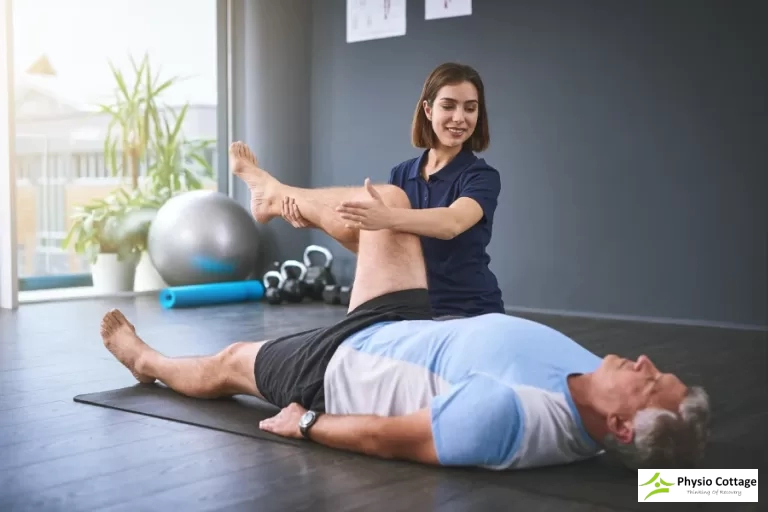
You lie comfortably on a therapy table while your therapist guides your body through FST, PNF or active assisted techniques.
Home program
You leave with simple, targeted home stretches to maintain progress between sessions.
Why people book it
The benefits of assisted stretch therapy
Range of motion
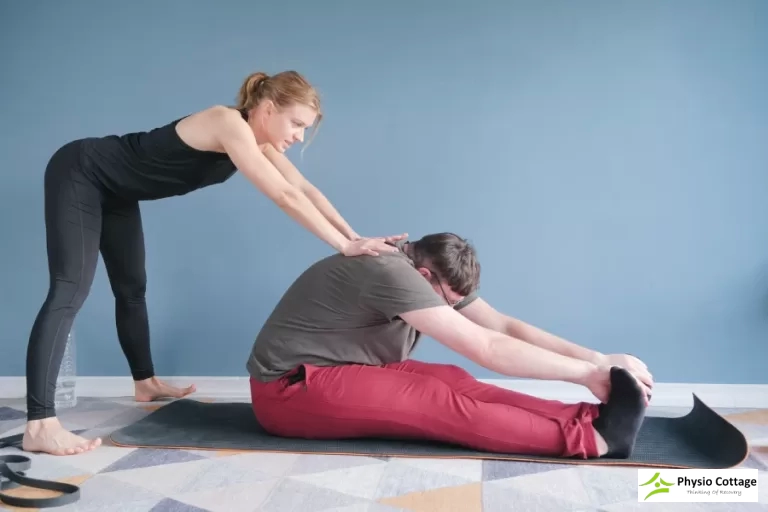
Works on deep fascial restrictions and joint capsule tightness that limit how fully you can move in sport, work and everyday life.
Muscle tension and pain
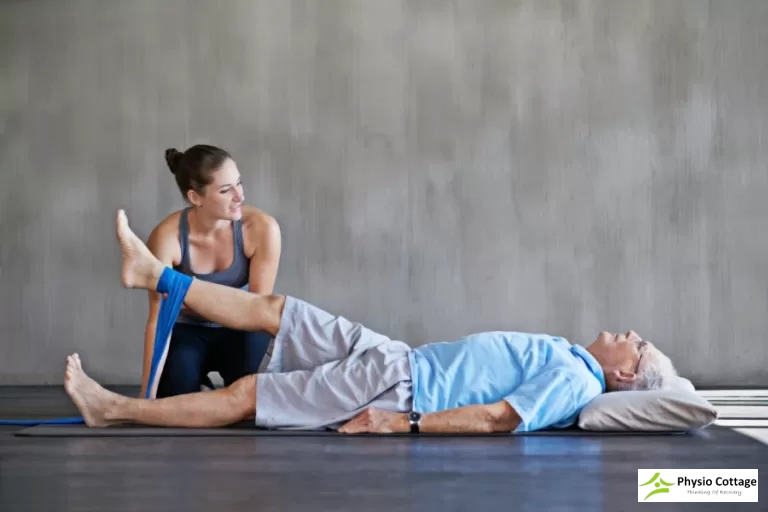
Chronic tightness in the neck, back, hips and hamstrings is addressed with guided assisted stretching, with many patients reporting less daily discomfort.
Athletic recovery
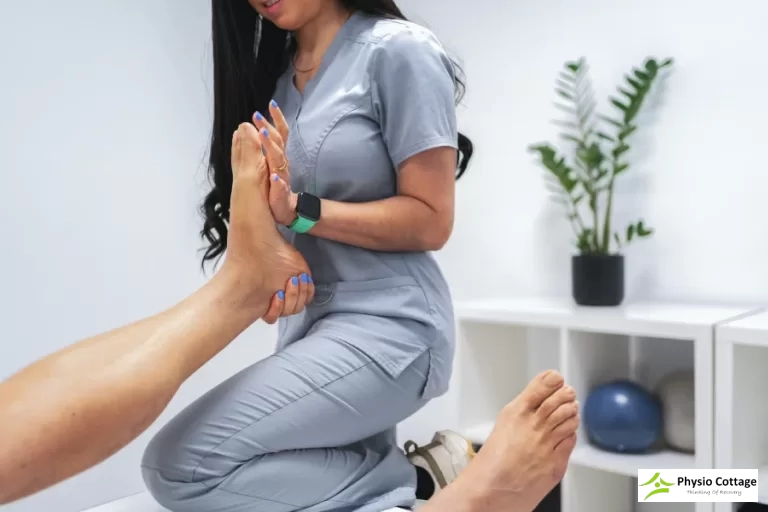
Athletes use stretch therapy to reduce muscle fatigue, address overuse patterns and return to training with better mechanics.
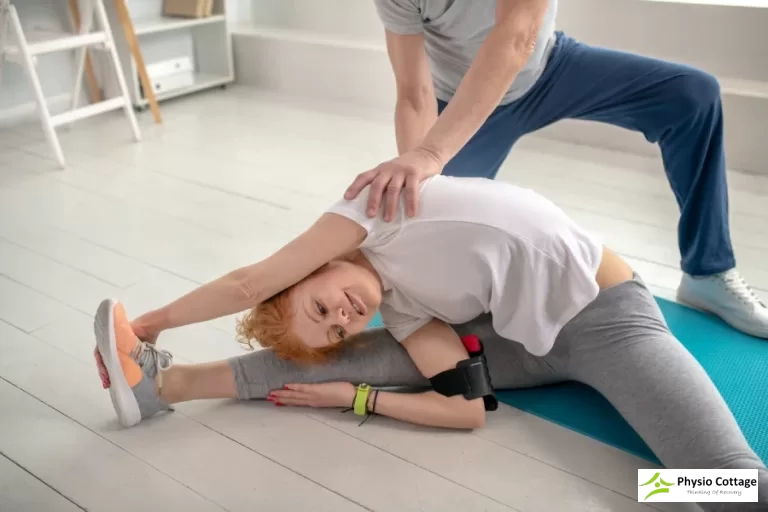
Posture
Tight chest, hip flexor and hamstring muscles contribute to the forward-rounded posture many of us develop from desk work. Stretch therapy works on these imbalances.
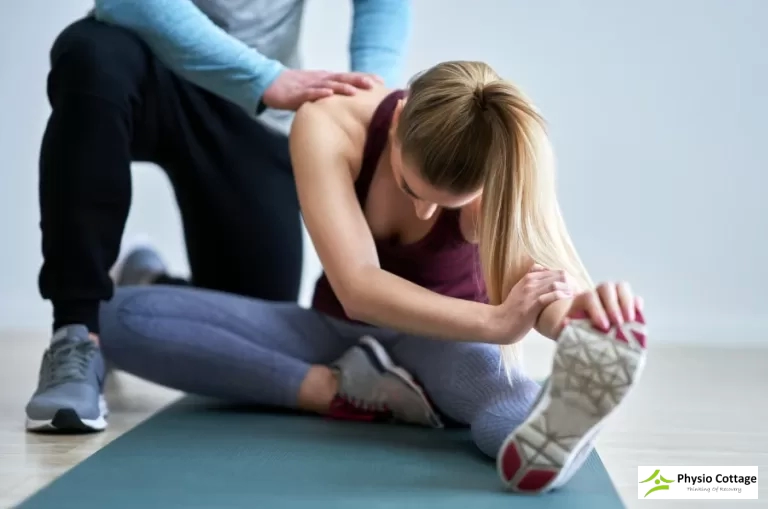
Injury prevention
Regular stretch therapy keeps muscles and fascia supple, which can lower the risk of strains, tears and compensation injuries.
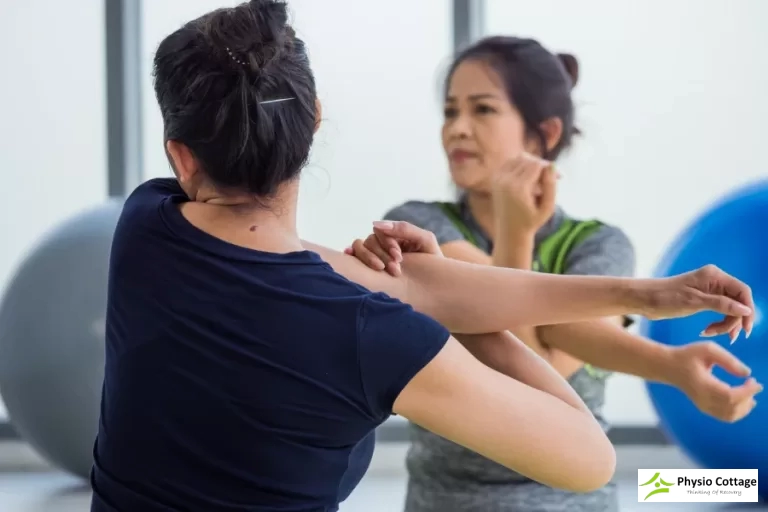
Everyday movement
Standing taller and moving more easily. Patients often describe feeling lighter and freer after a session.
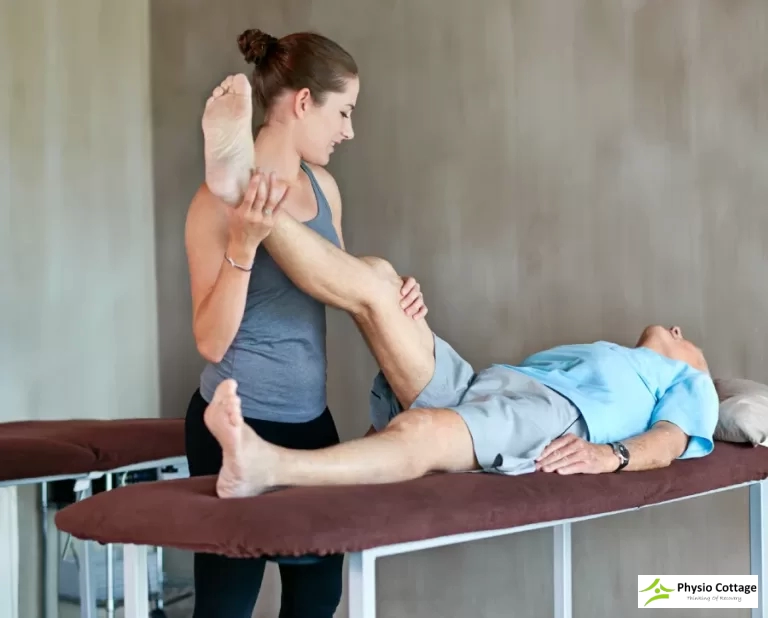
Choosing between them
Stretch therapy vs massage therapy
Both massage therapy and stretch therapy are used to reduce tension and improve how the body functions, but they work in different ways.
Massage therapy primarily uses manual pressure, kneading and manipulation of soft tissues to relieve muscle tightness, improve circulation, reduce stress and promote relaxation. It is often chosen for muscle adhesions, soreness and recovery after exercise or injury.
Stretch therapy is a guided approach focused on flexibility, range of motion and mobilizing joints and connective tissue. A trained therapist uses specific techniques to lengthen muscles and fascia, decompress joints and release restrictions that are hard to reach with self-stretching alone. Many patients combine the two. Read more on our massage therapy page.
Frequency
How often should I come?
This depends on your goals:
- General mobility and maintenance: about once a week
- Athletic performance: 1 to 2 times a week
- Post-injury stiffness: as recommended by your therapist
We will set a plan with you after your first session.
- 2231 Victoria Park Ave, Unit 5
Scarborough, ON M1R 1V8 - physiocottage@gmail.com
- Directions on Google Maps
FAQ
Stretch therapy questions
What is stretch therapy and how is it different from yoga or regular stretching?
Stretch therapy is guided one-on-one stretching by a trained therapist. The therapist controls the position, the force and the timing, which allows deeper release and joint decompression than self-stretching or a yoga class.
How long is a session?
Sessions are typically 30 to 60 minutes. A first visit includes the assessment, so 60 minutes is the usual starting point.
How many stretch therapy sessions will I need?
It varies with the problem. A course of 6 to 10 weekly sessions is common for lasting change, with maintenance visits afterward, while mild cases may need only 3 or 4. Your therapist sets the plan after your assessment and adjusts it as you progress.
How soon will I notice a difference?
Most people feel a change in the first session. Lasting improvement in how you move day to day usually takes four to six sessions with the home routine.
Does stretch therapy hurt?
It should not. You feel a strong but comfortable stretch, never sharp pain, and most people find sessions relaxing. The practitioner works with your breathing and your feedback, and the contract relax techniques make deeper stretching comfortable. Mild soreness for 12 to 24 hours after the first sessions is normal. Tell your therapist straight away if anything feels wrong.
What should I wear?
Fitted, comfortable athletic clothing that stretches and lets you move freely, such as workout wear. Loose clothing can get in the way of guided stretches. You stay fully dressed.
Is stretch therapy suitable for seniors and older adults?
Yes, with care. Techniques are gentle and adapted to arthritis and joint replacements. Gentle assisted stretching can help older adults keep the movement they need for stairs, dressing and getting in and out of a car, which makes daily tasks easier and safer. We screen for bone density, joint replacements and balance before starting.
Can I have stretch therapy if I have recently had surgery?
Yes, with your surgeon’s clearance. Therapists modify stretches to keep the affected area safe.
Can I combine it with massage or physiotherapy?
Yes, and many patients do. Both are available in the same clinic and can be scheduled back to back.
Is stretch therapy covered by insurance?
When provided by a registered massage therapist or physiotherapist it is billed under that benefit of most extended health plans, and we direct bill. Ask when booking so we schedule you with the right practitioner for your coverage.
Do I need a referral from my doctor to book stretch therapy?
No referral is needed to book, though some insurance plans require one for reimbursement. Check your plan before your first visit.
Where is the clinic and when are you open?
Physio Cottage is at 2231 Victoria Park Ave, Unit 5, Scarborough, ON M1R 1V8, with on-site parking, and Unit 5 is wheelchair accessible. The TTC 24 Victoria Park and 924 Victoria Park Express stop at Pachino Blvd, about 100 m away, and the 95 York Mills stops at Ellesmere Rd, about 450 m away. We are open Monday to Friday 10am to 8pm and Saturday 9am to 5pm. Call (416) 445-5353.
How it works
Why assisted stretching works when stretching on your own does not
Most people who come to us for stretch therapy have been stretching on their own for years with little to show for it. The reason is rarely effort. Stretching alone has three built in limits: you cannot fully relax a muscle you are also using to hold the position, you cannot easily reach the deep hip and spine tissues that limit most people, and you tend to stretch what feels tight rather than what is actually restricted. Assisted stretching removes all three. A trained practitioner moves your limb through its range while you stay completely relaxed, uses your own muscle contractions at the right moments to switch off the protective tension that stops a stretch, and targets the restrictions found in your assessment rather than the ones you can feel.
At Physio Cottage, stretch therapy draws on fascial stretch techniques, which work on the connective tissue around the joint as well as the muscle, and on contract relax methods, where you gently push against the practitioner for a few seconds before relaxing deeper into the stretch. Sessions are done on a treatment table, fully clothed in comfortable workout wear, with straps used to stabilize one limb while the other is treated. Most people leave with noticeably more range in the first session; the lasting change comes from a short course and the home routine that follows.
Fascial stretch techniques
Gentle traction and movement through multiple planes to free the connective tissue around the joint, not just the muscle. Particularly effective for hips, shoulders and the spine.
Contract relax stretching
You contract the muscle lightly against resistance for a few seconds, then relax while the practitioner takes the stretch further. Uses the nervous system to let go of tension.
Active assisted mobility
You move while the practitioner guides and supports, building control at the new end of range so the gain is usable in sport and daily life, not just on the table.
Who it helps
Who books stretch therapy at our Scarborough clinic
Desk workers with tight hips and shoulders
Hours of sitting shorten the hip flexors and round the shoulders. Stretch therapy restores the hip extension and chest opening that sitting takes away, with a short daily routine to keep it.
Runners and cyclists
Tight hip flexors, hamstrings and calves limit stride and load the knees and low back. Improved hip and ankle range makes running more efficient and reduces the strains that come from compensating.
Lifters and gym athletes
Restricted shoulders, hips and ankles limit squat depth and overhead position and push the load into the low back. Stretch therapy opens the positions the lifts require.
Athletes in rotational sports
Golf, tennis, baseball, cricket and hockey depend on hip and mid back rotation. Restriction here shows up as back pain and lost power; restoring it does the opposite.
People recovering from injury
After the acute phase of a strain, a frozen shoulder or a period of immobilization, assisted stretching restores range safely alongside the physiotherapy program.
Adults over fifty
Stiffness that creeps in with age is not inevitable. Gentle assisted stretching improves mobility for walking, stairs, gardening and getting up from the floor, and it is adapted to joint replacements and arthritis.
Anyone with chronic tightness
Tight necks, backs and hips that stretching, foam rolling and yoga have not shifted. The assessment finds what is actually restricted; the sessions address it.
Stress and poor sleep
A full body assisted stretch session is deeply relaxing, and many patients book it for that reason as much as for mobility.
Dancers and martial artists
Sports where range of motion is the skill. Assisted stretching builds range safely and pairs with strength work at end range so it holds.
Your session
What a stretch therapy session involves
- Assessment (first visit): history, goals, a look at how you move, and measurement of the key ranges: hip, shoulder, spine and ankle. We identify the restrictions that matter to your goal and screen for anything that needs physiotherapy first.
- The session: you lie on the table in comfortable clothing. The practitioner works systematically through the regions in your plan, using traction, movement and contract relax techniques. Breathing is coached throughout, because a held breath holds a muscle.
- Re measure: ranges are checked again at the end so you see the change.
- Home routine: two to four stretches or mobility drills, under ten minutes, chosen to hold the gain. Patients who do these progress twice as fast.
- Course: weekly for four to six sessions is typical, then every two to four weeks as maintenance if you choose. Athletes often book around training and competition.
Stretch therapy compared with other options
- Yoga and stretching classes: excellent for general mobility, but they stretch what you can reach and are not matched to your restrictions. Many of our patients do both.
- Massage therapy: works on muscle tension and circulation through pressure. Stretch therapy works on range through movement. They pair well. Massage therapy.
- Myofascial release: sustained pressure into restricted fascia. Often combined with stretch therapy in the same plan. Myofascial release.
- Physiotherapy: for pain, injury and rehabilitation. If your tightness comes with pain, numbness or a recent injury, start there. Physiotherapy.
Honest advice
What stretch therapy can and cannot do
Assisted stretching reliably improves range of motion and the feeling of tightness, and for many people that is exactly what they need. It is not a treatment for injury, nerve pain or joint damage, and stretching an injured tissue can make it worse. We assess before we treat, and we will tell you if your tightness is a symptom of something that needs physiotherapy or a doctor: a muscle that is tight because it is protecting an irritated joint or nerve, hamstrings that are tight because of a back problem, or a shoulder that is stiff because of a frozen shoulder or rotator cuff injury. In those cases the right plan starts with treatment of the cause, and stretch therapy joins later.
Flexibility alone is also not the goal. Range that you cannot control is range you cannot use, and it can even increase injury risk. That is why our sessions include active work at the new end of range, and why patients with hypermobile joints get a different plan built around strength and control rather than more stretching.
- See a physiotherapist or doctor first if you have sharp pain, numbness or tingling, a recent injury or surgery, unexplained swelling, or stiffness with fever or illness.
- Tell your practitioner about hypermobility, joint replacements, osteoporosis, pregnancy, blood thinners or any condition affecting your joints or circulation; techniques are adapted.
- Expect mild soreness for a day after your first sessions, like after a good workout. Sharp or lasting pain is not expected.
Between sessions
A sensible home mobility routine
Warm first
Stretch after a walk, a shower or a workout, not cold. Warm tissue lengthens more easily and more safely.
Slow and relaxed
Ease into each position over 20 to 30 seconds and breathe slowly. Bouncing and straining trigger the protective tension that stops the stretch.
The right targets
Do the two to four stretches your practitioner chose for your restrictions, not a generic list. For most desk workers that means hip flexors, chest and the upper back.
Use the range
Follow stretching with a movement that uses the new range: a deep squat, an overhead reach, a lunge. This is what tells the nervous system the range is safe to keep.
Little and often
Five to ten minutes most days beats a long session once a week. Pair it with something you already do, such as the kettle boiling or the end of a workout.
Move through the day
No routine undoes eight motionless hours. Stand and move for a minute every half hour; it matters more than any single stretch.
Book a session
Move better by the end of your first session.
Book stretch therapy at Victoria Park and Ellesmere, on its own or alongside massage therapy or physiotherapy.
- Assessment based, matched to your restrictions
- Direct billing to most extended health plans
- 2231 Victoria Park Ave, Unit 5, Scarborough, ON M1R 1V8
- Monday to Friday 10am to 8pm, Saturday 9am to 5pm
- On-site parking, minutes from the 401 and DVP
A typical course
What stretch therapy looks like in practice
Here is a typical example of the kind of case we see every week, with details changed. A man in his forties who works in software from an office near Don Mills has had a stiff low back and tight hamstrings for years. He cannot touch his shins, his squat in the gym stops well above parallel, and a weekly yoga class has not changed either. At his assessment we find that his hamstrings are not the main problem at all: his hips barely extend, his hip rotation is limited on both sides and his mid back hardly rotates, so his low back does the work the hips should do. His first session concentrates on the hips and mid back with fascial stretch and contract relax techniques, and we measure a clear gain in hip extension and rotation by the end. He leaves with three mobility drills that take eight minutes and a note to stand up every half hour. Over five weekly sessions his squat depth improves, the morning back stiffness fades, and for the first time he can reach the floor. A referral to our physiotherapist adds glute and core strengthening so the new range is supported. He now books a session every month or so during heavy work periods, by his own choice, and keeps the eight minute routine. The hamstrings were never the problem; the assessment was what made the difference.
Glossary: terms you will hear in a session
Range of motion
How far a joint moves, measured in degrees. We measure the ranges that matter to your goal at the first visit and re check them at the end of each session.
Contract relax
A technique where you gently contract a muscle against resistance, then relax while the stretch is taken further. Uses a reflex to reduce protective tension.
Fascia
The connective tissue web around muscles and joints. Fascial stretch techniques target it with traction and multi directional movement.
End range
The furthest point a joint currently reaches. Building strength and control at end range is what makes a new range usable.
Hypermobility
Joints that move beyond the usual range. Hypermobile patients need strength and control work more than stretching, and their plan reflects that.
Mobility versus flexibility
Flexibility is how far a muscle lengthens; mobility is how well a joint moves under control. We train both, with the emphasis on mobility.
Before you book
Questions to ask before you book stretch therapy
Assisted stretching has become popular, and studios offering it have opened across Toronto. Not every stretch session is delivered by a regulated health professional, and that difference matters if you have pain, an old injury or a health condition. These questions help you choose well.
Who will stretch me?
Ask whether the person working with you is a registered massage therapist, a physiotherapist or another regulated professional, or someone trained only in a stretching method. A regulated professional can screen for problems and adjust safely.
Will I be assessed first?
Tightness is sometimes a symptom of something else, such as a protective muscle around a sore joint. A short assessment of your history and movement makes sure stretching is the right tool.
What will I do between sessions?
Flexibility gained on the table fades without home practice. Ask for a short routine you can actually keep up, and ask how to progress it.
How will we measure progress?
Simple tests, such as how far you can reach, turn your head or bend your knee, show whether sessions are making a difference over a few weeks.
Can it be combined with other care?
Stretching often works best alongside massage, strengthening or physiotherapy. Ask whether your plan can include those if you need them.
Will my insurance help?
That depends on who delivers the session. Call (416) 445-5353 and we will tell you how your visit will be receipted.
Costs and billing
How stretch therapy is billed
Stretch therapy is a treatment approach rather than a separate regulated profession, so extended health plans pay for the professional who delivers it. When assisted stretching is part of a massage therapy appointment, it is usually receipted as massage therapy; when it is part of a physiotherapy plan, it is receipted as physiotherapy. Check whether your plan covers those services, whether a doctor note is needed for massage therapy, and how much of each visit is reimbursed. Our front desk can explain your receipt before your first session, so there are no surprises.
Keep reading
Related services and guides
How physiotherapy helps postural imbalances
Why desk posture and daily habits create tightness, and how to reverse it.
Recovering from a muscle strain
When stretching helps a strained muscle, and when to wait.
Massage therapy
Registered massage therapy, often combined with assisted stretching.
Myofascial release
Sustained pressure techniques for stubborn tightness.
Sport injury treatment
Recovery and mobility work for active people.
From the blog
Guides about stretch therapy from Physio Cottage
- Physiotherapy Exercises for Office Workers
- How Physiotherapy Helps Postural Imbalances
- Muscle strain recovery time with physiotherapy
- What Types of Exercises Are Common in Physiotherapy?
Related services at the clinic: physiotherapy, massage therapy and myofascial release.
Your wellness matters to us
Book a stretch therapy session online or call the clinic. We are at 2231 Victoria Park Ave, Unit 5, Scarborough, ON M1R 1V8, open Monday to Friday 10am to 8pm and Saturday 9am to 5pm.
- One-on-one sessions with a registered therapist
- FST and PNF techniques
- Direct billing where your plan allows
- Easy parking at Victoria Park and Ellesmere