Chronic pain
Ongoing pain that hasn’t fully responded to other treatment, addressed as part of a broader chronic pain plan.
Acupuncture · Scarborough
Reviewed by Maryam Ahankoob, Registered Physiotherapist and clinic lead. Updated November 2026.
Chronic pain, tension headaches, stress, poor circulation, or repetitive strain from desk work, our registered acupuncturists use traditional Chinese medicine techniques to relieve pain and restore balance, without medication.
We serve patients from across Scarborough and east Toronto, including Victoria Village, Wexford, Bendale, Agincourt, L’Amoreaux, and Clairlea, with easy parking and flexible evening and Saturday appointments near Victoria Park & Ellesmere.
Regulated in Ontario
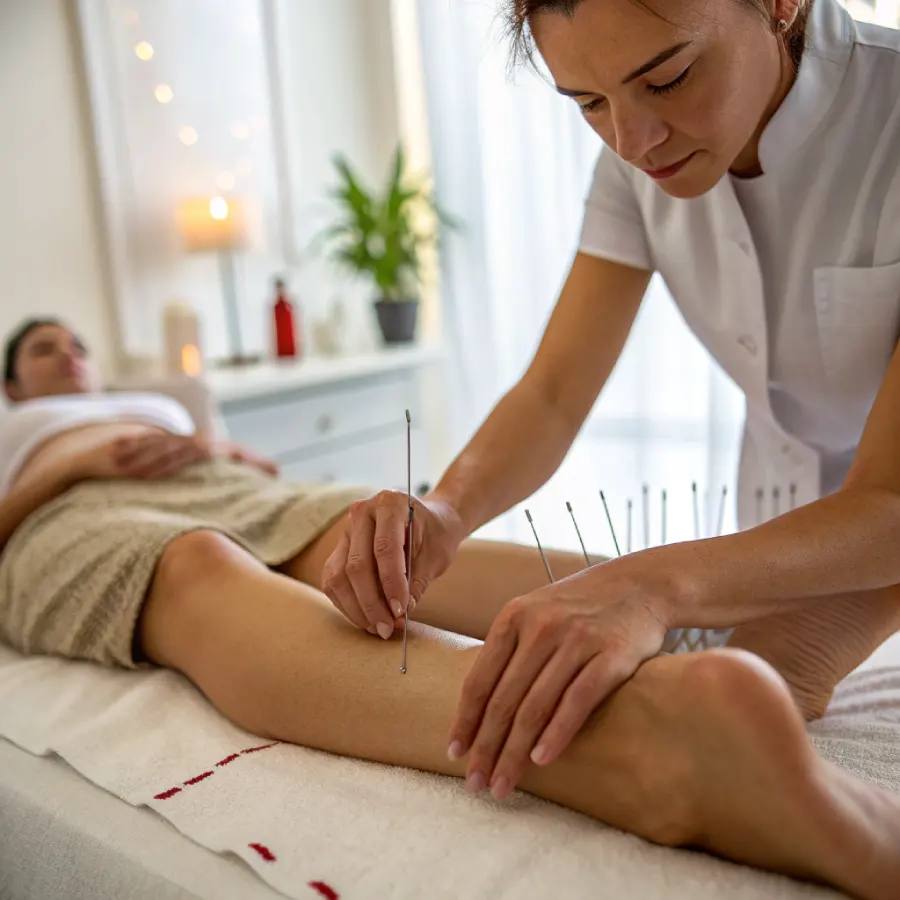
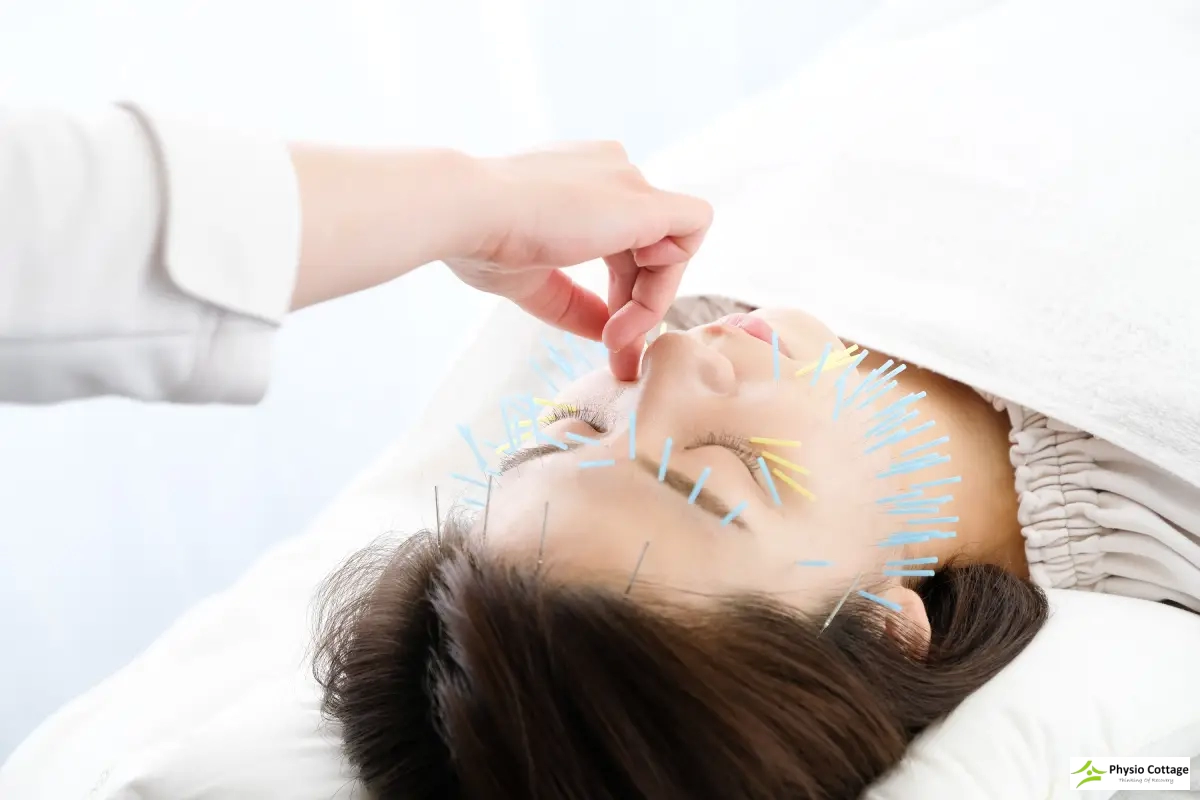
Acupuncture is a component of Traditional Chinese Medicine (TCM) that uses thin, sterile needles inserted at specific points on the body to stimulate the nervous system, ease pain, and support your body’s own healing response.
In Ontario, Traditional Chinese Medicine and acupuncture is a regulated health profession, overseen by the College of Traditional Chinese Medicine Practitioners and Acupuncturists of Ontario (CTCMPAO). That means your acupuncturist has met provincial education and safety requirements, worth checking, since not every “acupuncture-style” service advertised online is delivered by a registered practitioner.
Registration is easy to verify. You can look up any acupuncturist’s registration directly on the CTCMPAO website before you book, in under a minute.
Fees and pricing
Your first acupuncture visit costs $120 and each subsequent visit is $100. The initial appointment includes a health history and assessment so your acupuncturist can choose points and an approach that suit your condition, followed by your first treatment. Many extended health plans include acupuncture when it is provided by a registered practitioner. Check your plan, or call us and we will help you confirm your coverage before you book.
$120
Assessment and first treatment
$100
Per treatment session
All prices in Canadian dollars. Your fee is confirmed when you book.
A common question
Both use thin, solid needles, so it’s a fair question, but the theory and goal behind each are different.
| Based on | Best known for | |
|---|---|---|
| Acupuncture | Traditional Chinese Medicine, meridian-based points | Whole-body balance, chronic pain, stress, circulation, general wellness |
| Dry needling | Western, physiotherapy-based approach | Releasing tight, localized muscle trigger points |
Many patients benefit from acupuncture as part of a broader physiotherapy or myofascial release plan. Ask your practitioner which approach fits your goals.
Self-check
You may benefit from acupuncture if you experience any of the following.
If any of this sounds familiar, an acupuncture assessment is a reasonable next step.
Book an assessmentConditions we treat
Ongoing pain that hasn’t fully responded to other treatment, addressed as part of a broader chronic pain plan.
Needling can ease the muscle tension and nervous system patterns behind frequent headaches.
A calming, drug-free way to lower overall tension and support relaxation.
Supports blood flow to areas that feel persistently cold, tight, or under-recovered.
Many patients report more restful sleep as tension and pain ease.
Used alongside physiotherapy or sport injury rehab to support recovery.
Desk work, typing, and repetitive hand motion can lead to wrist and forearm tension or carpal-tunnel-type symptoms. Acupuncture can be used alongside physiotherapy to ease tension and support recovery.

Needle safety, plainly
Acupuncture needles are extremely thin, solid, sterile, and used only once. Most are inserted no more than half an inch to an inch deep, and many patients feel little more than a light pinch, if anything at all.
Once placed, needles typically stay in for a short rest period while you relax, often described as one of the most calming parts of the visit. Mild bruising at a needle site is possible but uncommon.
Single-use, no exceptions. Every needle is disposed of immediately after your session in a sharps container: nothing is ever reused.

Your first visit
Your first visit starts with a conversation about your health history, symptoms, and goals, so your acupuncturist can select the points and approach that fit your condition.
Treatment can begin the same visit, followed by a short rest period while the needles are in place. Many patients leave feeling noticeably more relaxed.
Why Physio Cottage
Regulated by the College of TCM Practitioners and Acupuncturists of Ontario.
Every treatment is built around your symptoms, goals, and overall plan.
A relaxing environment designed to support treatment, not rush it.
Combine acupuncture with physiotherapy, massage, or chiropractic care.
Most extended health plans cover acupuncture: we bill directly where available.
Look up any practitioner on the public register of their Ontario College before your visit.
Where our patients come from
Physio Cottage is located near Victoria Park & Ellesmere and welcomes patients from across Scarborough and east Toronto.
Approaches
Acupuncture is not one technique. Depending on your condition and comfort, your practitioner may use one or a combination of the approaches below. Each uses sterile, single use needles that are far finer than the needles used for injections, and most patients feel a brief tap followed by a dull, heavy or warm sensation rather than pain.
Needles placed at classical points along the body, chosen for your pattern of symptoms. Sessions are calm and unhurried, and many patients find this approach particularly helpful for stress, sleep and headaches.
Needles placed directly into tight bands of muscle that refer pain, such as the knot in the shoulder blade that sends pain up the neck. Often used for sports injuries and desk related tension. Acupuncture vs dry needling.
A gentle electrical current passed between two needles for a steady, rhythmic stimulation. Used for persistent pain and some nerve related conditions where manual needling alone is not enough.
Suction cups applied over tight muscle before or after needling to improve circulation and loosen the tissue. Expect round marks that fade over a few days.
Modified point selection and positioning for nausea, back and hip pain, and general wellbeing, with points that are avoided in pregnancy excluded. Is acupuncture safe during pregnancy?
Used within a physiotherapy plan, by a practitioner authorised for acupuncture, as one part of care for sprains, tendon pain and post surgical stiffness, alongside manual therapy and exercise. Physiotherapy.
Condition guide
These are the reasons patients in Scarborough most often book acupuncture at Physio Cottage, with a realistic note on how treatment usually goes. Results vary from person to person, and we will tell you early if acupuncture does not seem to be helping you.
The most common reason for a visit. Needling the tight muscles and local points often eases pain and improves movement within a few sessions, especially when combined with the exercise program from our physiotherapists.
Points in the neck, shoulders, scalp and hands. Many patients report fewer and milder headaches over a course of four to eight sessions, which we review together as we go.
Needling the calf and the sole of the foot alongside loading advice and footwear changes. Acupuncture for plantar fasciitis.
Points around the wrist, forearm and neck to ease tingling and aching from keyboard work and repetitive tasks. Combined with nerve gliding exercises and ergonomic advice.
Local and distal points to reduce pain and allow more activity. Acupuncture does not reverse arthritis, but less pain often means more walking and stronger legs, which is what protects the joint.
Calming treatments that many patients describe as the most relaxed they feel all week. Acupuncture is a support here, not a replacement for medical or psychological care when that is needed.
Your course of treatment
Acupuncture tends to work cumulatively. A single session can bring relief, but lasting change usually needs a short course. For a recent problem such as a muscle strain or a flare of neck pain, we typically suggest one to two sessions a week for two to three weeks. For long standing problems such as chronic headaches, arthritis pain or persistent low back pain, a course of six to ten sessions over several weeks is more realistic, followed by occasional sessions if they help you maintain the result.
We review progress at every visit. If you have had four sessions without any change, your acupuncturist will say so and suggest a different approach, which might be physiotherapy, massage therapy or a conversation with your doctor. How many acupuncture sessions are needed?
Honest advice
Acupuncture is a safe treatment in trained hands, and it is not the right starting point for everything. Please see a doctor first, or tell us so we can advise you, if you have:
Once a doctor or physiotherapist has assessed the problem, acupuncture is often a useful part of the plan and can begin right away.
Most people who book acupuncture at our Scarborough clinic come in with pain that has lasted longer than they expected. The most common reasons are:
Fine needles placed at specific points stimulate nerves in the skin and muscle. This is thought to change how pain signals are processed, prompt the release of the body’s own pain-relieving chemicals such as endorphins and help tight muscle relax. Results vary from person to person, which is why your practitioner reviews how you respond every few visits.
Traditional acupuncture uses points chosen from an assessment of your symptoms as a whole. Dry needling targets tight bands and trigger points within a muscle. Your practitioner explains which approach suits your problem before treatment starts. Read more about acupuncture and dry needling and the needles used in acupuncture.
Our clinic at 2231 Victoria Park Ave, Unit 5 sees acupuncture patients from Wexford, Maryvale, Dorset Park, Clairlea and across Scarborough, as well as Parkwoods and Victoria Village. Weekday appointments run until 8 p.m., with Saturday appointments from 9 a.m. to 5 p.m. Call (416) 445-5353 or book online.
Getting here
Physio Cottage is at 2231 Victoria Park Ave, Unit 5, Scarborough, ON M1R 1V8, with on-site parking. The TTC 24 Victoria Park and 924 Victoria Park Express stop at Pachino Blvd, about 100 m away, and the 95 York Mills stops at Ellesmere Rd, about 450 m away. We see acupuncture patients from across Scarborough, North York and East York, and from Markham and Pickering for patients who work nearby. Hours are Monday to Friday from 10am to 8pm and Saturday from 9am to 5pm; evening sessions are popular, so book ahead when you can. Call (416) 445-5353 or book online.
Step by step
We go through your symptoms, medical history, medications and goals, and check for anything that changes how we treat you, such as pregnancy, blood thinners or a pacemaker. This takes about 15 minutes and sets the plan.
You lie comfortably on the table, usually with only the treatment area uncovered. Needles are placed in a few seconds each; most people feel a tap and then a dull or warm sensation. They stay in for 15 to 25 minutes while you rest in a quiet room, and your practitioner checks on you.
Needles are removed, we discuss how it felt and what to expect over the next day, and we agree on how many sessions to plan before reviewing. You leave with simple advice on activity, hydration and anything to watch for.
Exercise is a core part of care for long lasting muscle and joint pain, so acupuncture here is usually paired with a short program from our physiotherapists. Ask about a combined plan if your problem has lasted more than a few weeks.
Our approach
At Physio Cottage, acupuncture is planned around a goal. Because the practitioner works alongside physiotherapists, a chiropractor and registered massage therapists in one clinic, acupuncture is prescribed for a reason and reviewed against a goal rather than offered as a standalone ritual. A patient with tennis elbow, for example, may receive dry needling to settle the tendon pain, a loading program from the physiotherapist to rebuild the tendon, and advice on grip and technique so the problem does not return. A patient with migraines may combine traditional acupuncture with neck treatment and sleep and posture coaching. Sessions are calm and never rushed, rooms are private, and the same practitioner sees you throughout. We have served Scarborough, North York and East York from Victoria Park and Ellesmere since 2017, with evening and Saturday hours and direct billing to most extended health plans, so a course of acupuncture is practical to complete rather than something you start and abandon.
From the blog
Updated 3 November 2026. Reviewed by Maryam Ahankoob, Registered Physiotherapist.
Dry needling
Dry needling uses the same fine, solid, single use needles as acupuncture, placed into a tight band of muscle (a trigger point) that is tender and often refers pain somewhere else, such as the knot under the shoulder blade that sends an ache up the neck. Physio Cottage offers dry needling at 2231 Victoria Park Ave, Unit 5, usually as one part of a plan that also includes exercise and hands on care from our physiotherapy in Scarborough team.
In Ontario, dry needling is acupuncture under the law. Acupuncture is a controlled act under Ontario’s Regulated Health Professions Act, so only practitioners authorised for it may perform dry needling: registered acupuncturists and Traditional Chinese Medicine practitioners with the College of Traditional Chinese Medicine Practitioners and Acupuncturists of Ontario (CTCMPAO), and physiotherapists who are rostered with the College of Physiotherapists of Ontario for acupuncture, which the College defines as including dry needling. A physiotherapist may not delegate acupuncture or dry needling to an assistant or anyone else. You are welcome to ask who will treat you and to check their registration before your session.
We start with your history and an examination to find the muscles involved and to screen for anything that rules needling out. With your consent, the practitioner places a needle into the trigger point, sometimes moving it gently. Some people feel a brief local twitch or a deep ache. Needles are usually in for seconds to a few minutes, then removed and disposed of in a sharps container.
Dry needling is most often used for muscle related pain: neck and shoulder tension from desk work, tension type headaches linked to neck muscles, low back and buttock pain, tennis elbow, calf and heel pain, and sports strains. It is used alongside exercise and loading advice, because needling on its own does not rebuild strength or change the habits that load the muscle.
Soreness in the treated muscle for a day or two is common and feels like a hard workout. Small bruises or a spot of blood can happen. Keep moving gently, drink water and do the exercises you were given. Tell us at your next visit how you felt, so the plan can be adjusted.
Minor reactions such as soreness, bruising and brief bleeding are common, while serious events are rare. Needling over the chest wall carries a small risk of a punctured lung, which is why practitioners use careful depth and technique there. Call 911 or go to an emergency department if you develop sudden shortness of breath or chest pain after treatment.
Both are acupuncture in Ontario law and use the same needles. The difference is in the reasoning. Traditional acupuncture selects points from an assessment of your symptoms as a whole, often including points away from the painful area, and needles usually stay in for 15 to 25 minutes while you rest. Dry needling targets the trigger points found in the examination, usually close to the pain, with shorter needle times. Some patients receive both in one plan. We use it as one tool in a plan, never as a stand alone fix.
Prices: an initial acupuncture visit is $120 and a subsequent visit is $100 (see all clinic prices). You can book online or call (416) 445-5353. More reading: Is acupuncture the same as dry needling? and myofascial release at Physio Cottage.
Regulation
Acupuncture and Traditional Chinese Medicine are regulated in Ontario by the College of Traditional Chinese Medicine Practitioners and Acupuncturists of Ontario. The College recognises two protected titles: R. Ac (Registered Acupuncturist) and R. TCMP (Registered Traditional Chinese Medicine Practitioner). Members of this College may not use the title Doctor, may not claim a specialty, and must practise under the name that appears on the College register. You can confirm any practitioner’s registration on the public register at ctcmpao.on.ca.
The College’s advertising standard also says fees must be explained before treatment and itemised on your receipt. At Physio Cottage the fee is confirmed when you book, and you receive a receipt after each visit for your insurer.
Acupuncture is most often used for back and neck pain, osteoarthritis pain, migraines and tension headaches, and it usually works best as part of a plan with exercise. Complications are rare when it is delivered properly with sterile, single use needles. Responses vary from person to person, which is why your practitioner reviews progress every few visits and says so early if acupuncture is not helping you.
Acupuncture at our clinic often sits alongside chronic pain care, massage therapy and chiropractic care. Read what to know before your first acupuncture session before your first appointment.
Questions patients ask
Updated 4 November 2026.
Many extended health plans cover acupuncture when a registered practitioner provides it, usually up to an annual maximum, and some ask for a doctor’s note. We direct bill most major insurers where your plan allows and give you a receipt after every visit. Check your annual limit, or call (416) 445-5353 and we will help you confirm coverage before you book.
An initial acupuncture visit is $120 and includes your health history, assessment and first treatment. Each subsequent visit is $100. Acupuncture is exempt from HST in Ontario when provided by a registered practitioner, so these are the prices you pay. Your fee is confirmed when you book. See all clinic prices on the pricing page.
No. OHIP does not pay for health services delivered outside hospital by providers who are not physicians, so acupuncture at a private clinic is paid by you or your extended health plan. Many workplace and private plans include acupuncture, and approved WSIB and auto insurance claims can include it when it is part of the treatment plan.
Usually, yes. Plans tend to cover dry needling under the benefit of the practitioner who provides it, either acupuncture or physiotherapy, so the receipt shows who treated you and what was done. Ask your insurer which benefit applies, because the annual maximums can differ. We can check with you before your visit.
No referral is needed to book acupuncture at Physio Cottage. Some insurance plans ask for a doctor’s referral or note before they reimburse acupuncture, so check your plan booklet if you are claiming.
Yes, when it is part of an approved treatment plan. We bill approved WSIB workplace injury claims and auto insurance claims directly where applicable. Bring your claim number and adjuster details when you book. Read more about WSIB injury care and motor vehicle accident care.
Bring your insurance card, a list of your medications, any imaging or doctor’s notes about your problem, and loose clothing that lets us reach your arms, legs and back. If you are claiming through WSIB or an auto insurer, bring the claim details. You can also complete the health history form before you arrive.
Yes. The clinic is open Monday to Friday from 10am to 8pm and Saturday from 9am to 5pm, and closed Sunday. Evening times fill quickly, so book a few days ahead when you can, online or by calling (416) 445-5353.
Plan for 45 to 60 minutes at your first visit, which includes the assessment. Follow up sessions are usually 30 to 45 minutes, with needles in place for 15 to 25 minutes of that time.
Most patients feel little to no discomfort. The needles are extremely thin, and many describe the treatment as relaxing rather than painful.
Most people feel a quick tap as the needle goes in, then a dull, heavy, tingling or warm feeling around the point, which practitioners call de qi. Sharp or burning pain is not expected; tell your practitioner straight away and the needle will be adjusted or removed. Many patients find the rest period with the needles in place relaxing.
Typically between five and twenty, depending on the condition and your comfort. If you are nervous, your practitioner can start with fewer needles and add more at later visits once you know what to expect.
For most sessions, yes. Needles usually stay in for 15 to 25 minutes. Your practitioner chooses the time based on your condition and how you responded last time. Longer is not automatically better, and a first session is often kept shorter.
It depends on the problem. A recent strain may need one or two sessions a week for two to three weeks, while long standing pain or frequent headaches often needs six to ten sessions over several weeks. We review progress at every visit, and if four sessions bring no change your practitioner will say so and suggest another approach.
Electroacupuncture passes a gentle, adjustable electrical current between two needles to give steady, rhythmic stimulation. It feels like tapping or buzzing and should never be painful. It is used for some persistent pain and nerve related problems. It is not used if you have a pacemaker or other implanted electrical device.
Cupping uses suction cups placed over tight muscles before or after needling to draw the skin and tissue upward. It usually leaves round red or purple marks that fade over a few days, and they are not bruises from impact. Tell us beforehand if you have an event coming up or skin that marks easily.
Do not come on an empty stomach: eat something light in the two hours before. Avoid alcohol and heavy exercise just before your visit, and do not skip regular medication unless your doctor has told you to. Wear loose clothing and tell us about any change in your health since your last visit.
Drink water, keep the rest of the day lighter if you can, and avoid a very hot shower or hard workout for a few hours. Feeling relaxed or a little tired is common. Do the home exercises you were given, and note how your symptoms change over the next two days so we can review it next time.
Yes. Most people feel relaxed but clear headed. If you feel light headed after your first session, rest in the clinic for a few minutes before leaving.
The most common reasons are neck, shoulder and low back pain, tension headaches and migraine, knee and hip osteoarthritis, plantar fasciitis and heel pain, repetitive strain such as carpal tunnel symptoms, and stress related muscle tension. Acupuncture is usually one part of a plan with exercise. We will tell you if your problem needs a different first step.
It may reduce how often migraines happen for some people, and it can help some people with tension headaches. Results vary, so we track how often headaches happen over a course of four to eight sessions and review it with you. Sudden severe headache needs urgent medical care.
It can help some people with long-standing low back pain, usually in the short term and most often as an addition to other treatment. That is why we combine it with exercise from our physiotherapy team.
It can ease osteoarthritis pain for some people, including in the knee. It does not reverse joint changes. The aim is less pain so you can walk and strengthen the leg, which protects the joint.
Neck and shoulder pain from desk work, sleep posture or an old strain is the most common reason patients book. We usually combine needling with posture changes and a few neck and shoulder exercises, and review whether it is helping within the first few sessions.
Many patients use acupuncture alongside physiotherapy to ease tension and support recovery from repetitive strain, including carpal-tunnel-type symptoms.
We focus on pain, musculoskeletal conditions, headaches and stress related symptoms, where the evidence and our experience are strongest. We are honest about what acupuncture can and cannot do. Can acupuncture help with weight loss?
Yes, with a practitioner who knows you are pregnant. Point selection and positioning are modified and points avoided in pregnancy are left out. It is often used for back and hip pain and nausea. Tell us how far along you are when you book, and read Is acupuncture safe during pregnancy?.
Yes. Some points are avoided or used with caution in pregnancy, over areas of infection or broken skin, over varicose veins, and close to the chest wall where depth matters. There is no single official list of forbidden points; your practitioner follows their training and the College’s safety standards and explains any points they will not use.
In Ontario both are acupuncture under the law and use the same fine needles. Traditional acupuncture chooses points from an assessment of your symptoms as a whole, often away from the painful area. Dry needling targets tight, tender trigger points in a muscle close to the pain, usually with shorter needle times. Your practitioner explains which approach suits you before starting.
Dry needling places a fine, solid needle into a trigger point, a tight and tender band in a muscle that often refers pain elsewhere. It is called dry because nothing is injected. It is used for muscle related pain in the neck, shoulders, back, hips, elbow and calf, alongside exercise and other hands on treatment.
Only practitioners authorised for the controlled act of acupuncture: registered acupuncturists and Traditional Chinese Medicine practitioners with the CTCMPAO, and physiotherapists rostered with the College of Physiotherapists of Ontario for acupuncture, which includes dry needling. Physiotherapists may not delegate it. You can ask who will treat you and check their registration on their College’s public register.
Yes. Dry needling is offered at our clinic at Victoria Park and Ellesmere, after an assessment and with your consent, as one part of a plan with exercise and hands on care. Book an acupuncture or physiotherapy assessment and mention dry needling, or call (416) 445-5353 and we will book you with a practitioner authorised to provide it.
You may feel a brief prick, then a deep ache or a quick twitch in the muscle when the needle reaches the trigger point. It should not be sharp or burning. Soreness afterwards, like a hard workout, is common for a day or two. Your practitioner checks in throughout and stops if you ask.
It can help some people with muscle related pain, especially when combined with exercise. Responses vary, so we review whether it is helping after a few sessions.
Common minor effects are soreness, small bruises, brief bleeding and feeling tired. Major events are rare. Rare serious risks include a punctured lung when needling near the chest wall and infection. Seek urgent care for sudden shortness of breath or chest pain.
They can. Needling may ease a trigger point, but if the muscle keeps being overloaded by posture, work tasks or training errors, tension often returns. That is why dry needling at our clinic comes with exercises and advice on whatever loads the muscle, so the change is more likely to last.
It may help when buttock and hip muscles such as the piriformis contribute to leg pain, but it does not treat a compressed nerve root itself. Sciatica needs an assessment first to find the cause. Numbness that is spreading, leg weakness, or changes in bladder or bowel control need urgent medical care rather than needling.
Neither is better for everyone, and the evidence for both in sciatica is limited. The choice depends on what the assessment finds: dry needling may suit tight hip and buttock muscles, while acupuncture may be chosen for broader pain relief. Either one is usually combined with exercise and activity advice from a physiotherapist.
Myofascial pain syndrome is muscle pain linked to trigger points: tight, tender spots in a muscle that hurt when pressed and can refer pain elsewhere, such as from the neck into the head. It is commonly managed with exercise, stretching, manual therapy, myofascial release and, for some people, dry needling.
Many people try two to four sessions alongside their exercise program, then we review. If there is a clear change in pain or movement we continue and spread the visits out; if not, we stop and change the plan. You should not need dry needling indefinitely.
Light activity and your home exercises are fine and often help the soreness settle. Leave hard training or heavy lifting with the treated muscle until the next day, or longer if it still feels sore. Your practitioner will tell you what suits your sport or job.
Acupuncture is considered safe when a trained, registered practitioner uses sterile, single use needles. Mild bruising, soreness or a small spot of blood are the most common effects. Serious complications such as infection or a punctured organ are rare and are linked to improper technique. Tell us about blood thinners, pregnancy, a pacemaker or bleeding disorders.
Many patients who dislike injections do fine with acupuncture because the needles are so fine. Tell us about your concern; we start with fewer needles and explain each step.
Acupuncture may not be suitable, or needs extra care, if you have a bleeding disorder or take blood thinners, a pacemaker (for electroacupuncture), a skin infection or rash at the treatment site, lymphedema in the area, uncontrolled epilepsy, or are pregnant. Tell your practitioner about these so they can adjust or recommend another treatment.
Never. Every needle is sterile, single use and disposed of in a sharps container straight after your session. Sterile, single use needles are the standard of practice for every registered practitioner.
Search the practitioner’s name on the public register of the College of Traditional Chinese Medicine Practitioners and Acupuncturists of Ontario at ctcmpao.on.ca. A physiotherapist who provides acupuncture or dry needling appears on the College of Physiotherapists of Ontario register. Practitioners must use the name shown on their register.
They are the two protected titles under Ontario’s Traditional Chinese Medicine Act, 2006. R. Ac means Registered Acupuncturist and R. TCMP means Registered Traditional Chinese Medicine Practitioner. Only members of the College may use them. College members may not use the title Doctor or describe themselves as specialists.
Feeling light headed happens occasionally, especially at a first visit or if you have not eaten. Tell your practitioner straight away: the needles are removed, you lie flat and rest, and it passes within minutes. Eating something light beforehand and lying down for treatment reduce the chance of it happening.
Yes. Acupuncture is often combined with physiotherapy, massage therapy or chiropractic care in one plan, so each visit has a clear purpose and progress is reviewed against your goals.
The clinic is at 2231 Victoria Park Ave, Unit 5, Scarborough, ON M1R 1V8, near Victoria Park and Ellesmere, with on-site parking and bus stops on Victoria Park within a short walk. Patients come from Wexford, Dorset Park, Victoria Village, Parkwoods and across Scarborough and North York. Unit 5 is wheelchair accessible.
Our team speaks English, Farsi and Tagalog. Let us know your preferred language when you book and we will tell you which appointments suit you.
Registered acupuncturists, direct billing, and appointments that fit your schedule, right at Victoria Park & Ellesmere.
Monday to Friday 10am to 8pm · Saturday 9am to 5pm · Sunday closed
2231 Victoria Park Ave, Unit 5, Scarborough, ON M1R 1V8