
Hands-on therapy
Myofascial release therapy in Scarborough
Reviewed by Maryam Ahankoob, Registered Physiotherapist and clinic lead. Updated October 2026.
Physio Cottage provides myofascial release for chronic pain, muscle tightness and movement that feels restricted. This slow, hands-on technique works on the fascia, the connective tissue around your muscles and joints, to ease tension and help you move more freely. Direct insurance billing is available where your plan allows. We are at Victoria Park and Ellesmere in Scarborough.
Fees and pricing
Myofascial release prices in Scarborough
Myofascial release is billed at the rate of the practitioner who provides it. With a registered physiotherapist, the initial assessment is $115 and follow-up visits are $105. As part of a registered massage therapy session, prices start at $79.10 for 30 minutes and go up to $169.50 for 90 minutes, tax included. Tell us your goals when you book and we will match you with the right practitioner.
Initial physiotherapy assessment
$115
First visit: assessment and treatment plan
- Full history and movement assessment
- The problem explained in plain language
- Treatment plan agreed together
- Home exercise program
Physiotherapy follow-up visit
$105
Per treatment session
- Hands-on treatment
- Exercise progression
- Progress re-checked each visit
- Receipt for your insurer
Registered massage therapy
$79.10
From 30 minutes, tax included
- 45 min $101.70
- 60 min $124.30
- 75 min $146.90
- 90 min $169.50
All prices in Canadian dollars. Your fee is confirmed when you book.
The technique
What myofascial release is
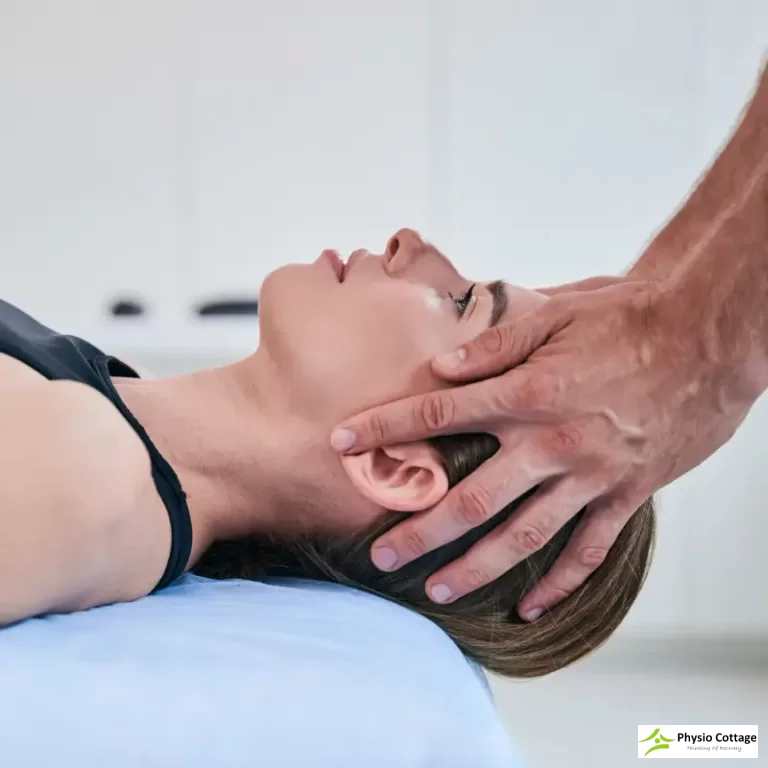
Myofascial release is a hands-on treatment that takes place during a session with your therapist. It begins with a gentle assessment of your tissue, feeling for stiff, rigid or tightened areas where the fascia has lost its natural elasticity. Healthy fascia feels pliable and springy; restricted fascia feels dense and holds the muscles underneath in a shortened position.
Using slow, sustained pressure rather than fast strokes, your therapist stretches and releases the restricted areas. As the tissue lets go, the muscle contractions pressing on nearby structures ease, which can improve how the muscle works, restore movement and reduce pain.
Because Physio Cottage is a multidisciplinary clinic, myofascial release is often combined with physiotherapy, massage therapy or chiropractic care in one plan, so the cause of the tightness is treated as well as the tightness itself.

Why patients choose us
Myofascial release at Physio Cottage
Assessment first
Every course of treatment starts with an assessment of how you move and where the restriction sits, so the session targets the right tissue.
Registered therapists
Treatment is provided by registered physiotherapists and registered massage therapists under the lead of Maryam Ahankoob.
Part of a complete plan
Release work is paired with exercise, posture advice and other hands-on care when that is what keeps the tissue moving between visits.
Several services under one roof
Physiotherapy, massage therapy, chiropractic care and acupuncture are available at the same clinic when your plan calls for them.
Direct billing
We bill most extended health plans directly where the plan allows and give you receipts for the rest.
Easy to reach in Scarborough
The clinic is at Victoria Park and Ellesmere with easy parking, open Monday to Friday 10am to 8pm and Saturday 9am to 5pm.
Understanding fascia
What fascia is, and why it can hurt
Fascia is the continuous web of connective tissue that wraps every muscle, bone, nerve and organ in the body and links them together. Healthy fascia is slippery and elastic, allowing muscles to glide against each other as you move. After injury, surgery, long periods of poor posture or repetitive strain, fascia can thicken, dehydrate and stick to the layers around it. The result is a feeling of tightness that stretching does not fix, pain that seems to move around, and restriction in one area that shows up as a problem somewhere else: a stiff hip that produces knee pain, or tight chest fascia that keeps the shoulder from moving freely.
Myofascial release is a hands-on technique that applies sustained, gentle pressure into these restricted areas, allowing the tissue to soften and lengthen. It is slower than most massage, often held for 90 seconds to several minutes at a time, and it works with the tissue rather than forcing it. At Physio Cottage it is provided by our registered massage therapists and physiotherapists as part of a complete plan, not as a standalone cure.
Signs fascial restriction may be part of your problem
- Tightness that returns within hours of stretching.
- Pain that moves, or that is felt in a different place from the original injury.
- A pulling sensation along a whole limb or along the side of the body.
- Restricted movement after surgery, especially around scars.
- Tender, ropey bands in a muscle that refer pain elsewhere when pressed.
- Stiffness that is worst in the morning and eases with movement.
Conditions
What myofascial release is used for at our Scarborough clinic
Chronic neck and shoulder tension
Desk work builds restriction through the upper trapezius, chest and the fascia at the base of the skull. Release here often eases both the tightness and the headaches that come with it.
Low back pain and tight hips
Restriction in the thoracolumbar fascia, hip flexors and the band down the outer thigh contributes to back pain that resists stretching. Release paired with hip and core strengthening.
Plantar fasciitis
The thick fascia under the foot and the calf fascia above it. Release work combined with loading exercises, footwear advice and custom orthotics when foot mechanics are a factor.
Scar tissue after surgery or injury
Caesarean, abdominal, knee and shoulder surgery scars, once healed, can tether the tissue around them. Gentle release improves mobility and reduces pulling and sensitivity.
Fibromyalgia and widespread pain
Very gentle, slow release can reduce tissue sensitivity when firmer massage is not tolerated. Always paced to the patient and combined with the chronic pain program.
Sports and training restriction
Runners and lifters with restrictions that limit range of motion or keep causing the same strain. Release restores glide so strength work can progress.
TMJ and jaw tension
Release of the masseter, temporalis and neck fascia for jaw pain, clenching and headaches, alongside jaw mobility exercises.
Frozen shoulder and post injury stiffness
Release of the fascia around the shoulder and chest to improve comfort while physiotherapy mobilization and exercise restore range.
Postural strain and breathing restriction
Restriction through the chest, diaphragm and ribs from slumped posture, which limits breathing and shoulder movement. Release combined with posture retraining.
Your session
What to expect at a myofascial release appointment
1. Assessment
Your therapist takes a history, watches how you move and feels for areas of restriction, often in places you did not expect. The plan targets the restrictions that matter to your symptoms, not every tight spot.
2. Treatment
You lie on the table, usually in loose clothing or draped. The therapist applies slow, sustained pressure or gentle stretch into the restricted tissue and waits for it to release, which you may feel as warmth, softening or a spreading sensation. Pressure is firm but should never be sharp.
3. Movement and home advice
Release is followed by movement to use the new range, and you leave with one or two self release or mobility exercises, often using a ball or foam roller, so the gain holds between visits.
Mild soreness or tiredness for a day after treatment is common. Drink water, keep moving gently and expect improved range over the following days. Sharp or lasting pain is not expected; tell us if it happens.
How it fits
Myofascial release within a treatment plan
Myofascial release is most effective when it is paired with the right follow up. Releasing a tight hip without strengthening the glutes usually means the tightness returns, because the body tightened the fascia for a reason. At Physio Cottage, release work from our registered massage therapists is coordinated with the exercise programs of our physiotherapists and, where spinal mobility is part of the picture, our chiropractor. Patients can book release work on its own, but if the same restriction keeps coming back we will recommend a combined plan and explain why.
A typical course is weekly for three to six sessions, then spacing out as self release and strengthening take over. Many patients with physically demanding jobs or heavy training schedules keep a monthly session; that is their choice, and we will tell you if it is not necessary.
Myofascial release compared with other techniques
- Deep tissue massage: faster, deeper strokes into muscle. Good for general tightness; less specific for fascial restriction.
- Trigger point therapy: focused pressure on tender points within a muscle. Often combined with release in the same session.
- Instrument assisted release: tools used along the tissue to detect and treat restriction. Used by some of our therapists for stubborn areas.
- Stretch therapy: assisted stretching that lengthens muscle and fascia together. Stretch therapy.
- Foam rolling at home: a useful self release tool between visits, best done after your therapist shows you where and how.
Practical questions
Questions about myofascial release
Is myofascial release painful?
It can be intense in a restricted area, but it should feel like a deep, releasing pressure rather than sharp pain. Your therapist adjusts to your feedback throughout.
Who provides myofascial release at Physio Cottage?
Registered massage therapists and physiotherapists trained in the technique. Which practitioner you see depends on your condition and how the treatment fits your plan, and we will advise when you book.
Is it covered by insurance?
Yes, under the massage therapy or physiotherapy benefit of most extended health plans depending on who provides it, and we direct bill.
How many sessions will I need?
Most people feel a change after the first session and notice lasting improvement over three to six weekly sessions combined with home work. Long standing restrictions can take longer.
Can I have myofascial release after surgery?
Once your surgeon has cleared you and the incision has fully healed, usually six weeks or more after surgery. Scar work is gentle and progresses as the tissue tolerates it.
Is foam rolling the same thing?
Foam rolling is a form of self myofascial release. It helps maintain results between sessions, but it cannot assess where the restriction is or treat it as precisely as a trained therapist.
Book a session
Tightness that stretching does not fix? Let us assess it.
Book myofascial release on its own or as part of a physiotherapy or massage therapy plan at Victoria Park and Ellesmere.
- Registered massage therapists and physiotherapists
- Direct billing to most extended health plans
- 2231 Victoria Park Ave, Unit #5, Scarborough, ON M1R 1V8
- Monday to Friday 10am to 8pm, Saturday 9am to 5pm
- On-site parking, minutes from the 401 and DVP
Myofascial pain syndrome
Trigger points, referred pain and why the sore spot is often not the problem
Myofascial pain syndrome is a common and under recognized source of persistent pain. It involves trigger points: small, hyper irritable knots within a taut band of muscle that are tender to press and that refer pain to a predictable area some distance away. A trigger point in the upper trapezius sends pain up the side of the neck and into the temple; one in the gluteal muscles sends pain down the back of the thigh and can mimic sciatica; one in the forearm mimics tennis elbow. Because the pain is felt away from its source, patients and sometimes practitioners treat the wrong place for months.
Trigger points form after overload, sustained postures, injury, stress and poor sleep, and they rarely resolve with stretching alone. Myofascial release, trigger point pressure and, where appropriate, dry needling by our acupuncturist or physiotherapist deactivate them; strengthening and posture work keep them from returning. At your assessment we map where your pain is felt and where it actually comes from, which is often the most useful ten minutes of the visit.
Self care
A simple self release routine between visits
Your therapist shows you the specific spots for your problem; these general principles make home work effective and safe:
- Use a ball or roller, not your thumbs. A lacrosse or tennis ball against a wall for the shoulders, hips and glutes; a foam roller for the thighs, calves and upper back.
- Go slow. Find a tender spot, hold steady pressure for 30 to 90 seconds and breathe until it eases. Rolling quickly back and forth does little.
- Moderate, not maximum, pressure. A pressure you can relax into works better than one you brace against. Bruising is a sign of too much.
- Move afterwards. Follow release with the stretch or exercise your therapist gave you, so the new range is used.
- Avoid certain areas. Do not roll directly on the low back spine, the front of the neck, the back of the knee or over varicose veins or recent injuries.
- Little and often. Five to ten minutes most days beats a painful half hour once a week.
Fascia and your desk
Hours in one position are the most common reason fascial restriction keeps returning in our Scarborough patients. Small changes have a large effect: screen at eye level so the head is not pushed forward; elbows at about ninety degrees with the keyboard close; a chair that supports the low back with feet flat; and, above all, movement every thirty minutes, even for a minute. Chest and hip flexor restrictions, the two that desk work creates most reliably, respond best to a combination of release, a doorway chest stretch and a simple hip flexor stretch done twice a day. We review your setup from a photo or a description at your visit and adjust the home program to it.
Common patterns
Three restriction patterns we see every week
The forward head and rounded shoulders
Tight chest fascia and suboccipital muscles, long weak upper back. Produces neck pain, headaches, shoulder impingement and sometimes tingling in the hands. Release the front, strengthen the back, fix the screen height.
The locked hips and sore back
Restricted hip flexors and outer thigh fascia from sitting, with weak glutes. Produces low back pain, hip pinching and knee pain. Release the hips, strengthen the glutes, walk more.
The tight calf and foot chain
Restriction from the plantar fascia up through the calf and hamstrings, common in runners and people who stand all day. Produces heel pain, Achilles pain and tight hamstrings that never stretch out. Release the whole chain and load the calf progressively.
Why Physio Cottage
Myofascial release in Scarborough at Victoria Park and Ellesmere
Physio Cottage has offered myofascial release as part of registered massage therapy and physiotherapy since 2017, treating patients from across Scarborough, North York, East York and Markham. What makes the approach work is the setting: release is provided by registered practitioners who assess before they treat, and it is coordinated with the exercise programs, chiropractic care and acupuncture available in the same clinic, so the cause of the restriction is addressed and not only the symptom. Sessions are unhurried and private, direct billing to most extended health plans keeps the cost side simple, and evening and Saturday hours, on-site parking and quick access from Highway 401, the Don Valley Parkway and the Victoria Park and Lawrence East buses make it easy to keep appointments. The measure of success is not how good you feel leaving the table; it is whether the tightness stays away, and the plan is built around that.
More answers
Further questions about myofascial release
Why does the restriction come back?
Because the cause is still there: the posture, the workload, the weak muscle or the training spike. Release restores movement; strengthening and habit changes keep it. That is why we combine them.
Is myofascial release the same as a massage?
It is a specific technique within massage therapy and physiotherapy, slower and more sustained than general massage, aimed at connective tissue restriction rather than general muscle relaxation.
Can it help headaches?
Headaches that come from the neck and shoulders often respond to release of the suboccipital, upper trapezius and chest fascia, combined with posture work. Migraines may be helped as a supporting treatment; we coordinate with your doctor.
What if I bruise easily or take blood thinners?
Tell your therapist. Pressure is reduced and techniques are adapted; release can still be effective at lower intensity.
Can I have it during pregnancy?
Yes, with positioning adjusted and certain areas avoided. Many pregnant patients find release work for the hips, low back and ribs very helpful.
Does it help fibromyalgia?
Gentle, slow release can reduce tissue sensitivity and improve movement for many patients with fibromyalgia, as part of a paced program. Firmer techniques are avoided.
How soon after an injury can I start?
Once the acute inflammation has settled, usually a few days to a week for a strain, and after medical clearance for fractures and surgery. Early treatment focuses on surrounding tissue, not the injured site.
Do you teach foam rolling?
Yes. Your therapist shows you exactly where, how long and how hard, and which areas to avoid, so your home work actually helps.
Related reading: Massage therapy · Stretch therapy · Physiotherapy.
Glossary
Fascia and soft tissue terms explained in plain language
Fascia
The connective tissue web that wraps and links every muscle, bone, nerve and organ. Healthy fascia glides; restricted fascia sticks and pulls.
Adhesion
Layers of tissue that have become stuck together after injury, surgery or prolonged immobility, limiting glide and movement.
Trigger point
A tender knot in a tight band of muscle that refers pain to a predictable area elsewhere. Deactivated with sustained pressure, release or dry needling.
Referred pain
Pain felt away from its source, such as shoulder blade trigger points producing neck and head pain. A common reason the sore spot is not the problem.
Myofascial release
Sustained, gentle pressure or stretch applied to restricted fascia and muscle until the tissue softens and lengthens.
Instrument assisted release
Specially shaped tools used along the tissue to find and treat restriction, sometimes used for stubborn areas.
Self myofascial release
Release done at home with a ball or foam roller, following the areas and method your therapist shows you.
Plantar fascia
The thick band under the foot from heel to toes. Overload produces plantar fasciitis, a common cause of heel pain treated with release and loading.
Thoracolumbar fascia
The broad sheet of connective tissue across the low back that links the back, hips and shoulders. Restriction here contributes to stubborn low back pain.
Serving patients across Scarborough and east Toronto
Physio Cottage is at Victoria Park and Ellesmere, with on-site parking and bus stops on Victoria Park and Lawrence Ave E. Patients book myofascial release from Wexford, Agincourt, Parkwoods, Don Mills, East York, North York, Markham and Pickering, often after months of stretching that did not hold. Evening and Saturday hours fit around work and training. Wear loose clothing, bring a note of where and when the tightness is worst, and we take it from there.
A typical course
What myofascial release looks like in practice
Here is a typical example of the kind of case we treat every week, with details changed. A woman in her thirties who works at a laptop from home in Don Mills has had a tight right shoulder and neck for a year. She stretches daily, has tried a massage gun and a new pillow, and the tightness returns within hours. Lately she has headaches by late afternoon and a pulling sensation into the upper arm. At her first visit with one of our registered massage therapists we take a history, watch her posture and movement, and find restriction through the right chest, the upper trapezius and the muscles at the base of the skull, with a trigger point in the shoulder blade area that reproduces her headache when pressed. We explain the pattern: the chest restriction pulls the shoulder forward, the neck muscles work overtime to hold the head up, and stretching the neck alone can never win against that.
Treatment begins with slow, sustained release of the chest and the base of the skull, then the trigger point. She feels the difference immediately and is shown two self release positions with a ball against a wall and a doorway chest stretch. We also look at a photo of her workstation and suggest raising the screen and bringing the keyboard closer. Over four weekly sessions the headaches stop and the pulling into the arm resolves. A referral within the clinic to our physiotherapist adds a short strengthening program for the muscles between the shoulder blades, which is what keeps the shoulder from drifting forward again. She finishes with a five minute daily routine and returns every couple of months during busy periods by choice. The restriction had been treated before; the cause had not. That is the approach we take with every myofascial case.
Before you book, have these ready
- Where the tightness or pain is felt, where it started and what you have already tried.
- A photo or description of your workstation or training setup if relevant.
- Any surgery, injury or scar in the area, and any medical conditions or medications affecting bleeding or sensation.
- Your extended health card for direct billing under massage therapy or physiotherapy.
Who benefits most
Who tends to get the most from myofascial release
In our experience the patients who benefit most share a few features. Their tightness has lasted months rather than days and has not responded to stretching. Their pain moves or is felt away from the area that feels tight. They have a clear driver, such as a desk job, a repetitive task, a healed surgical scar or a training routine that loads the same tissues the same way every week. And they are willing to do a short daily routine between visits, because release work holds far better when the tissue is used in its new range. Patients with a fresh injury, with pain that is sharp and worsening, or with symptoms such as numbness, weakness, fever or unexplained weight loss need an assessment by a physiotherapist or a doctor first, and we will say so when you call. For everyone else, a single assessment tells us quickly whether fascial restriction is part of the picture and what a sensible course would look like. Most people know after the first session whether this is the right approach for them, and we would rather tell you honestly that it is not than book a course that will not help.
From the blog
Guides about myofascial release from Physio Cottage
Your wellness matters to us
Book a myofascial release session online or call the clinic. We are at 2231 Victoria Park Ave, Unit #5, Scarborough, ON M1R 1V8, open Monday to Friday 10am to 8pm and Saturday 9am to 5pm.
- Assessment before every treatment plan
- Registered physiotherapists and massage therapists
- Direct billing where your plan allows
- Easy parking at Victoria Park and Ellesmere