Skip to content

Products

Compression stockings and socks in Scarborough

Reviewed by Maryam Ahankoob, Registered Physiotherapist and clinic lead. Updated November 2026.

Physio Cottage supplies medical compression stockings and socks for leg swelling, tired or aching legs, varicose veins and recovery after surgery. We measure your legs at the clinic and help you choose the compression level, length and style that fits your prescription and your day.

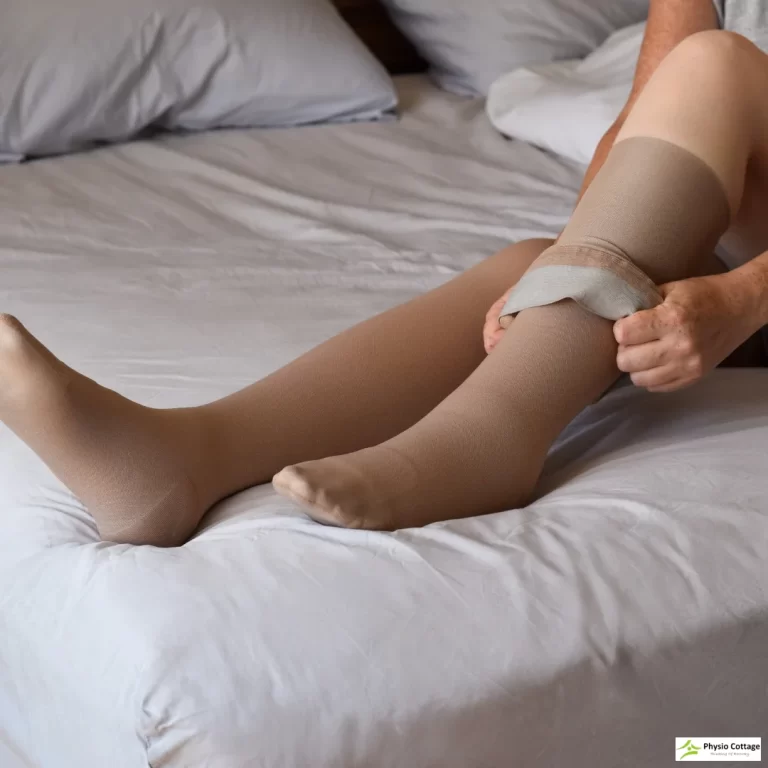
Compression stockings and socks fitted at Physio Cottage in Scarborough

Fees and pricing

Compression stockings pricing

Compression stocking prices depend on the compression level, the length and the style you need. Your stockings are measured and fitted at the clinic, and you get the price before anything is ordered. Many extended health plans cover medical compression stockings with a prescription, so call (416) 445-5353 and we will help you check your coverage.

Priced per pair

Compression stockings

Personal quote

Given after measuring and fitting

  • Measured at the clinic
  • Price confirmed before you order
  • Help checking your coverage
Call for a quote
Direct billingWe bill most extended health insurance plans directly where your plan allows it.
A receipt every visitYou get an official receipt after each appointment for your insurer or your tax return.
WSIB and car accident claimsApproved work injury and auto insurance claims are billed directly where applicable.
Coverage checkCall (416) 445-5353 and we will check your coverage with you before your first visit.

All prices in Canadian dollars. Your fee is confirmed when you book.

Book an appointmentSee all clinic prices

How they help

What compression stockings and socks do

Compression stockings and socks apply graduated pressure to the legs, firmest at the ankle and easing toward the knee or thigh, which helps blood move back toward the heart. They are used to reduce swelling, relieve heavy, aching or painful legs, manage varicose veins and support circulation for people who sit or stand for long hours, during pregnancy, after surgery and in other situations where a doctor recommends them.

Compression is measured in mmHg. Lighter levels suit everyday tired legs and travel; higher levels are prescribed for medical conditions and need a correct fit to work and to be safe. That is why we measure rather than guess.

What we supply

Sizes, styles and compression levels

The clinic carries a range of compression stockings and socks in different sizes, lengths (knee high, thigh high and pantyhose), styles and compression levels. Our trained staff measure your legs, explain the options and help you choose the product that matches your prescription and your routine. Open toe, closed toe, sheer and athletic styles are available depending on the product line.

  • Reduced swelling in the legs and ankles
  • Improved circulation in the legs
  • Relief from leg pain, heaviness and discomfort
  • Management of varicose veins
  • Support during recovery after surgery

Why fit here

Fitting at Physio Cottage

Measured by trained staff

Leg measurements are taken at the clinic following the manufacturer sizing chart, at the time of day that gives the most accurate result.

Part of a wider plan

Physiotherapy, massage therapy and chiropractic care are available at the same clinic, so compression can be combined with treatment where it helps.

Insurance paperwork

Many extended health plans cover compression wear with a prescription. We provide the paperwork and offer direct billing where your plan allows it.

How they work

What medical compression stockings do, and why fit matters

Compression stockings apply graduated pressure to the leg, strongest at the ankle and decreasing up the calf and thigh. That gradient helps the veins return blood toward the heart, reduces pooling and swelling, and supports tired, aching legs. Medical grade stockings are measured and fitted to deliver a specific pressure, which is what separates them from the loose support socks sold in pharmacies. The wrong size or the wrong pressure class is at best useless and at worst harmful, which is why fitting is done by a trained fitter with proper measurements, usually first thing in the day before the legs swell.

At Physio Cottage we measure and fit compression stockings and socks for people who stand or sit all day, for pregnancy, for travel, for varicose veins and venous insufficiency, after surgery and for lymphedema, following the pressure class prescribed by your doctor where a prescription applies. We carry a range of brands, styles and colours so that wearing them daily is realistic.

Mild compression (15 to 20 mmHg)

For tired, achy legs, mild swelling, long days on your feet, travel and pregnancy. Often available without a prescription.

Moderate compression (20 to 30 mmHg)

For varicose veins, moderate swelling, after vein procedures and for many post surgical and pregnancy related needs. Usually prescribed by a doctor.

Firm compression (30 to 40 mmHg and above)

For chronic venous insufficiency, lymphedema, severe varicose veins and after a blood clot. Always prescribed and fitted carefully.

Who they help

Reasons patients in Scarborough are fitted for compression

Standing and sitting jobs

Nurses, teachers, retail and warehouse staff, hairdressers, drivers and office workers. Compression reduces the heavy, aching feeling and ankle swelling at the end of a shift.

Pregnancy

Swollen ankles, aching legs and new varicose veins are common as pregnancy progresses. Maternity stockings are fitted to accommodate the belly and can be worn from early pregnancy.

Varicose veins and venous insufficiency

Compression is widely used to ease swelling and aching with vein problems, alongside a medical vein assessment. Fitted to the class your doctor prescribes.

After surgery and after a blood clot

Compression reduces swelling after orthopedic and vein surgery and is part of preventing and managing deep vein thrombosis, following medical advice.

Lymphedema

Flat knit, made-to-measure garments for lymphedema of the leg, coordinated with your lymphedema therapist or physician.

Travel

Long flights and drives raise the risk of swelling and clots, especially with other risk factors. Properly fitted stockings are a common choice for flights of four hours or more; ask your doctor first if you have had a clot.

Athletes and recovery

Compression socks for running and recovery between sessions. Benefits are mainly comfort and reduced soreness; we are honest about what they can and cannot do.

Diabetes

Special non binding diabetic socks protect circulation and skin. Compression for people with diabetes needs medical guidance, which we coordinate.

Seniors

Swelling and heaviness in the legs are common with age. Easier to apply styles and donning aids make daily use practical.

Your fitting

What happens at a compression fitting

  • Timing: ideally early in the day or after your legs have been elevated, so measurements are taken before swelling builds.
  • History: we ask about your symptoms, your doctor’s prescription if you have one, your job, your skin, any circulation problems and what you have tried.
  • Measurements: ankle, calf and, for thigh high styles, thigh circumference and leg length, taken at specific points. These determine the size; the prescription determines the pressure.
  • Style and brand: knee high, thigh high or pantyhose; open or closed toe; sheer, cotton, wool or sport fabrics; colours. The best stocking is the one you will actually wear.
  • Fitting and instruction: we help you put the first pair on, check the fit and show you the technique, with donning aids for anyone who struggles with grip or bending.
  • Follow up: a quick check after a week or two of wear, and refitting when weight, swelling or health changes.

Wearing and caring for your stockings

  • Put them on first thing in the morning before swelling starts, and take them off at night unless your doctor says otherwise.
  • Smooth out wrinkles; a rolled or bunched band can cut in and block circulation.
  • Wash after each wear in cool water and mild soap; air dry. Heat damages the elastic.
  • Replace every three to six months with daily wear; the compression fades before the fabric wears out.
  • Stop and call us or your doctor if you notice numbness, pain, colour change or skin breakdown.

Honest advice

When compression is not the right answer, or needs a doctor first

Compression is safe and helpful for most people, and there are important exceptions. Compression should not be worn, or needs medical clearance first, if you have peripheral arterial disease or poor arterial circulation in the legs, severe neuropathy with loss of sensation, an active skin infection or open wound in the area, severe heart failure, or an allergy to the materials. New, sudden swelling of one leg, particularly with pain, warmth and redness, needs urgent medical assessment for a blood clot before any stocking goes on. Swelling with shortness of breath, chest pain or sudden weight gain also needs a doctor first. We screen for these at every fitting, and when a prescription is needed for the pressure class, we ask for it. Compression manages symptoms; it does not treat the cause of vein disease, so we encourage patients with varicose veins or venous insufficiency to have a medical assessment as well.

For many people with tired legs and mild swelling, well fitted stockings make the day more comfortable, and walking, calf exercises and leg elevation add to the effect. Our physiotherapists can add a short leg health routine if you would like one.

Book a fitting

Properly fitted compression, measured by a trained fitter.

Book a compression fitting at Victoria Park and Ellesmere. Bring your prescription if you have one.

  • Measured fitting, range of styles and brands
  • Insurance documentation provided
  • 2231 Victoria Park Ave, Unit 5, Scarborough, ON M1R 1V8
  • Monday to Friday 10am to 8pm, Saturday 9am to 5pm
  • On-site parking, minutes from the 401 and DVP

A typical course

What a compression fitting looks like in practice

Here is a typical example of the kind of case we see every week, with details changed. A woman in her thirties who works at a hair salon in Wexford stands for nine hours a day. By mid afternoon her legs feel heavy and by evening her ankles are visibly swollen; a few small veins have appeared behind her knees. Her doctor has examined her, found no clot or other problem, and written a prescription for moderate compression stockings. She arrives for a fitting first thing in the morning before swelling builds. We take her ankle, calf and leg measurements, discuss the fabrics and colours that would work with her work clothes, and settle on a knee high in a breathable cotton blend. We fit the first pair in the clinic, show her how to turn the stocking to the heel and roll it up without tugging, and recommend rubber gloves for grip. She wears them from the first shift. Within a week she notices less afternoon heaviness and less evening ankle swelling. Every person responds differently. At the two week check the fit is good, she orders a second pair so she can wash one while wearing the other, and she claims both through her benefits with the receipt and prescription we provide. Six months later she returns for a replacement pair as the compression has faded with daily wear, which is normal. A short calf exercise routine from our physiotherapist and a habit of elevating her legs in the evening completes the plan.

Glossary: terms you will hear at your fitting

Graduated compression

Pressure that is strongest at the ankle and decreases up the leg, which helps blood return toward the heart.

mmHg

Millimetres of mercury, the unit used to describe compression pressure. Classes run from mild (15 to 20) to firm (30 to 40 and above).

Venous insufficiency

Vein valves that no longer close properly, allowing blood to pool in the lower leg. Causes swelling, aching and skin changes over time.

Lymphedema

Swelling from a lymphatic system that cannot drain fluid properly, managed with made-to-measure garments and therapy.

Flat knit and circular knit

Two ways stockings are made. Circular knit is seamless and common; flat knit is firmer and used for lymphedema and irregular leg shapes.

Donning aid

A device that makes putting on compression stockings easier for people with limited grip or bending.

Before you buy

Questions to ask before you buy compression stockings

Compression stockings look simple, but the pressure level, the size and the style all change how well they work and how comfortable they feel. Stockings bought off a shelf without measuring often end up in a drawer because they roll down, pinch behind the knee or feel impossible to put on. These questions help you get a pair you will actually wear.

What pressure level do I need?

Compression is measured in millimetres of mercury. Lighter levels suit tired, achy legs and long days on your feet; firmer medical grades are used for varicose veins, swelling and some circulation problems. The right level depends on your legs and your health history, not on what feels tightest.

Who will measure my legs?

A proper fitting measures the ankle, calf and sometimes the thigh, ideally in the morning before swelling builds up. Ask who will measure you and whether they are trained in compression fitting.

Knee high, thigh high or full length?

Most people do well with knee high stockings, which are easier to put on and stay up better. Thigh high or pantyhose styles are chosen when swelling or veins extend above the knee.

Is it safe for me?

Firm compression is not suitable for everyone. Poor arterial circulation, some skin conditions, uncontrolled heart failure and diabetes with nerve damage need careful screening, and sometimes a doctor needs to agree first.

How do I put them on?

Ask to be shown, and to practise in the clinic. Donning gloves and simple aids make a big difference, especially for older adults or people with sore hands.

When should I replace them?

Elastic loses strength with washing and wear. Most people replace daily stockings every few months. Ask how long your pair should last and how to tell when the compression has faded.

Choosing a level

Understanding compression levels in plain language

Compression garments are sold in ranges, and the numbers can be confusing. Light support hosiery below 15 mmHg is sold for tired legs and long periods of sitting. Mild compression, 15 to 20 mmHg, is a common choice for travel, pregnancy and jobs that keep you standing all day. Moderate compression, 20 to 30 mmHg, and firm compression, 30 to 40 mmHg and above, are used for varicose veins, swelling after surgery or injury, and other conditions where a health professional has recommended them. The strongest levels are reserved for specific medical problems and are fitted only after screening.

Graduated stockings are tightest at the ankle and gradually looser up the leg. That pattern helps blood and fluid move back towards the heart instead of pooling at the ankles. It is also why size matters so much: a stocking that is too small squeezes the wrong places, and one that is too large does very little. A measured fitting is the simplest way to get the level and the size right together.

Costs and billing

How compression stockings are billed and how to check your coverage

Many extended health plans in Ontario cover medical grade compression stockings under a medical supplies benefit. The rules vary by plan, so it is worth checking before your fitting. Common conditions include a prescription from a physician, a minimum compression level, a limit on the number of pairs per year, and a maximum dollar amount for the year.

We suggest asking your insurer four things: whether compression stockings are covered, whether a doctor prescription is needed and what it must say, how many pairs you can claim in a year, and whether the plan pays the full amount or a percentage. Bring the answers, and your prescription if you need one, to your fitting. Our team will give you a detailed receipt showing the product and the compression level so your claim has what the insurer asks for. Call (416) 445-5353 if you are not sure what your plan needs.

Daily use

How to put on, wear and care for compression stockings

Put them on in the morning

Legs are least swollen when you first get up. Putting stockings on early makes it easier and gives the best support through the day.

Turn the stocking inside out to the heel

Reach inside, hold the heel, and turn the stocking inside out down to that point. Slide your foot in, line up the heel, then ease the rest up your leg a little at a time. Rubber gloves help you grip the fabric.

Smooth out every wrinkle

Wrinkles and rolled tops create tight bands that work against the stocking. Never fold the top down. If a stocking keeps slipping, the size or style may need changing.

Wash gently and often

Hand wash or use a gentle cycle in cool water, then air dry flat away from heat. Washing after each wear restores the elastic and keeps skin healthy. Having two pairs makes this easy.

Take your stockings off and call a doctor if your toes turn blue, white or cold, you feel numbness or pins and needles, or the skin becomes painful or breaks down. Seek urgent care for sudden calf pain and swelling in one leg, or for shortness of breath.

Everyday situations

Compression for travel, pregnancy and long shifts

Long flights and road trips keep you sitting for hours, which slows circulation in the legs. Moderate compression stockings, together with walking the aisle, ankle pumps and drinking water, are a common way to reduce leg swelling while travelling. People with a history of blood clots should speak with their doctor before a long journey.

During pregnancy, hormonal changes and the growing baby put extra pressure on leg veins, and swollen ankles are common in the third trimester. Maternity compression styles with a soft belly panel are available, and many patients find knee high stockings easiest. Tell your midwife or doctor you are using compression.

For nurses, retail and warehouse staff, hairstylists and anyone on their feet all day, compression can reduce the heavy, aching feeling by the end of a shift. Combined with good footwear and short movement breaks, it is a simple habit that many of our Scarborough patients rely on.

Keep reading

Related services and guides

Custom orthotics

Foot support for people on their feet all day, often paired with compression.

Orthopedic braces

Supports for knees, ankles and wrists, fitted after a proper assessment.

Physiotherapy after surgery

When to start rehab, and where swelling management fits in.

Physiotherapy

Our main physiotherapy service for injury, pain and recovery.

Get measured for compression that fits

Book a compression fitting at our Scarborough clinic, ideally in the morning, and leave with stockings you can put on and wear comfortably.

Call (416) 445-5353 Book online

Still wondering

A few more answers before your visit

Physio Cottage, 2231 Victoria Park Ave, Unit 5, Scarborough, ON M1R 1V8. Call (416) 445-5353.

Updated 4 November 2026. Reviewed by Maryam Ahankoob, Registered Physiotherapist.

Compression stockings in Scarborough

Compression stockings in Scarborough, measured and fitted at Victoria Park and Ellesmere

Physio Cottage measures, fits and supplies medical compression stockings and socks at 2231 Victoria Park Ave, Unit 5, Scarborough. You can book a fitting with or without a prescription: mild compression can be fitted without one, while moderate and firm classes follow the pressure your doctor prescribes. Bring your prescription, your insurance details and a note of when your legs feel worst. Book in the morning if you can, since legs are least swollen early in the day.

Compression is often one part of a plan. If swelling or aching follows an injury, surgery or a long period of inactivity, our team can add a short calf and ankle routine, and you can combine a fitting with physiotherapy in Scarborough, custom orthotics or orthopedic braces at the same clinic. See current clinic fees on our pricing page or book a fitting online.

What compression is used for

Compression socks for swelling, varicose veins, travel, shin splints and long shifts

Graduated compression is firmest at the ankle and eases up the leg, which helps blood in the leg veins move back toward the heart. Compression stockings improve blood flow in the leg veins, ease aching and swelling, and help prevent clots, mainly after surgery or injury. Here is what we fit them for.

Leg swelling and edema

Ankle and lower leg swelling at the end of the day is the most common reason for a fitting. Swelling has many causes, some of them medical, so new swelling, swelling in one leg only, or swelling with shortness of breath needs a doctor first. Once the cause is known, compression and regular walking help manage it.

Varicose veins

Stockings are widely used to ease heavy, aching legs with varicose veins. Stockings are not a cure for varicose veins, so we fit to your doctor’s prescription and encourage a medical vein assessment as well.

Flights and long drives

Travel of more than four hours raises the risk of blood clots, especially with other risk factors, and stockings are a common choice for long flights and drives. If you have had a clot, ask your doctor before travelling.

Pregnancy

Pregnancy raises pressure on the leg veins, and swollen ankles and new varicose veins are common later in pregnancy. Maternity styles with a soft belly panel are available, and knee high styles are often easiest. Tell your midwife or doctor you are using compression.

Shin splints and plantar fasciitis

Compression sleeves and socks are sold for shin splints and heel pain. Some people find them comfortable, but they do not treat either condition on their own. Loading, footwear and training changes do most of the work; see our sport injury and shockwave therapy pages.

Long shifts and recovery

Nurses, retail and warehouse staff, drivers and office workers use mild compression for heavy, tired legs. For athletes, any benefit for recovery after exercise is small, so we suggest them for comfort rather than performance.

Safety and funding

When not to wear compression, and when Ontario’s ADP helps pay

Compression is very rarely harmful when it is fitted and worn correctly. The most common problems are skin irritation, discomfort and pain, and severe problems are very rare when the reasons not to wear compression are respected. Severe peripheral arterial disease is the main reason not to wear compression. We also ask for medical clearance first if you have poor circulation to the feet, diabetes with loss of feeling, an open wound or skin infection on the leg, severe heart failure, or a known allergy to the fabric. Sudden swelling, pain, warmth or redness in one calf needs urgent medical care before any stocking goes on.

How a fitting is measured

For knee high stockings we measure the ankle at its narrowest point, the calf at its widest and the length from the floor to just below the bend of the knee. Thigh high and pantyhose styles add thigh and hip measurements. Measuring early in the day gives the most accurate size; the prescription decides the pressure class. Knee length stockings should finish two fingers below the knee bend.

The Assistive Devices Program for lymphedema

Ontario’s Assistive Devices Program helps pay for compression garments and sleeves for chronic lymphedema and for garments for hypertrophic scars, for Ontario residents with a valid health card. ADP pays 75% of the approved cost directly to an ADP-registered business and you pay 25%; people receiving Ontario Works, ODSP or Assistance for Children with Severe Disabilities may receive full coverage. An ADP-registered lymphedema or burn team assesses you and starts the application. ADP does not cover devices for varicose veins or venous insufficiency, elastic bandages and wraps, repairs, or devices needed for less than six months. Physio Cottage is an ADP-registered vendor, so once an ADP-registered lymphedema or burn team has assessed you, we can complete the business part of the application with you and submit it (Ontario ADP: garments, pumps and braces). For everything else, most people claim through an extended health plan.

Questions patients ask

Compression stockings in Scarborough: questions patients ask

Updated 4 November 2026.

Do I need compression stockings?

What are compression stockings used for?

They apply graduated pressure to the legs to help blood flow back toward the heart. They are used for heavy, aching legs, ankle swelling, varicose veins, long periods of standing or sitting, pregnancy, travel, and after surgery or injury where a doctor recommends them.

What are signs I might benefit from compression socks?

Legs that feel heavy or achy by the end of the day, ankle swelling that goes down overnight, visible varicose veins, or long shifts on your feet are common reasons for a fitting. New or one sided swelling needs a doctor before compression.

Do compression socks help with foot and ankle swelling?

They are commonly used to manage everyday ankle swelling once a medical cause has been ruled out. Walking, calf exercises and raising your legs in the evening help as well. Swelling with breathlessness or sudden weight gain needs medical assessment first.

Do compression stockings help varicose veins?

Many people find they ease aching and heaviness. Stockings are not a cure for varicose veins, so a medical vein assessment is worthwhile alongside a fitting.

Do compression socks help shin splints?

Some runners find calf sleeves comfortable, but compression does not treat shin splints on its own. A gradual return to running, strength work and footwear or training changes do most of the work. Our physiotherapists can assess the cause.

Do compression socks help plantar fasciitis?

Compression socks and sleeves for heel pain are popular, but they do not treat plantar fasciitis on their own. Calf and foot loading exercise, footwear changes and, for long lasting pain, options such as shockwave therapy are the main treatments.

Do compression socks help with running?

Some runners find they reduce calf soreness. Any benefit for recovery is small and they do little for performance, so we suggest choosing them for comfort rather than speed.

Should I wear compression socks on a long flight?

They are a common choice for flights of four hours or more. Walk the aisle, flex your ankles and drink water too. If you have had a blood clot, ask your doctor first.

Can I wear them during pregnancy?

Yes, mild compression is commonly used for swollen ankles and aching legs in pregnancy. Maternity styles accommodate the belly and can be refitted as pregnancy progresses. Tell your midwife or doctor you are using compression.

Can men wear compression socks?

Yes. Compression socks come in styles that look like ordinary dress or athletic socks, and many of our male patients wear them for work, travel and sport.

Are compression socks good for people who stand all day?

Many nurses, retail and warehouse staff, hairstylists and teachers use mild compression to reduce heavy, aching legs by the end of a shift. Good footwear and short movement breaks add to the effect.

Compression levels and prescriptions

What compression level do I need?

It depends on your legs and your health history. Mild compression, 15 to 20 mmHg, suits tired legs, travel and pregnancy. Moderate, 20 to 30 mmHg, and firm, 30 to 40 mmHg and above, are used for medical conditions and follow your doctor’s prescription.

What does mmHg mean on compression stockings?

Millimetres of mercury, the unit for the pressure the stocking applies at the ankle. A higher number means firmer compression. The pressure is highest at the ankle and lower further up the leg.

Do I need a prescription?

Mild compression can be fitted without one. Moderate and firm classes are prescribed by a doctor, and insurance claims almost always require a prescription. Ask your doctor to specify the pressure class and the style.

Can I buy compression stockings over the counter?

Mild compression is sold without a prescription. For moderate or firm levels, or if you plan to claim through insurance, ask your doctor for a prescription that states the pressure class and the diagnosis. Firm compression should be fitted after screening.

What is the difference between support socks and medical compression stockings?

Support socks sold in many stores apply light, unmeasured pressure. Medical compression stockings are made to deliver a specific graduated pressure in a measured size, which is why fitting matters for moderate and firm levels.

Is higher compression better?

No. The right level is the one that suits your condition and that you can wear safely every day. Too much pressure can be uncomfortable or unsafe with poor circulation, which is why firm classes are prescribed and screened.

Fitting, sizing and styles

How do I know what size I am?

You do not need to. We measure you at the fitting. Sizes vary between brands, which is why self sizing from a chart so often goes wrong.

How are legs measured for compression stockings?

For knee high styles we measure the ankle at its narrowest point, the calf at its widest and the length from the floor to just below the knee bend. Thigh high and pantyhose styles add thigh and hip measurements. Mornings give the most accurate size.

Knee high or thigh high?

Knee high works for most swelling and symptoms below the knee and is easier to wear. Thigh high or pantyhose is used when the swelling or veins extend above the knee or when a doctor prescribes it.

How tight should compression stockings feel?

Snug and supportive, firmest at the ankle, but never painful, numb or cutting in. If they leave deep marks or your toes change colour, take them off and have the fit checked.

What styles of compression do you carry?

Knee high, thigh high and pantyhose styles, open or closed toe, in sheer, cotton blend and athletic fabrics and several colours, depending on the product line. We help you choose a style you will actually wear.

Do you fit compression stockings for lymphedema?

We fit compression for many leg conditions and coordinate with your lymphedema therapist or physician for lymphedema garments. Flat knit, made-to-measure garments are often used for lymphedema; bring your prescription and any measurements from your lymphedema team.

Can I bring my own stockings to check the fit?

Yes. Bring the stockings you have and we will check the size, the pressure class and the way you are putting them on. Many problems with rolling or pinching come from the size or the technique.

Wearing and caring for stockings

How many hours a day should I wear compression stockings?

Most people wear them from the morning until bedtime. Put them on first thing in the morning and wear them as long as your provider recommends, which may be all day. Do not stop a prescribed stocking without talking to your provider.

Can I wear them at night?

Usually not needed, since lying down reduces pooling. Most compression is designed for when you are upright and active, so take it off at bedtime unless a health professional has told you otherwise.

They are hard to put on. Any tips?

Put them on first thing in the morning, turn the stocking inside out to the heel before you start, use rubber gloves for grip and ease the fabric up a little at a time. A donning aid, a different size or an easier style can help. We show you the technique at the fitting.

How often should I replace compression stockings?

Every three to six months with daily wear, because the elastic loses pressure before the fabric looks worn. Having two pairs lets you wash one while you wear the other.

How do I wash compression stockings?

Wash them after each wear in cool water with mild soap, by hand or on a gentle cycle, and air dry away from heat. Heat from a dryer or radiator damages the elastic.

Is it normal for stockings to leave marks on my legs?

Light marks from the fabric are common. Deep grooves, a band that digs in, numbness, tingling or toes that change colour are not normal. Take them off and have the fit checked.

Can I wear compression socks while exercising?

Yes, mild or athletic compression can be worn for walking, running and sport if it is comfortable. Stop if you feel numbness, tingling or pain.

Safety

What is the downside of wearing compression stockings?

The most common problems are skin irritation, discomfort and difficulty putting them on. Serious problems are very rare when stockings are fitted correctly and people with contraindications, such as severe arterial disease, are screened out first.

When should you not wear compression socks?

Do not wear compression, or get medical clearance first, if you have severe peripheral arterial disease or poor circulation to the feet, diabetes with loss of feeling, an open wound or infection on the leg, or severe heart failure. Sudden one sided calf swelling needs urgent medical care.

Can people with diabetes wear compression socks?

Often yes, with care. Diabetes with poor circulation or loss of feeling needs screening, and sometimes medical clearance, before firm compression. Non binding diabetic socks are an option when compression is not suitable.

When should I take compression stockings off and call a doctor?

Take them off and call a doctor if your toes turn blue, white or cold, you feel numbness or pins and needles, or the skin becomes painful or breaks down. Seek urgent care for sudden calf pain and swelling or shortness of breath.

Cost, insurance and ADP

Are compression stockings covered by insurance?

Many extended health plans cover medical compression stockings, often a set number of pairs per year, and usually require a physician’s prescription stating the pressure class and diagnosis. We provide the receipt and documentation your insurer requires. Check your plan and bring your prescription.

How much do compression stockings cost at Physio Cottage?

The price depends on the compression level, the length and the style. You are measured first and given the price before anything is ordered. Call (416) 445-5353 for a quote or see our pricing page for clinic fees.

Does OHIP cover compression stockings?

No. OHIP does not pay for compression stockings bought from a clinic. Ontario’s Assistive Devices Program helps pay for compression garments for chronic lymphedema and hypertrophic scars, and most other stockings are claimed through extended health plans.

Does the Assistive Devices Program pay for compression stockings?

Only for some conditions. ADP helps pay for compression garments and sleeves for chronic lymphedema and for hypertrophic scars, paying 75% to an ADP-registered business while you pay 25%. Physio Cottage is an ADP-registered vendor. It does not cover devices for varicose veins or venous insufficiency.

What does my insurer need to reimburse compression stockings?

Usually a prescription stating the pressure class and the diagnosis, and an itemized receipt naming the product and compression level. Many plans also limit the number of pairs per year. We provide a detailed receipt and direct bill where your plan allows.

How many pairs of compression stockings can I claim a year?

It depends on your plan. Many extended health plans set a limit of a few pairs per year. Your benefits booklet or insurer will tell you the exact number and the maximum amount.

Visiting the clinic

Do I need a referral?

No referral is needed for a fitting at Physio Cottage, but many insurance plans need a doctor prescription to reimburse medical compression.

Where is the clinic and when are you open?

Physio Cottage is at 2231 Victoria Park Ave, Unit 5, Scarborough, ON M1R 1V8, with on-site parking. The TTC 24 Victoria Park and 924 Victoria Park Express stop at Pachino Blvd, about 100 m away, and the 95 York Mills stops at Ellesmere Rd, about 450 m away. We are open Monday to Friday 10am to 8pm and Saturday 9am to 5pm. Call (416) 445-5353 to book a fitting. Unit 5 is wheelchair accessible.

Where can I get compression stockings fitted in Scarborough?

At Physio Cottage, near Victoria Park and Ellesmere. Trained staff measure your legs, help you choose the level and style, and fit the first pair in the clinic. Book online or call (416) 445-5353.

When should I book a compression fitting?

Morning, if you can, because legs are least swollen early in the day and measurements are most accurate. If you can only come later, tell us and we will measure accordingly.
Inside the clinic

A look at Physio Cottage

Your wellness matters to us

Book a compression fitting online or call the clinic. We are at 2231 Victoria Park Ave, Unit 5, Scarborough, ON M1R 1V8, open Monday to Friday 10am to 8pm and Saturday 9am to 5pm.

  • Measured and fitted in the clinic
  • Several compression levels and styles
  • Direct billing where your plan allows
  • Easy parking at Victoria Park and Ellesmere
Hi, I'm Physio Cottage's AI assistant 👋 Ask me about physiotherapy, hours or booking.