
Walking into a clinic for the first time can feel a bit daunting. It’s completely normal to feel a mix of hope and nervousness. You might be wondering, “Will it hurt?” or “What if they find something wrong?” At Physio Cottage, we see new patients every day who feel exactly the same way. The good news is that these nerves usually disappear within the first five minutes.
Think of your physiotherapist not just as a clinician, but as a partner in your recovery journey. We aren’t here to judge your flexibility or critique your posture without cause; we are here to play detective. Our job is to uncover the root of your discomfort and build a bridge back to the activities you love.
Whether you are dealing with a nagging sports injury, chronic back pain, or recovering from surgery, knowing the roadmap ahead can ease your mind. This guide is designed to be a comprehensive walkthrough of your initial visit. By the time you finish reading, you’ll know exactly how to prepare, what happens during the exam, and how we start treating your pain from day one. Let’s get you ready for a smooth and effective first session.

How to Prepare Before You Arrive
A little bit of preparation goes a long way. Getting organized before you step foot in our scarborough physiotherapy clinic ensures that we can spend more time focusing on your treatment and less time chasing down administrative details. Here is how you can set yourself up for success.
What to Wear to Physiotherapy
Clothing choices might seem trivial, but they are actually quite important for a thorough assessment. We need to see the body part that is bothering you, and you need to be able to move freely. If you come in tight jeans for a knee injury, it limits our ability to examine the joint properly.
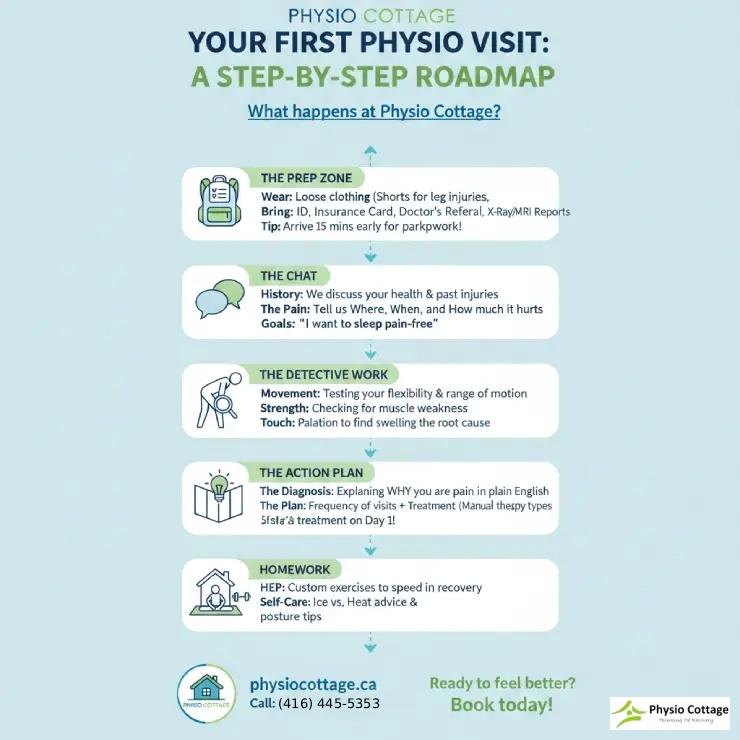
For lower body injuries (hips, knees, ankles), bring a pair of shorts. For upper body issues (shoulder, neck, upper back), a tank top or a loose t-shirt is ideal. If you are coming from work, don’t worry—we have private changing areas where you can swap your office attire for something more comfortable.
What to Bring With You (Checklist)
To make your intake process seamless, gather these items beforehand. Having them ready prevents the last-minute scramble at the front desk:
- Doctor’s Referral: While you often don’t need one to see registered physiotherapists scarborough, some insurance plans require it for reimbursement.
- Medication List: A simple note of any medications or supplements you are currently taking.
- Diagnostic Reports: If you have had X-rays, MRIs, or CT scans related to your injury, bring the reports. We can read the imaging results to get a deeper insight into your anatomy.
- Insurance Details: Have your policy card handy so we can help you figure out your coverage.
Paperwork and Arrival Time
Nobody likes paperwork, but it is a necessary part of healthcare. We recommend arriving at least 15 minutes early for your first appointment. This gives you ample time to fill out the health history forms without feeling rushed. Alternatively, check if you can fill them out online through our portal before you leave home. This small buffer of time also lets you decompress and settle in before meeting your therapist.
Step 1: The Subjective Assessment (The Interview)
The session begins with a conversation. This is what we call the “Subjective Assessment.” Before we touch the injured area, we need to hear your story. This isn’t just about ticking boxes; it is about building a relationship and gathering clues that only you can provide.
Discussing Your Medical History
Your therapist will ask about your general health, not just the specific injury. We look at the big picture. Have you had surgeries in the past? Do you have high blood pressure? Sometimes, an old ankle sprain from ten years ago contributes to the back pain you are feeling today. As a provider of holistic physiotherapy scarborough, we consider how different systems in your body interact. Honesty is key here—even small details can be significant clues.
Describing Your Pain and Symptoms
Describing pain can be tricky, but we use a method to help you articulate it clearly. We might ask:
- Provocation: What movements make it hurt? What makes it feel better?
- Quality: Is it a sharp stab, a dull ache, a burning sensation, or a tingling numbness?
- Region: Where exactly is the pain, and does it travel (radiate) elsewhere?
- Severity: On a scale of 0 to 10, how bad is it right now versus at its worst?
- Timing: Is it worse in the morning or after a long day at work?
Setting Your Recovery Goals
This is the most important part of the interview. We need to know why you are seeking help. Your goals define our treatment plan. One patient might say, “I just want to get through the work day without a headache,” while another might say, “I need to train for a 10K race.” Whether you need chronic pain treatment scarborough to manage daily discomfort or performance rehabilitation, your specific goals steer the ship.
Also Read: Post-Surgery Physiotherapy in Scarborough — When and How to Start Recovery
Step 2: The Objective Assessment (The Physical Exam)
Once we have talked through your history, we move to the physical exam, or the “Objective Assessment.” This is where we test the theories we formed during our conversation. It is a safe, controlled environment, and you are in charge—if anything feels too painful, tell us, and we stop immediately.
Range of Motion (ROM) & Flexibility Tests
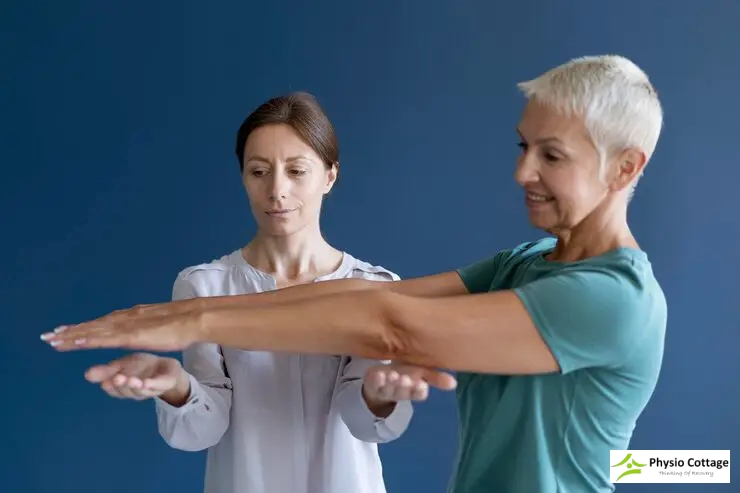
We start by looking at how well your joints move. We will ask you to bend, straighten, or rotate the injured area. We compare the injured side to the healthy side to see what is restricted. For example, if you have shoulder pain, can you lift your arm as high as the other one? These baselines help us measure progress in future sessions.
Strength and Stability Testing
Muscles support your joints, so we need to test their integrity. We might ask you to push against our hand to gauge your strength. We are looking for weakness, imbalances, or pain inhibition (where the muscle “shuts off” to protect you). Weakness in the hips, for instance, is a common culprit we find when treating physiotherapy scarborough patients with knee issues.
Palpation (Hands-on Assessment)
“Palpation” is just a fancy word for touching. We use our hands to feel the tissues. We are checking for muscle spasms, swelling, heat, or specific tender points. This hands-on approach helps us locate the exact source of the pain. Sometimes, we might identify tight connective tissue that requires techniques like myofascial release scarborough later in the treatment phase.
Functional & Neurological Screening
We don’t just look at the body part in isolation; we look at how you move. We might watch you walk, squat, or lift an object. If your symptoms involve numbness or tingling, we will perform quick neurological tests (like checking reflexes) to ensure your nerves are conducting signals properly.
Step 3: Diagnosis and The Treatment Plan
After gathering all the data from the interview and the exam, we sit down to explain what is going on. This is often the “lightbulb moment” for many patients who have been worrying about their symptoms.
Uncovering the Root Cause
We believe that education is as powerful as any exercise. Instead of just giving you a medical label (like “patellofemoral syndrome”), we explain it in plain English. We tell you why it happened. Perhaps your back hurts because your hip is stiff, or your neck is sore due to ergonomic issues at work. Our goal is to demystify the problem so you feel less anxious and more empowered.
Your Personalized Roadmap to Recovery
This is the plan of action. We will outline:
- Frequency: How often you need to come in (e.g., twice a week for four weeks).
- Timeline: How long it generally takes to heal this type of injury.
- Methods: What we will do. This could involve manual therapy, dry needling, or perhaps acupuncture scarborough if it aligns with your condition and preferences. We might also discuss if you would benefit from complementary services. For instance, some musculoskeletal issues respond well when we coordinate with Chiropractic Care Scarborough or other specialists.
Will I Receive Treatment on the First Day?
This is one of the most common questions we get. Patients often worry that the first session is “just talking.” While the assessment is detailed, we know you are in pain and want relief now.
Immediate Symptom Relief
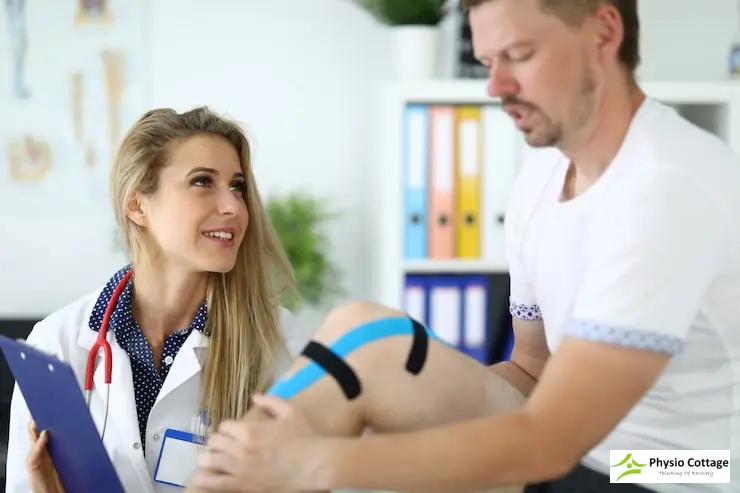
The answer is almost always yes. Unless your case is extremely complex and the assessment takes the entire hour, we reserve time at the end to start treatment. This usually involves gentle manual therapy to calm the nervous system, taping to support an injury, or using modalities like ultrasound or laser. You might also receive a session of massage therapy scarborough techniques focused on the specific area of tension. Our goal is for you to walk out feeling better than when you walked in.
Step 4: Homework and Self-Management
Physiotherapy is a partnership. What you do in the 167 hours of the week that you aren’t in the clinic is just as important as the one hour you spend with us. We equip you with the tools to manage your condition at home.
The Home Exercise Program (HEP)
We will prescribe a few specific exercises to get you started. These aren’t generic workouts; they are targeted movements to address the weaknesses or stiffness we found. We might send you videos or printed sheets so you don’t forget the technique. Doing these exercises is crucial for speeding up your recovery.
Post-Session Advice
We will give you advice on how to manage your symptoms immediately after the session. Should you use ice or heat? (Usually, ice for fresh acute injuries, heat for stiff chronic muscles). We might also suggest ergonomic changes, like adjusting your computer monitor height or changing your sleeping pillow.
Also Read: How does physiotherapy help copd?

Logistics: Billing, Insurance, and Duration
Wrapping up the appointment involves a few administrative steps. We try to make this as hassle-free as possible so you don’t leave stressed.
How Long is the First Appointment?
Your initial assessment typically lasts between 45 to 60 minutes. This gives us enough time to be thorough without rushing. Follow-up treatment sessions are usually shorter, typically around 30 to 45 minutes, depending on your treatment plan.
Direct Billing and Coverage
Most extended health benefit plans cover physiotherapy. To save you the headache of submitting claims later, we offer direct billing to most major insurance companies. Whether you are a long-time resident or accessing refugee physiotherapy scarborough services (like IFHP), our front desk team is experienced in handling the paperwork to ensure you get the coverage you are entitled to.
FAQs
Here are quick answers to some questions that might still be on your mind.
Does physiotherapy hurt?
It shouldn’t be painful. While some “good pain” (like a deep stretch) is normal, we avoid sharp or intense pain. Always communicate with your therapist.
Do I need a doctor’s referral to see a physiotherapist?
In Ontario, physiotherapists are primary care practitioners, so you don’t need a referral to see us. However, check your insurance policy as they might require one for reimbursement.
How will I feel after the first session?
You might feel some relief, but it is also common to feel a little “worked on” or mild soreness, similar to post-workout fatigue. This usually fades within 24 hours.
Can you treat multiple areas in one session?
We focus on the main complaint during the first assessment to be thorough. If you have multiple issues, let us know, and we can plan accordingly for future visits.
What if I’m in too much pain to do exercises?
We start with pain management. We won’t give you heavy exercises until your pain levels are under control.
Taking the First Step Toward a Pain-Free Life
The first physiotherapy appointment is the most important step in your recovery. It transitions you from worrying about the unknown to having a clear, actionable plan. At Physio Cottage, we pride ourselves on creating a welcoming environment where you feel heard and cared for.
Don’t let pain dictate your life any longer. You now know exactly what to expect, so the fear of the unknown is gone. Whether you need rehabilitation, preventative care, or specific treatments like acupuncture scarborough, we are here to help you move better and feel better.
Ready to start your journey? Contact Physio Cottage today to book your initial assessment and get back to doing what you love.