

Short answer: Pelvic floor physiotherapy is assessment and treatment of the muscles that support the bladder, bowel and pelvic organs. A physiotherapist checks how these muscles contract and relax, then teaches exercises, breathing and daily habits for leaking, pelvic pain, or pregnancy and postpartum changes. Learn more about pelvic floor physiotherapy at Physio Cottage.
Pelvic floor physiotherapy is a specialized form of physical therapy focused on the muscles, ligaments, and connective tissues that support the pelvic organs. These muscles play a crucial role in bladder and bowel control, sexual function, and overall core stability. When the pelvic floor is weakened or dysfunctional, it can lead to a range of issues, including incontinence, pelvic pain, and sexual dysfunction. Pelvic floor physiotherapy aims to assess, treat, and prevent these problems, helping individuals regain control and improve their quality of life.
What is Pelvic Floor Therapy?
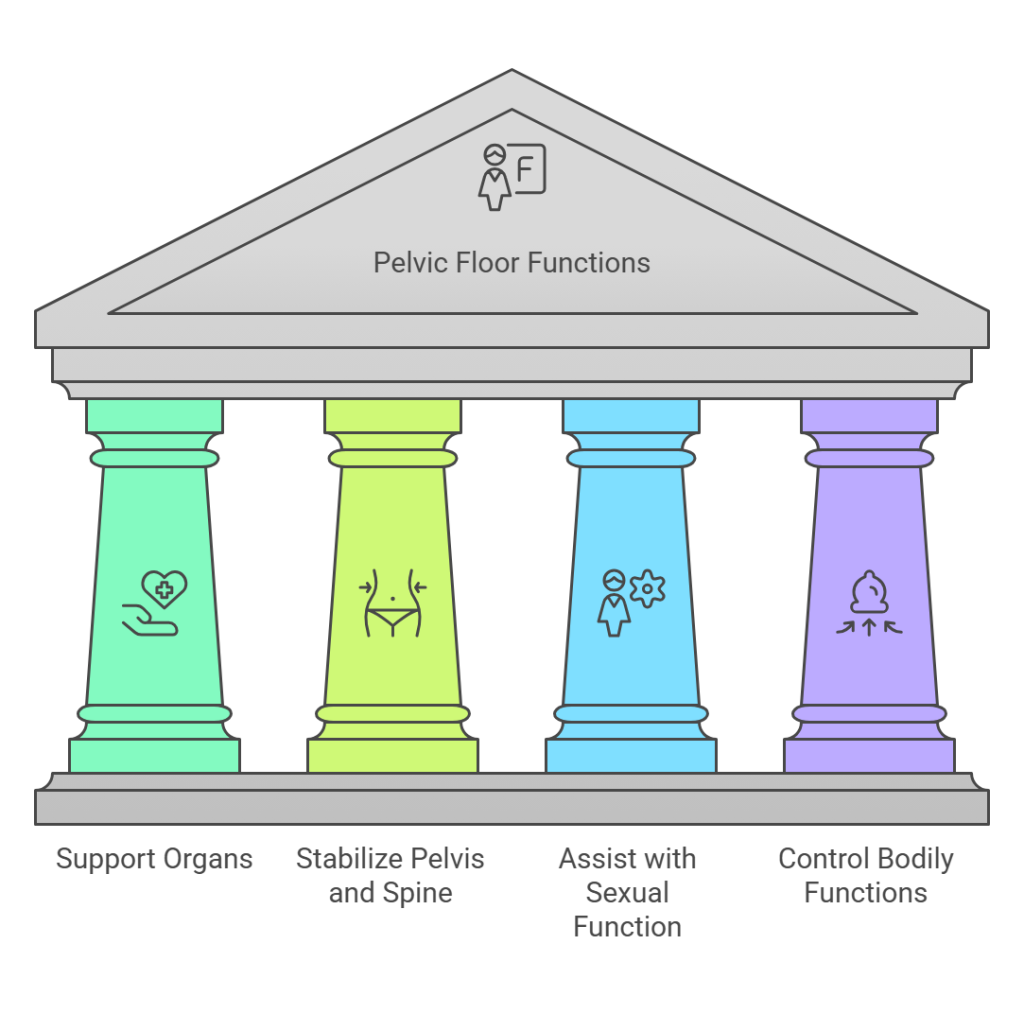
The pelvic floor is a group of muscles and connective tissues that form a hammock-like structure at the base of the pelvis. In women, these muscles support the bladder, uterus, and rectum; in men, they support the bladder and rectum. The pelvic floor has four primary functions:
- Support Pelvic Organs: It provides essential support to organs such as the bladder, uterus (in women), prostate (in men), and rectum.
- Stabilize the Pelvis and Spine: A strong pelvic floor contributes to the stability of the pelvis and spine, aiding in posture and movement.
- Assist with Sexual Function: These muscles play a role in sexual arousal, sensation, and orgasm.
- Control Bowel and Bladder Functions: They help manage the release of urine and feces, maintaining continence.
When these muscles are functioning correctly, they contract and relax as needed. However, factors like childbirth, surgery, aging, or injury can lead to dysfunction, resulting in symptoms such as incontinence, pelvic pain, or sexual difficulties.
Common Pelvic Floor Disorders
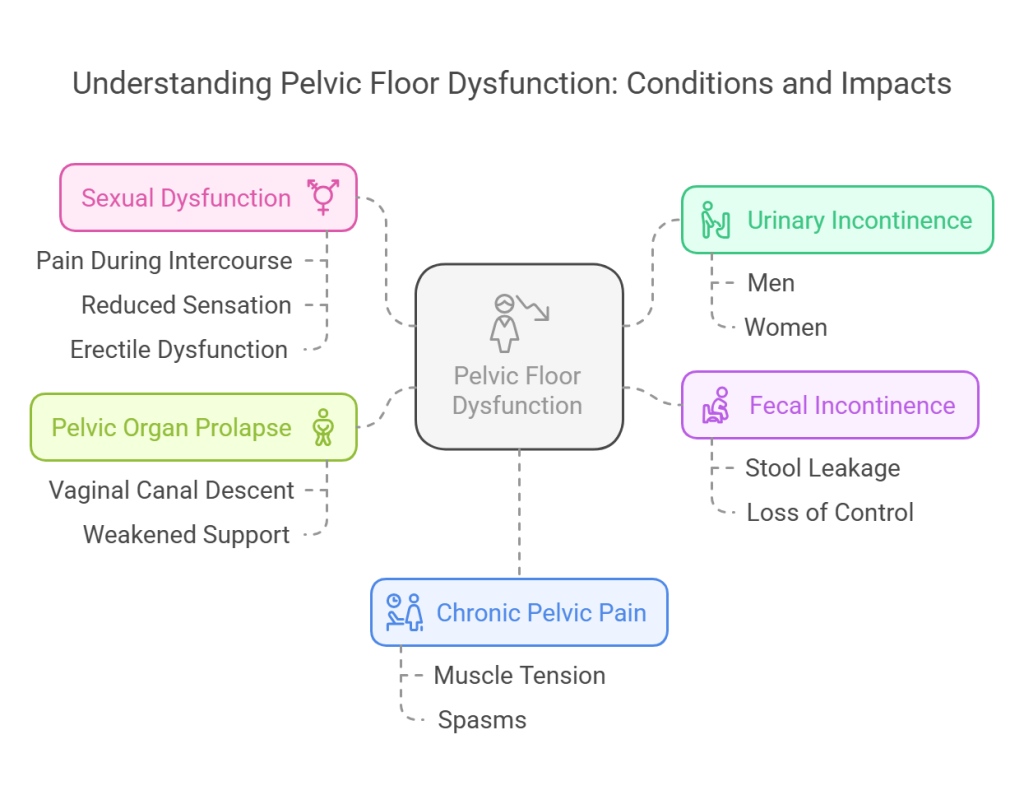
Pelvic floor dysfunction encompasses a variety of conditions that arise when the pelvic floor muscles are weak, tight, or uncoordinated. Common disorders include:
- Urinary Incontinence: The involuntary leakage of urine, affecting both men and women.
- Fecal Incontinence: The inability to control bowel movements, leading to unintentional stool leakage.
- Pelvic Organ Prolapse: A condition where pelvic organs descend into or outside the vaginal canal due to weakened support.
- Chronic Pelvic Pain: Persistent pain in the pelvic region, which may be related to muscle tension or spasms.
- Sexual Dysfunction: Issues such as pain during intercourse, reduced sensation, or erectile dysfunction in men.
These conditions can significantly impact daily life, self-esteem, and intimate relationships.
What to Expect in Pelvic Floor Physiotherapy?
Pelvic floor physiotherapy involves a comprehensive approach to evaluate and treat pelvic floor dysfunction. Here’s what you can typically expect:
Initial Assessment
The physiotherapist will conduct a thorough evaluation, which may include:
- Medical History Review: Discussing your symptoms, medical history, and lifestyle factors.
- Physical Examination: Assessing posture, pelvic alignment, and possibly an internal examination to evaluate muscle tone, strength, and coordination.
Treatment Plan
Based on the assessment, a personalized treatment plan will be developed, which may include:
- Pelvic Floor Exercises: Also known as Kegel exercises, these aim to strengthen or relax the pelvic floor muscles, depending on the dysfunction.
- Biofeedback: Using specialized equipment to provide visual or auditory feedback, helping you learn to control your pelvic floor muscles effectively.
- Manual Therapy: Hands-on techniques to release muscle tension, improve mobility, and alleviate pain.
- Education: Guidance on lifestyle modifications, bladder and bowel habits, and techniques to reduce strain on the pelvic floor.
- Electrical Stimulation: In some cases, mild electrical currents are used to stimulate and strengthen the pelvic floor muscles.
Consistency and adherence to the prescribed exercises and recommendations are key to achieving optimal results.
Benefits of Pelvic Floor Physiotherapy
Pelvic floor physiotherapy offers numerous advantages, whether you’re recovering from childbirth, surgery, or simply looking to improve your core health. Some of the key benefits include:
1. Improved Bladder and Bowel Control
Pelvic floor exercises help strengthen the muscles that control urination and bowel movements. This is especially beneficial for individuals experiencing urinary incontinence or constipation.
2. Reduced Pelvic Pain
Pelvic pain can result from muscle tightness, scar tissue, or nerve irritation. Physiotherapy techniques, including manual therapy and relaxation exercises, can alleviate pain and improve mobility.
3. Faster Postpartum Recovery
After childbirth, many women experience weakened pelvic floor muscles, leading to incontinence or discomfort. Physiotherapy helps restore strength, supporting a quicker and smoother recovery.
4. Enhanced Sexual Function
Pelvic floor therapy can increase blood flow and muscle coordination, leading to improved sexual sensation and reduced pain during intercourse.
5. Better Core Stability and Posture
Your pelvic floor is a crucial part of your core. Strengthening these muscles enhances overall stability, reducing back pain and improving posture.
What Happens During a Pelvic Floor Physiotherapy Session?
If you’ve never attended a pelvic floor physiotherapy session, you might wonder what to expect. Here’s a breakdown of a typical visit:
1. Initial Assessment
Your physiotherapist will begin by discussing your medical history, symptoms, and lifestyle. They may ask about your bladder and bowel habits, pain levels, and any previous treatments.
2. Physical Examination
A physical exam may include assessing your posture, breathing patterns, and pelvic muscle strength. Some therapists may conduct an internal exam to better evaluate the pelvic floor muscles, but this is always done with patient consent.
3. Personalized Treatment Plan
Based on the assessment, your physiotherapist will create a customized treatment plan, which may include:
- Pelvic floor exercises to strengthen or relax muscles
- Manual therapy to release muscle tightness
- Biofeedback training to help you engage the right muscles
- Education on posture, breathing techniques, and lifestyle adjustments
4. Home Exercise Routine
You’ll likely receive a set of exercises to practice at home. Consistency is key to seeing long-term improvements.
How Long Does It Take to See Results?
Every person is different, but many people notice improvements within a few weeks of starting therapy. Depending on your condition, you may need several sessions over a few months. The key to success is consistencydoing your prescribed exercises regularly and making the recommended lifestyle changes.
For physiotherapy services in Scarborough, Call us
Final Thoughts
Pelvic floor physiotherapy is a highly effective, non-invasive approach to addressing pelvic health concerns. Whether you’re dealing with incontinence, pain, or postpartum recovery, therapy can help you regain strength, control, and confidence.
If you’re experiencing symptoms, consider booking a session with a qualified pelvic floor physiotherapist. Your body will thank you for it.
Who pelvic floor physiotherapy can help
Pelvic floor physiotherapy is not only for one group of people. Physiotherapists see women, men and older adults with symptoms that start in the pelvis or the deep core. You may want an assessment if you notice any of these:
- Leaking urine when you cough, sneeze, laugh, lift or run
- A sudden, strong urge to pass urine, or getting up several times a night
- A feeling of heaviness or bulging in the vagina, especially at the end of the day
- Pain in the pelvis, tailbone, hips or lower back that has not settled with general exercise
- Pain with intercourse or when inserting a tampon
- Constipation or straining that keeps coming back
- Weakness or separation of the abdominal muscles after pregnancy
- Leaking or pelvic pain after prostate surgery
These problems are common, but common does not mean you have to live with them. A physiotherapist can look at how your muscles work and explain what is likely driving your symptoms.
Pelvic floor exercises are more than Kegels
Many people are told to do Kegels and leave it at that. Squeezing exercises help when the muscles are weak, yet some people have the opposite problem: muscles that stay tight and cannot relax. For them, more squeezing can make pain or urgency worse.
A pelvic floor physiotherapist checks three things: strength, the ability to relax fully, and coordination with breathing and the deep abdominal muscles. Your program may include:
- Down-training: breathing and relaxation work for muscles that are overactive
- Strength and endurance work: holds and quick contractions, built up week by week
- Coordination: using the pelvic floor at the right moment, such as before a cough or a lift
- Bladder and bowel habits: fluid timing, toilet posture and urge control
- Whole-body exercise: hip, core and posture work so the pelvic floor is not working alone
Pelvic floor physiotherapy in pregnancy and after birth
During pregnancy, the growing baby and hormonal changes put extra load on the pelvic floor. Physiotherapy can help you prepare for labour, manage pelvic girdle pain and learn safe ways to stay active. After birth, a check at around six weeks, or once your doctor or midwife clears you, is a good time to review healing, abdominal separation and a safe return to exercise. It is never too late: many people come in years after their last baby.
How to prepare for your first appointment
- Write down your symptoms, when they started and what makes them better or worse
- Keep a simple bladder diary for two or three days if leaking or urgency is a concern
- Bring a list of medications and any past surgeries
- Wear comfortable clothing
- Ask any question you have; you can say no to any part of the assessment
An internal exam is often the most accurate way to assess the pelvic floor, but it is always explained first and only done with your consent. If you would rather not have one, your physiotherapist can still assess posture, breathing, hips and the abdominal wall.
More questions about pelvic floor physiotherapy
Do I need a referral?
No. You can book directly with a physiotherapist in Ontario. Some extended health plans ask for a doctor’s note before they reimburse, so check your plan.
Is pelvic floor physiotherapy only for women?
No. Men see pelvic floor physiotherapists for leaking after prostate surgery, pelvic pain and bowel problems.
How many sessions will I need?
It depends on your symptoms and how regularly you do your home program. Many people notice changes within several weeks of steady practice, and your physiotherapist reviews progress at each visit.
Ready to talk about your symptoms? Book a pelvic health assessment at Physio Cottage, 2231 Victoria Park Ave, Unit #5, Scarborough, ON M1R 1V8. Call (416) 445-5353 or book online. Hours: Mon to Fri 10am to 8pm, Sat 9am to 5pm.

About the author and clinical reviewer
Dr. Maryam Ahankoob, Registered Physiotherapist at Physio Cottage, 2231 Victoria Park Ave, Unit #5, Scarborough, ON M1R 1V8. Questions about this article or your own symptoms? Call (416) 445-5353 or learn more about our clinic.
This article is general information, not a diagnosis. Please book an assessment for advice about your situation.