
Shoulder pain is more than just a nuisance; it is a thief. It steals your ability to reach for a cup of coffee, hinders your sleep, and makes simple acts like putting on a jacket feel like a monumental task. Whether it’s a sharp pinch when you lift your arm or a dull, aching throb that keeps you up at night, shoulder dysfunction disrupts your entire life.
If you are searching for physiotherapy scarborough, you are likely looking for answers beyond just “take some rest.” The shoulder is arguably the most mobile and complex joint in the human body, relying on a delicate balance of muscles, tendons, and ligaments. When that balance is thrown off, the results can be debilitating. At Physio Cottage, we believe in digging deep to find the root cause of your discomfort, moving beyond symptom management to true structural correction.
The Anatomy of Mobility: How Your Shoulder Works
Before we can fix the problem, we need to appreciate the machinery. The shoulder isn’t just one joint; it is a complex interplay of the clavicle (collarbone), scapula (shoulder blade), and humerus (upper arm bone). This design allows for an incredible range of motion, but this mobility comes at a cost: stability.
The Role of the Rotator Cuff
Think of the rotator cuff not as a single cuff, but as a dynamic team of four small muscles. Their primary job isn’t just to lift the arm, but to suck the arm bone into the socket, keeping it centered while the bigger muscles do the heavy lifting. When these stabilizers become fatigued or injured, the joint mechanics falter, leading to wear and tear.
The Scapula Connection
A common oversight in treating shoulder pain is ignoring the shoulder blade. Your scapula is the foundation for your arm. If it doesn’t move smoothly along your rib cage (a condition often called scapular dyskinesis), your shoulder joint has to work overtime, leading to strain and impingement.

Identifying the Culprit: Common Causes of Shoulder Pain
Shoulder issues rarely pop up overnight, even if the pain does. Often, it is a culmination of repetitive stress, poor posture, or an old injury that never healed correctly.
Rotator Cuff Tears and Tendinopathy
This is the most frequent diagnosis we see. It involves micro-tears or inflammation in the tendons. Patients often describe a deep ache in the shoulder that worsens at night. While full tears might require surgical consultation, the vast majority of partial tears and tendinopathies respond exceptionally well to conservative care.
Frozen Shoulder (Adhesive Capsulitis)
This condition can be baffling and frustrating. It involves the thickening and tightening of the capsule surrounding the joint. The hallmark is a significant loss of motion, both active (when you move it) and passive (when we move it). Recovery is a journey, but with consistent scarborough physiotherapy clinic interventions, thaw and mobility restoration are achievable.
Shoulder Impingement
Impingement occurs when the space between the top of the shoulder blade (acromion) and the rotator cuff narrows. When you lift your arm, the tendon gets pinched. This is common in swimmers, painters, and office workers with rounded shoulders.
Referred Pain from the Neck
Sometimes, the shoulder isn’t the problem at all. Issues in the cervical spine (neck) can refer pain down into the shoulder blade or upper arm. A skilled assessment is crucial here to ensure we aren’t treating the smoke while ignoring the fire.
Also Read: Shoulder Pain Physiotherapy in Scarborough — Treatment Options That Work
The Physio Cottage Assessment: Beyond the Symptoms
When you walk into our clinic, we don’t just look at your shoulder. We look at you. Pain is a subjective experience influenced by biology, mechanics, and lifestyle.
Our evaluation process is thorough. We analyze your posture, check your neck’s range of motion, and assess the strength and timing of your muscle recruitment. We are proud to staff registered physiotherapists scarborough residents trust, professionals who are trained to distinguish between a simple strain and complex mechanical dysfunction.
During this phase, we also listen to your history. Are you dealing with work-related stress? Are you a new Canadian adjusting to a new environment? We offer refugee physiotherapy scarborough services because we believe healthcare should be accessible to everyone, regardless of their background or current status.
Comprehensive Treatment Modalities
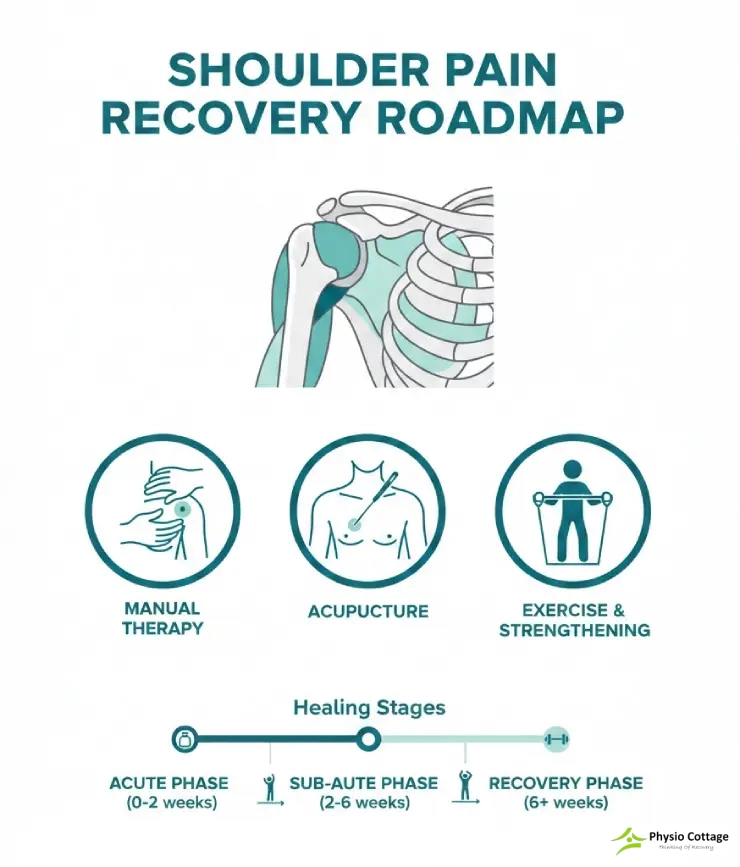
Once we have a working diagnosis, we build a roadmap for your recovery. No two shoulders are the same, so no two treatment plans should be either. We utilize a blend of modern technology and time-tested hands-on techniques.
Manual Therapy and Mobilization
Hands-on work is often the catalyst for healing. We use joint mobilization techniques to gently stretch the capsule and improve the glide of the joint. For soft tissue restrictions, techniques like myofascial release scarborough locals rely on can be incredibly effective. This involves applying sustained pressure into the myofascial connective tissue restrictions to eliminate pain and restore motion.
Acupuncture and Dry Needling
For stubborn knots and deep-seated muscle tension, needles can be a game-changer. Acupuncture scarborough services at our clinic are integrated into physiotherapy plans to help modulate pain, reduce inflammation, and reset the nervous system. By targeting specific trigger points, we can encourage blood flow and relaxation in muscles that are guarding the injury.
Therapeutic Massage
While physiotherapy focuses on mechanics, the health of the muscle tissue is paramount. Integrating massage therapy scarborough sessions into your rehab plan can accelerate recovery by keeping the muscles pliable, reducing cortisol (stress hormones), and flushing out metabolic waste products from injured tissues.
A Holistic Approach to Healing
We don’t view the shoulder in isolation. We look at how you breathe, how you sit, and how you manage stress. This holistic physiotherapy scarborough approach ensures that we aren’t just patching you up, but empowering you to be healthier overall. This might involve nutritional advice for inflammation or breathing exercises to calm a sensitized nervous system.
The Role of Active Rehab and Strengthening
Passive treatments like massage and mobilization open the “window of opportunity” for movement. However, to keep that window open, you must strengthen the muscles.
Isometric Exercises
In the early stages, moving the arm might be too painful. Isometrics allow you to activate the muscle without moving the joint. This prevents atrophy while respecting the healing tissue.
Scapular Stabilization
We focus heavily on the muscles around the shoulder blade (rhomboids, serratus anterior, and lower trapezius). If your scapula is stable, your rotator cuff doesn’t have to work as hard.
Functional Integration
Eventually, we move to exercises that mimic your daily life. Whether that’s lifting a box or swinging a tennis racket, the goal is to build resilience. For patients dealing with long-standing issues, our approach to chronic pain treatment scarborough involves gradual exposure to movement, retraining the brain to understand that movement is safe.
Complementary Care: Chiropractic and Multidisciplinary Support
Sometimes, the shoulder requires a team approach. The alignment of the spine and ribs plays a significant role in shoulder mechanics.
We often collaborate or refer internally to ensure all bases are covered. If rib dysfunction is limiting your shoulder movement, Chiropractic Care Scarborough practitioners can provide adjustments that immediately free up range of motion. This multidisciplinary model prevents patients from falling through the cracks and ensures that both the skeletal and muscular systems are working in harmony.
The Recovery Timeline: What to Expect
“How long will it take?” is the question every patient asks. The answer depends on the tissue involved and how long the problem has existed.
- The Acute Phase (Weeks 1-3): Focus is on pain reduction and protecting the injury.
- The Sub-Acute Phase (Weeks 3-6): restoring range of motion and beginning gentle loading.
- The Remodeling Phase (Week 6+): building strength, endurance, and power.
Recovery is rarely a straight line. There may be flare-ups, but with professional guidance, these are just bumps in the road, not dead ends.
Also Read: How Physiotherapy Helps Postural Imbalances

Prevention and Ergonomics for the Scarborough Lifestyle
Many of our patients commute into downtown Toronto or work from home setups that are less than ideal. Prevention is about managing the load you put on your body.
- Workstation Setup: Ensure your keyboard and mouse are close enough that your elbows remain by your side. Reaching forward constantly strains the upper traps.
- Posture breaks: “Text neck” and rounded shoulders shorten the chest muscles (pecs), which pulls the shoulder forward and invites impingement.
- Sleep positioning: Avoid sleeping directly on the injured shoulder. Hugging a pillow can keep the shoulder in a neutral, open position.
Why Choose Physio Cottage?
In a city filled with clinics, Physio Cottage stands out because we treat people, not just parts. We understand the local community. Whether you need specialized refugee physiotherapy scarborough services, high-level sports rehab, or simply want to pick up your grandchildren without pain, we are here.
Our facility is designed to be welcoming and therapeutic. From the moment you search for a scarborough physiotherapy clinic to the day you graduate from our care, we want you to feel supported. We combine evidence-based medicine with a warm, compassionate environment.
FAQ
Do I need a doctor’s referral for physiotherapy in Scarborough?
No, in Ontario, physiotherapy is a direct-access profession. You can book an appointment directly with us without seeing a GP first, although some insurance plans may require one for reimbursement.
Is heat or ice better for shoulder pain?
Generally, ice is better for acute, sharp pain or new injuries (first 48-72 hours) to reduce inflammation. Heat is better for chronic, stiff, or aching muscles to increase blood flow and relaxation.
Can physiotherapy fix a torn rotator cuff without surgery?
Yes, in many cases. Unless it is a massive, traumatic tear, studies show that physiotherapy can be as effective as surgery for degenerative rotator cuff tears by strengthening the remaining intact tissue.
Does acupuncture hurt?
Most patients feel very little discomfort. You might feel a tiny prick followed by a dull ache or heavy sensation, which is a sign the treatment is working. It is generally very relaxing.
How long does a typical session last?
An initial assessment usually takes 45 to 60 minutes. Follow-up treatment sessions are typically 30 to 45 minutes, depending on the complexity of your condition and the treatment plan.
Take the First Step Toward Pain-Free Living
You don’t have to accept shoulder pain as your new normal. Whether it’s a sports injury or chronic stiffness, the team at Physio Cottage has the expertise and the tools to help you heal.
Don’t let another day go by with limited mobility. Contact us today to schedule your assessment and let’s get you back to doing what you love.