

You’ve been going to your sessions. You’re doing the exercises at home, most of the time, anyway. But here’s the question that keeps nagging: is any of this actually working?
It’s a fair thing to wonder. Unlike popping a pill and feeling different within an hour, physiotherapy operates on a different timeline. The changes can be gradual, sometimes so subtle that you miss them entirely. Other times, you might hit a plateau and wonder if you’ve wasted your time and money.
At Physio Cottage, we hear this question constantly from patients across Scarborough and Toronto. And honestly? It’s one of the most important questions you can ask. Because knowing what to look for, and when to look for it, can make the difference between sticking with a treatment that’s genuinely helping and abandoning ship too early.
Let’s break down the real indicators that your physiotherapy treatment is on the right track.
The First Few Sessions: What Should Actually Happen
Here’s something most clinics won’t tell you upfront: you probably won’t feel dramatically better after your first appointment. Sometimes you might even feel a bit worse, sore, tired, or achier than before.
This doesn’t mean something’s wrong.
Initial Assessment Matters More Than Immediate Relief
A good physiotherapist spends that first session really digging into what’s going on. At our physiotherapy Scarborough clinic, we’re looking at how you move, where you’re restricted, what triggers your pain, and what your daily life actually looks like. This detective work forms the foundation of everything that follows.
The real question isn’t “do I feel better right now?” It’s “does my therapist have a clear picture of my situation and a logical plan to address it?”
Early Signs Worth Noticing
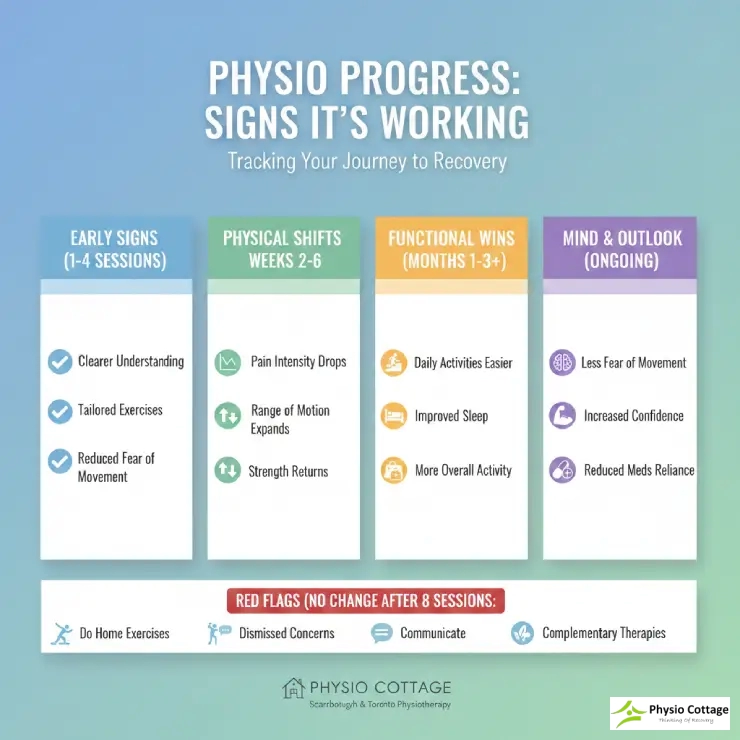
Within the first two to four sessions, keep an eye out for:
- Your therapist can explain your condition in terms that make sense to you
- You have specific home exercises tailored to your issue, not generic handouts
- You understand why certain movements hurt and what you’re working toward
- There’s a rough timeline for reassessment
If these boxes are checked, you’re starting on solid ground.

Physical Changes That Signal Real Progress
Now let’s talk about the tangible stuff, the physical shifts that tell you something positive is happening in your body.
Pain Patterns Start to Shift
Pain rarely disappears overnight. But it does change. You might notice:
Intensity drops. That sharp 8-out-of-10 pain becomes a dull 5. Then maybe a 4. The trajectory matters more than any single day.
Location changes. This one surprises people. Sometimes pain that was radiating down your leg starts to centralize, moving closer to the spine. In many cases, this is actually good news. It often means the nerve irritation is settling down.
Triggers become fewer. Maybe sitting used to hurt after 10 minutes. Now you can manage 30. Perhaps climbing stairs was brutal, but now it’s just uncomfortable. These shifts count.
For patients dealing with chronic pain treatment Scarborough, these gradual changes are particularly meaningful. Chronic conditions rarely resolve quickly, but consistent small improvements add up significantly over weeks and months.
Range of Motion Expands
Can you turn your neck further than before? Reach higher without that catching sensation? Bend forward without your lower back screaming at you?
These measurable changes are concrete evidence that tissues are responding. Your physiotherapist should be tracking these numbers, comparing your shoulder rotation from week one to week six, for instance.
Strength Starts Returning
Weakness often accompanies injury and pain. When physiotherapy works, you’ll notice:
- Exercises that felt impossible become merely difficult
- Difficult exercises become manageable
- Manageable exercises become almost easy
Your therapist should be progressively challenging you. If you’re doing the exact same exercises at the same difficulty level month after month, that’s worth questioning.
Also Read: Do I Need X-Rays Before Physiotherapy?
Functional Improvements: The Real Test
Here’s where it gets practical. Physiotherapy isn’t about performing well in a clinic, it’s about performing well in your actual life.
Daily Activities Become Easier
The morning stiffness that used to last an hour? Maybe it’s down to twenty minutes now. Getting in and out of your car doesn’t require that elaborate series of movements anymore. You can carry groceries without dreading the aftermath.
These functional wins matter enormously. In fact, they matter more than isolated clinical measurements in many ways.
Sleep Quality Improves
Pain and sleep have a complicated relationship. They feed off each other in the worst possible way, pain disrupts sleep, poor sleep amplifies pain. When physiotherapy starts working, many patients notice they’re sleeping better. Fewer position changes at night. Less waking up because something hurts. More mornings where you actually feel rested.
You’re Doing More Overall
This one sneaks up on people. You realize you walked further than usual without thinking about it. You played with your kids longer. You stood through an entire concert when six weeks ago that would’ve been unthinkable.
At Physio Cottage, our registered physiotherapists Scarborough specifically ask about these real-world activities. Because ultimately, that’s the whole point.
Mental and Emotional Shifts
Physical therapy isn’t purely physical. The psychological component matters too, and changes here often indicate genuine progress.
Less Fear Around Movement
Pain teaches us to be afraid. It’s protective, your brain trying to keep you safe. But sometimes this protection becomes excessive, leading to avoidance patterns that actually make things worse.
Effective physiotherapy helps recalibrate this fear response. You start trusting your body again. Movement feels less risky. You stop catastrophizing every twinge.
Confidence Returns
There’s something profound about regaining confidence in your physical capabilities. Patients often describe feeling like themselves again, not the injured version, but the version that could do things without constantly calculating risks.
Reduced Dependence on Pain Medications
Many patients find themselves reaching for painkillers less frequently as physiotherapy progresses. This isn’t always the goal, sometimes medications are necessary and appropriate, but reduced reliance often indicates underlying improvement.
Realistic Timelines: When to Expect What
One frustrating aspect of physiotherapy is the variability. What takes one person three weeks might take another three months. Still, some general patterns hold true.
Acute Injuries (Recent Sprains, Strains, Post-Surgery)
Weeks 1-2: Inflammation settles, pain begins decreasing
Weeks 3-6: Noticeable improvements in range and function
Weeks 6-12: Strength rebuilding, return to most normal activities
Chronic Conditions (Long-Standing Pain, Degenerative Issues)
The timeline stretches considerably for chronic conditions. Meaningful improvements might take several months of consistent work. This is where patience becomes critical, and where many people give up too soon.
Approaches like holistic physiotherapy Scarborough can be particularly valuable here, addressing not just the physical symptoms but contributing factors like stress, sleep, and movement habits.
Neurological Conditions
Recovery trajectories vary dramatically depending on the specific condition and individual circumstances. Progress may be measured in smaller increments, and timelines often extend to six months or longer.
Also Read: Can You Be Too Old for Physiotherapy?
Red Flags: Signs Something Isn’t Right
Not all physiotherapy experiences are positive. Here’s when to reassess your situation.
No Change After 6-8 Sessions
If you’ve had eight sessions with zero improvement, not even minor shifts in pain or function, something needs to change. Maybe the diagnosis needs revisiting. Maybe the treatment approach isn’t suited to your particular situation. A good therapist will recognize this and adjust; a mediocre one will keep doing the same thing.
Progressive Worsening
Brief flare-ups happen. But if you’re consistently getting worse, more pain, less function, declining quality of life, that’s a problem. Don’t tough it out hoping things will turn around. Speak up.
Your Concerns Get Dismissed
If you express that something doesn’t feel right and your therapist brushes it off without adequate explanation, that’s concerning. Your input matters. You know your body better than anyone.
Treatment Feels Generic
Every person is different. If your treatment plan looks identical to what everyone else gets, the same exercises, same modalities, same approach regardless of individual circumstances, that raises questions about whether your specific needs are being addressed.
At our Scarborough physiotherapy clinic, we regularly see patients seeking second opinions, and we’re equally comfortable when our patients seek outside perspectives on complex cases.

Putting It All Together
So how do you actually know if physiotherapy is working?
You look for trends, not single data points. You notice functional improvements in daily life, not just what happens in the clinic. You feel yourself trusting your body more. You’re sleeping better, moving more, worrying less about every sensation.
Progress isn’t linear. You’ll have setbacks. Some weeks will feel like steps backward. But zoom out over months, and the trajectory should be positive. If it isn’t, genuinely isn’t, then something needs to change.
The relationship with your physiotherapist matters too. You should feel heard, your questions should get real answers, and your treatment should evolve as you do.
Physiotherapy requires patience and active participation. It’s not passive healing, it’s collaborative rebuilding. When it works, and it often does, the results extend far beyond pain relief into reclaimed capability and confidence.
FAQ
How many physiotherapy sessions before I should see improvement?
Most patients notice some positive changes within 4-6 sessions, though this varies based on condition severity, how long the issue has existed, and individual healing rates. Chronic conditions typically require longer timeframes than acute injuries.
Can physiotherapy make my pain worse initially?
Yes, temporary soreness after sessions is common, especially early in treatment. This usually settles within 24-48 hours. However, persistent or worsening pain beyond this window warrants discussion with your therapist.
What if I miss my home exercises for a few days?
Don’t panic, just restart. Consistency over time matters more than perfection. That said, chronic non-compliance will significantly slow your progress. If exercises are unrealistic for your lifestyle, ask your therapist to modify them.
Should I stop physiotherapy if I feel better?
Not necessarily. Feeling better doesn’t always mean the underlying issue is fully resolved. Stopping too early is a common reason for re-injury. Discuss with your therapist when discharge is appropriate versus when maintenance sessions might help.
How do I know if I need a different physiotherapist?
Consider switching if: you’ve had no improvement after 8+ sessions, your concerns are consistently dismissed, treatment feels generic rather than individualized, or you simply don’t feel comfortable with your current provider. The therapeutic relationship matters for outcomes.
Take the Next Step
Still uncertain whether your current treatment is on track? Or maybe you’re considering physiotherapy but want to start with realistic expectations?
Physio Cottage offers thorough assessments designed to give you clarity, about what’s happening in your body, what approach makes sense, and what realistic improvement looks like for your specific situation.
Book your assessment today and work with registered physiotherapists Scarborough who will partner with you toward genuine, measurable recovery.