
Let me tell you something that might surprise you. Last week, a 91-year-old woman walked into our clinic asking if she was “past the point” where physiotherapy could help her. She’d been told by well-meaning family members that maybe she should just “take it easy” and accept her hip pain as part of getting older.
Three weeks later, she’s gardening again.
This question, whether someone can be too old for physiotherapy, comes up more often than you’d think. And honestly? It reveals a deeper misunderstanding about what physiotherapy actually does and who it’s for.
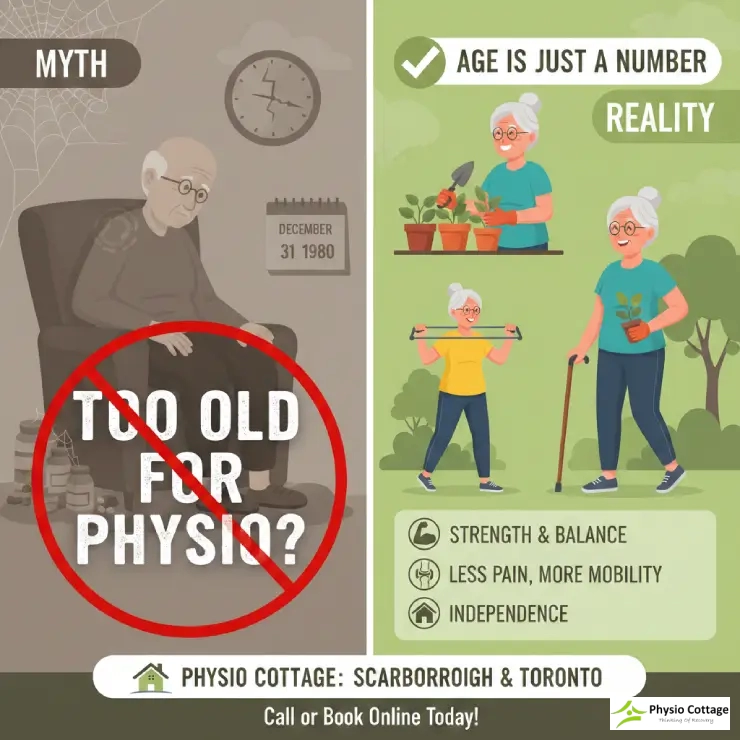
The short answer is no. Absolutely not. Your body doesn’t suddenly become un-treatable because you’ve celebrated a certain number of birthdays.
But let’s dig into why this myth persists, and more importantly, why it’s flat-out wrong.
Why This Question Exists in the First Place
There’s a stubborn belief floating around that older bodies are somehow “beyond repair.” That once you hit 70, 80, or 90, your options narrow down to medication and acceptance.
This couldn’t be further from the truth.
The confusion often stems from mixing up two different things: cure and improvement. No, physiotherapy won’t reverse 80 years of living. But that’s not the goal. The goal is function. Independence. Less pain. Better sleep because your back isn’t screaming at you at 3 AM.
Where This Myth Comes From
Part of the problem is outdated medical thinking. Decades ago, rest was prescribed for almost everything. Bad back? Bed rest. Sore knee? Stay off it. Hip replacement? Don’t move too much.
We know better now.
Research consistently shows that movement, appropriate, guided movement, helps bodies heal at any age. The “just rest” approach often makes things worse, leading to muscle weakness, joint stiffness, and a downward spiral that becomes harder to reverse.
Another factor? Ageism, plain and simple. There’s an unspoken assumption that investing in an older person’s mobility somehow matters less. That it’s not “worth it.” This thinking is not only wrong, it’s harmful.
What the Research Actually Says
Study after study confirms that older adults respond well to physiotherapy interventions. A 2022 meta-analysis in the Journal of Geriatric Physical Therapy found significant improvements in balance, strength, and daily function among participants over 75 who engaged in structured physiotherapy programs.
The body’s ability to adapt doesn’t disappear with age. It changes, yes. It might take longer. But adaptation remains possible until the very end of life.

How Physiotherapy Works Differently for Older Adults
Here’s where things get practical. Physiotherapy for someone who’s 25 looks different from physiotherapy for someone who’s 85. And that’s exactly how it should be.
At our physiotherapy Scarborough clinic, we don’t use a one-size-fits-all approach. We assess each person individually, considering their medical history, current medications, existing conditions, and personal goals.
Gentler Approaches That Still Get Results
Forget the image of grueling gym sessions. Effective physiotherapy for older adults often involves:
Low-impact movements that protect joints while building strength. Water-based therapy, seated exercises, and resistance band work can all be remarkably effective.
Balance and coordination training that reduces fall risk, a huge concern for anyone over 65.
Breathing exercises that support overall function and can help with conditions like COPD or post-surgical recovery.
Modifications That Make Sense
A good physiotherapist knows how to modify. Maybe you can’t lie flat on a treatment table. Maybe you have osteoporosis and certain movements are off-limits. Maybe you tire easily and need shorter sessions.
None of these are reasons to skip physiotherapy. They’re simply factors that shape how your treatment looks.
Working with registered physiotherapists Scarborough residents trust means working with professionals who understand these nuances.
Common Conditions in Older Adults That Physiotherapy Addresses
Let’s get specific. What exactly brings older adults through our doors?
Arthritis and Joint Pain
Osteoarthritis affects roughly 80% of adults over 65 to some degree. The pain, stiffness, and reduced mobility can feel overwhelming.
Physiotherapy helps by strengthening muscles around affected joints (which takes pressure off the joint itself), improving flexibility, and teaching movement patterns that reduce strain. Many patients report significant pain reduction without adding more medication to their already lengthy list.
For comprehensive chronic pain treatment Scarborough offers, physiotherapy forms a cornerstone of effective management.
Post-Surgical Recovery
Hip replacements. Knee replacements. Shoulder surgeries. These procedures are increasingly common in older populations, and the surgery itself is only half the battle.
Recovery requires guided movement to prevent scar tissue buildup, restore range of motion, and rebuild strength. Without proper rehabilitation, even a technically successful surgery can result in disappointing outcomes.
Falls and Balance Problems
Here’s a statistic that should concern everyone: one in three adults over 65 falls each year. Falls are the leading cause of injury death in this age group.
Physiotherapy directly targets fall risk through balance training, strength work, and gait analysis. We look at how you walk, identify problems, and address them before they send you to the emergency room.
Stroke Recovery
Stroke rehabilitation is time-sensitive, but improvements can continue for months or even years after the initial event. Physiotherapy helps restore movement patterns, address muscle weakness or spasticity, and improve independence in daily activities.
Chronic Pain That Won’t Quit
Maybe it’s your lower back. Maybe it’s your neck. Maybe it’s a pain that’s been with you so long you’ve forgotten what life without it feels like.
Holistic physiotherapy Scarborough approaches address not just the site of pain but contributing factors throughout the body. Sometimes your hip pain is actually a foot problem. Sometimes your shoulder pain relates to how you breathe. A thorough assessment reveals connections you might never have considered.
The Real Benefits of Physiotherapy at Any Age
Okay, so physiotherapy can help with specific conditions. But what does that actually mean for daily life?
Staying Independent Longer
This is the big one. The ability to dress yourself, cook your own meals, walk to the bathroom without help, these things matter enormously to quality of life.
Physiotherapy protects independence by maintaining the physical capacity to perform daily tasks. Even small improvements in strength or balance can make the difference between living in your own home and needing to move to assisted living.
Reducing Medication Dependence
Pain medication comes with side effects. Drowsiness. Constipation. Increased fall risk. Potential for dependency.
When physiotherapy reduces pain effectively, many patients can decrease their reliance on medication. This isn’t about rejecting medical treatment, it’s about having more tools in the toolbox.
Better Sleep
Chronic pain disrupts sleep. Poor sleep worsens pain. It’s a vicious cycle that exhausts everyone caught in it.
By addressing underlying musculoskeletal issues, physiotherapy often improves sleep quality as a welcome side effect.
Mental Health Improvements
Let’s not pretend physical and mental health are separate things. They’re deeply intertwined.
Being able to move better, do more, and experience less pain naturally lifts mood. The social aspect of attending appointments and working with therapists also combats isolation, a serious concern for many older adults.
Additionally, complementary treatments like acupuncture Scarborough services can support both physical and emotional wellbeing alongside physiotherapy.
Also Read: Can Physiotherapy Prevent Surgery?
What to Expect During Your First Appointment
Uncertainty keeps people away from treatment they need. So let’s demystify the process.
The Initial Assessment
Your first visit involves a lot of questions and some physical tests. We want to understand:
- What’s bothering you and for how long
- Your medical history and current medications
- What you want to be able to do that you currently can’t
- How your body moves, where restrictions exist, what hurts and when
This isn’t a test you can fail. We’re gathering information, not judging your fitness level.
Creating Your Treatment Plan
Based on the assessment, we develop a personalized plan. This might include:
- In-clinic treatment sessions
- Home exercises (simple ones you can actually do)
- Recommendations for assistive devices if helpful
- Coordination with other healthcare providers
The plan adapts as you progress. What works in week one might change by week six.
What About Mobility Limitations?
Can’t drive? We can discuss transportation options.
Use a wheelchair? Treatment tables adjust, and much can be done seated.
Need a caregiver present? They’re welcome to join and learn how to assist with home exercises.
Barriers exist to be addressed, not to stop treatment entirely.
Addressing Concerns Family Members Often Have
It’s not just the older adults themselves who worry. Family members frequently have questions.
“What if they get hurt during treatment?”
Licensed physiotherapists are trained to work safely with all populations, including those with osteoporosis, heart conditions, or other concerns. We monitor constantly and adjust as needed.
The risk of not moving is often greater than the risk of guided movement.
“Is it worth the cost?”
Compare the cost of regular physiotherapy to the cost of a hip fracture from a fall. Or the cost of lost independence requiring full-time care.
Physiotherapy is an investment in continued quality of life. Many extended health plans cover a significant portion of costs.
“They seem too weak for exercise.”
Then we start exactly where they are. Maybe that’s lifting a two-pound weight. Maybe it’s practicing standing up from a chair. There’s always a starting point.
Also Read: How Long After Surgery Should You Start Physiotherapy?
Finding the Right Physiotherapy Clinic for Older Adults
Not all clinics are equally equipped to work with seniors. Here’s what to look for.
Staff Experience with Geriatric Patients
Ask directly: how often do you work with patients over 70? Over 80? The answer matters.
A Scarborough physiotherapy clinic that regularly treats older adults will have appropriate equipment, trained staff, and realistic expectations.
Accessibility
Ground floor access? Parking close by? Grab bars in appropriate places? These practical details determine whether someone can actually attend appointments.
Communication Style
Does the therapist explain things clearly? Listen to concerns? Adjust when something isn’t working?
The therapeutic relationship matters at any age, but especially when someone might be nervous about trying something new.
Holistic Approach
Looking at the whole person rather than just the painful joint leads to better outcomes. How do sleep, stress, nutrition, and social factors affect your condition? A thorough clinic considers these elements.

Getting Started Is Easier Than You Think
If you’ve been putting off physiotherapy because you thought you were too old, or because you weren’t sure it would help, consider this your invitation to try.
At Physio Cottage, we work with adults of all ages across Scarborough and Toronto. We’ve seen remarkable improvements in patients who thought improvement was no longer possible for them.
Your age isn’t a barrier. Your condition isn’t hopeless. And your goals, whatever they are, deserve attention.
FAQ
What age is considered too old for physiotherapy?
There is no age limit for physiotherapy. Patients in their 90s regularly benefit from treatment. The approach adjusts to individual capacity, but the potential for improvement exists throughout life.
How often should elderly patients attend physiotherapy?
This varies based on condition and goals, but many older adults start with one to two sessions per week. Frequency may decrease as home exercises become established and progress is achieved.
Will physiotherapy be painful for someone with arthritis?
Treatment should never be unbearably painful. Some mild discomfort during certain movements is normal, but your physiotherapist will work within your tolerance and adjust techniques to minimize pain while maximizing benefit.
Can physiotherapy help after a stroke if months have passed?
Yes. While early intervention is ideal, neuroplasticity allows the brain to continue forming new connections well beyond the initial recovery period. Improvements remain possible months or even years post-stroke.
Does OHIP cover physiotherapy for seniors?
OHIP covers physiotherapy only in specific circumstances, such as post-hospital discharge or for those over 65 with certain conditions. Many extended health plans provide additional coverage. We can discuss your specific situation during consultation.
Take the First Step Today
You’ve spent enough time wondering whether your age disqualifies you from feeling better. It doesn’t.
Whether you’re dealing with arthritis, recovering from surgery, worried about falls, or simply tired of pain limiting your days, help exists.
Contact Physio Cottage today to schedule your initial assessment. Our team proudly serves the Scarborough and Toronto communities with compassionate, effective physiotherapy for patients at every stage of life.
Your body has carried you this far. Let’s help it carry you further.
Call us or book online to get started.